

You reach for your coffee mug in the morning, and one finger does not straighten with the others. It hesitates, catches, and then suddenly pops open with a snap dramatic enough to make you stare at your hand as though it has developed a personality overnight.
Perhaps the finger feels normal later in the day, so you decide you slept on it strangely. Then it happens again the next morning, followed by a tender spot in your palm and a clicking sensation every time you make a fist.
This peculiar problem has a name: trigger finger. It is particularly relevant to women in midlife because the condition is most common in women over 50, although it can affect adults of any age. According to the American Academy of Orthopaedic Surgeons, it most often involves the ring finger or thumb, but any finger can be affected.
The good news is that trigger finger is usually treatable. The less encouraging news is that buying a new hand cream will not persuade a stubborn tendon to behave, no matter how luxurious the packaging may be.
What Is Trigger Finger?
Your fingers bend because long, cord-like tendons connect muscles in your forearm to the bones in your fingers. Each tendon slides through a series of small tunnels, called pulleys, that keep it close to the bone as your hand opens and closes.
Trigger finger develops when the tendon and the tunnel at the base of the finger no longer fit together smoothly. The tendon may become thickened or develop a small nodule, while the surrounding pulley may narrow or thicken. Instead of gliding freely, the tendon catches as it passes through the tight space.
Think of pulling a knotted cord through a narrow curtain ring. The cord moves until the knot reaches the ring, pauses under pressure, and then jerks through. That is essentially what your tendon is doing each time the finger clicks or suddenly releases.
The medical name is stenosing tenosynovitis, although specialists now recognize that the condition is more complicated than simple tendon inflammation. Fortunately, you do not need to pronounce the medical name correctly to make an appointment.
The Early Signs Are Easy to Dismiss
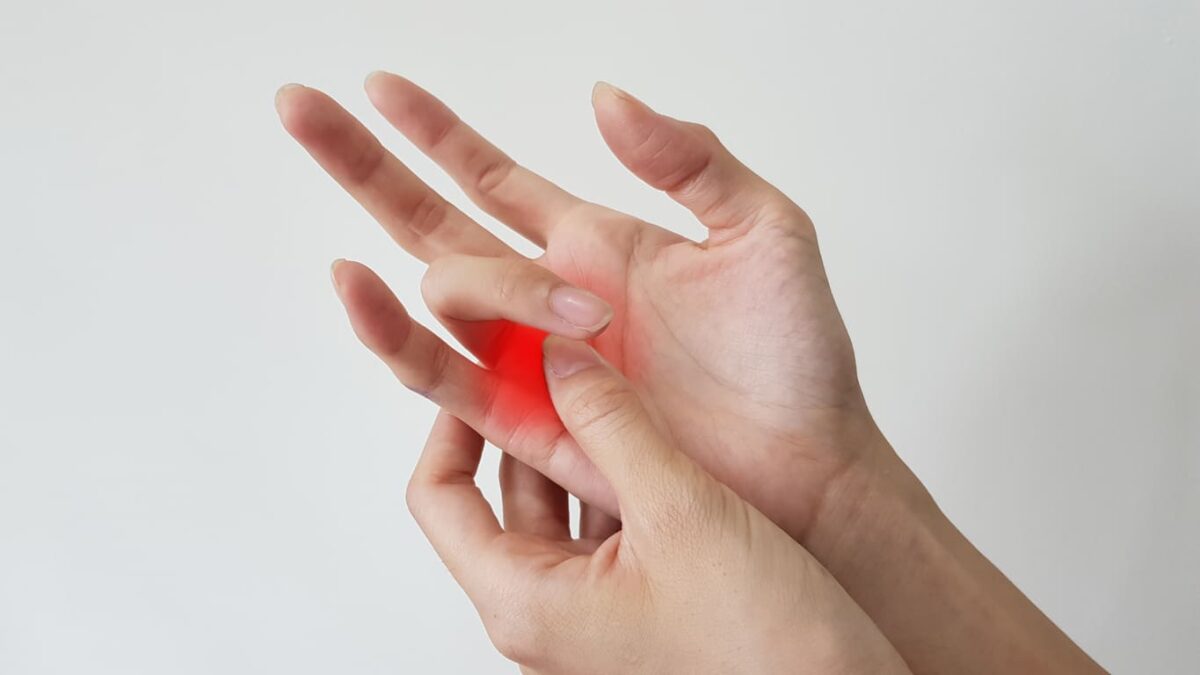
Trigger finger usually begins gradually. The first sign may be stiffness when you wake up, a faint click during movement, or tenderness in the palm at the base of a finger.
As the condition progresses, the finger may catch when you bend or straighten it. You might feel a small lump in the palm, experience pain that travels into the finger, or need to use your opposite hand to straighten the affected digit. In more severe cases, the finger can become locked in a bent position and may not straighten without medical help.
Morning symptoms are particularly common because stiffness and locking often worsen after periods of inactivity. The hand may loosen as you begin using it, which can make the condition seem less important by lunchtime.
That temporary improvement does not mean you imagined the whole episode before breakfast. It simply means gentle movement has helped the tendon glide a little more easily for the moment.
Is It Arthritis?
Trigger finger is not the same as arthritis, although the two conditions can occur in the same hand.
Arthritis affects a joint and commonly causes aching, swelling, stiffness, or reduced motion around that joint. Trigger finger affects the tendon’s ability to glide and is more likely to produce clicking, catching, popping, or locking near the base of the finger.
The location of the tenderness can offer a clue. With trigger finger, the sore spot or small nodule is often found in the palm where the finger begins, rather than directly over one of the finger joints. A clinician can usually distinguish trigger finger from arthritis by examining your hand and watching the finger move. X-rays and scans are not typically necessary when the symptoms and examination are straightforward.
Do not assume every stiff hand is “just arthritis” because you are over 50. Different hand conditions require different treatments, and the correct label may save you from buying a shelf full of products that never address the actual problem.
Why Are Women Over 50 More Susceptible?
Trigger finger is more common in women, particularly between ages 40 and 60. The precise reason for this age and sex pattern is not fully understood, so it would be misleading to blame menopause alone.
Certain health conditions are associated with a higher risk. These include diabetes, rheumatoid arthritis, low thyroid function, and amyloidosis. People who repeatedly grip, pinch, or grasp objects for work, exercise, or hobbies may also be more likely to develop symptoms.
Gardening shears, knitting needles, pickleball paddles, golf clubs, heavy cookware, pruning tools, and even a phone held tightly for long periods can place repeated demands on the fingers. However, many cases begin without any obvious new activity, and most people cannot identify one particular afternoon when the problem started.
That distinction is important because women tend to blame themselves for physical problems with astonishing efficiency. You probably did not ruin your hand by opening one difficult jar of pasta sauce.
Start by Reducing the Aggravating Movement
Mild symptoms may improve when the tendon receives a break from the movement that repeatedly triggers it. For a week or two, notice which activities cause the finger to catch and look for ways to reduce the amount of force your hand must use.
An electric jar opener, silicone grip pad, key turner, lightweight garden pruner, or electric can opener can help you avoid prolonged squeezing. Enlarged foam grips can be slipped over pens, crochet hooks, makeup brushes, or kitchen utensils to reduce how tightly you need to hold them.
These products do not treat the narrowed pulley. They simply make daily tasks less aggravating while the hand rests or while you wait for an appointment.
Avoiding every movement is neither practical nor desirable. Gentle hand use may feel better than complete inactivity, but repeated forceful gripping should be reduced when it clearly causes pain or locking. Both the AAOS and Mayo Clinic include activity modification among the first conservative steps.
Should You Buy a Finger Splint?
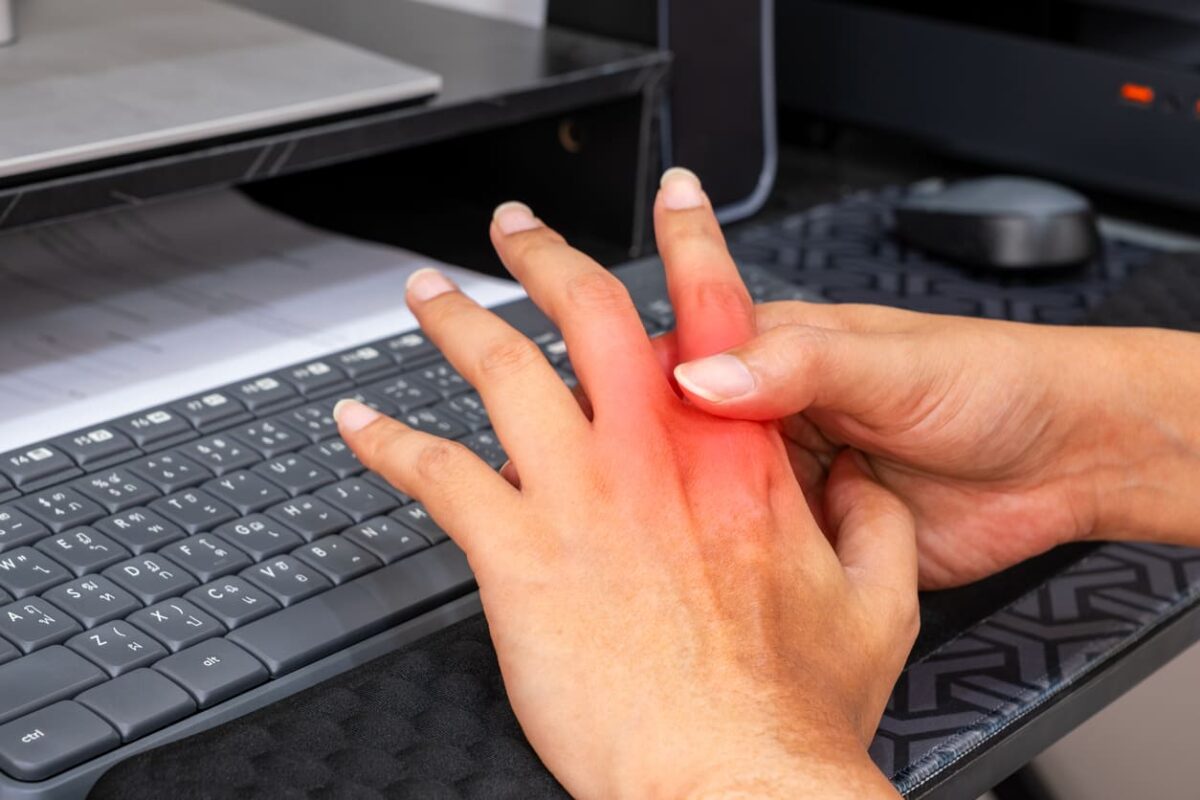
A splint may help rest the tendon by keeping the affected finger in a straighter position, particularly during sleep. Night splinting is included among the nonsurgical treatments recommended by orthopedic and hand specialists, and published reviews have found that finger orthoses can reduce pain and improve function for some patients.
The difficulty is choosing the right style and wearing it correctly. Some splints block only one joint, while others hold more of the finger still. A poorly fitting product can rub the skin, restrict circulation, or immobilize more of the hand than necessary.
A clinician, occupational therapist, or certified hand therapist can recommend the appropriate splint and show you how it should fit. Until then, resist the temptation to secure your finger to a household object with enough tape to prepare it for shipping.
Be Careful With Pain Relievers
Nonsteroidal anti-inflammatory drugs, including ibuprofen and naproxen, may reduce pain for some people. Topical pain-relieving creams or patches may also be options, depending on your health and the specific product.
These medicines are not safe for everyone. Oral anti-inflammatory drugs can interact with prescriptions and may be unsuitable for women with certain kidney, stomach, bleeding, or cardiovascular conditions.
Ask your physician or pharmacist before taking them regularly, particularly if you use blood thinners, blood pressure medicine, or several prescriptions. Reducing pain is useful, but it should not require starting an entirely new medical problem.
Do Exercises Help?
Gentle stretching may help maintain mobility and reduce stiffness, but aggressive stretching is not a contest. Forcing a locked finger straight repeatedly can increase discomfort and does not remove the narrowing that is making the tendon catch.
A hand therapist may teach tendon-gliding or range-of-motion exercises based on the severity of your symptoms. The best exercise is one that allows movement without repeatedly provoking a painful snap.
Be cautious with online routines promising to cure trigger finger through intense massage, gadgets, or a specific series of stretches. Conservative treatment can be helpful, but there is no reason to attack a tender tendon as though it owes you money.
When a Steroid Injection Is Recommended
If rest and splinting are not enough, a clinician may recommend injecting a corticosteroid near or into the tendon sheath. The medication is intended to reduce swelling and create more room for the tendon to glide.
Steroid injections can resolve the condition in many cases, although some people need more than one injection. They may be less effective when triggering has been present for a long time, when multiple fingers are affected, or in people with diabetes.
Women with diabetes should ask how an injection may affect their blood glucose. The AAOS advises that steroid injections can temporarily raise blood sugar, so closer monitoring may be needed after treatment.
What Happens If It Does Not Improve?
When symptoms are severe or nonsurgical treatments fail, the narrowed pulley can be released so the tendon has enough room to move. This may be done through a small incision or, in selected cases, with a needle procedure.
Trigger-finger release is generally an outpatient treatment. The goal is not to remove the tendon or replace the joint; it is to open the tight portion of the tunnel that is preventing smooth movement.
A hand surgeon can explain which procedure is appropriate, the potential risks, and what recovery will involve. Surgery is not the starting point for most women, but it can provide a solution when the finger remains painful or locked despite other care.
The Bottom Line
A clicking or locking finger is not necessarily arthritis, and it is not an inevitable price of getting older. Trigger finger develops when a tendon can no longer glide freely through the small pulley at the base of the finger, creating stiffness, tenderness, snapping, or a finger that becomes stuck.
Begin by reducing forceful gripping and making everyday tasks easier with sensible adaptive tools. Ask about a properly fitted night splint, use pain medicine only when it is medically appropriate, and arrange an evaluation if symptoms persist or worsen.