
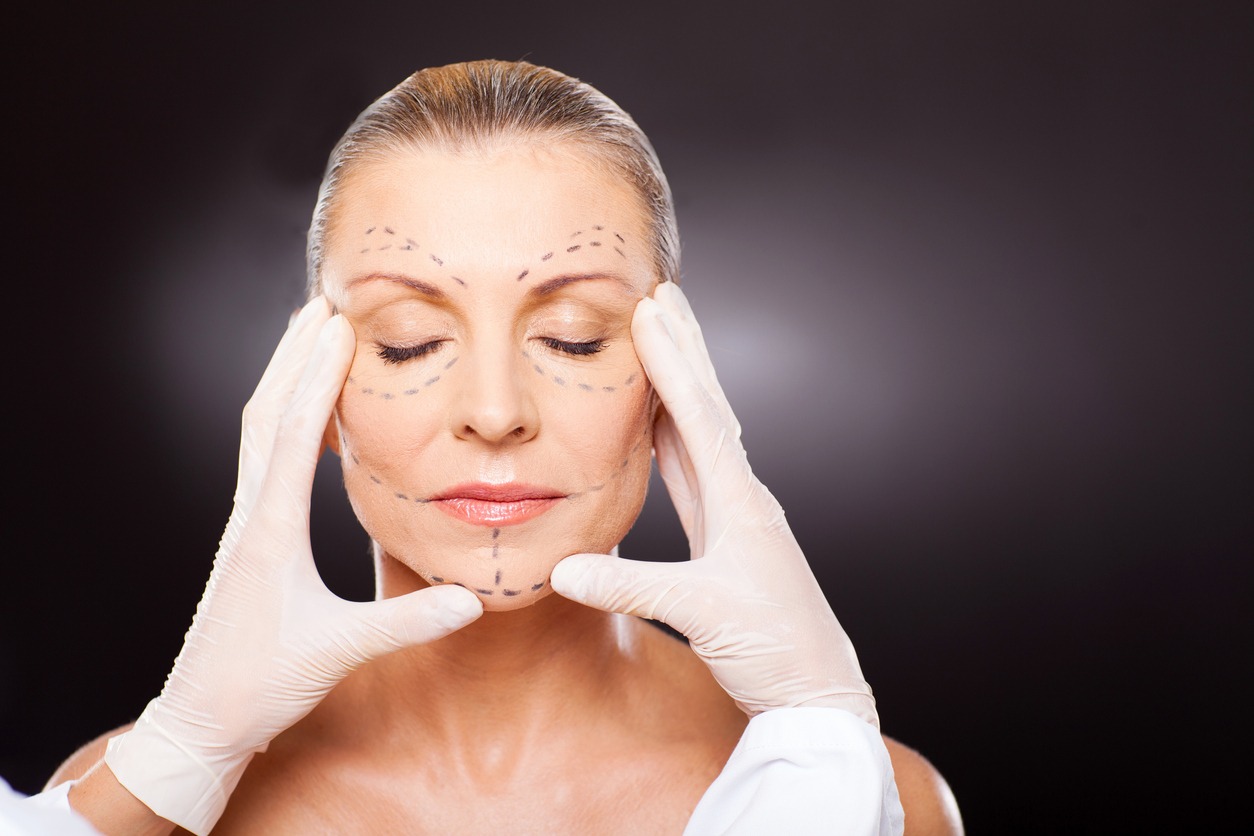
Your face undergoes natural changes over time that can make you look older, tired, or less vibrant than you feel on the inside. But as Dolly Parton would say, “I don’t have time to get old!” So how can we realign our external appearance with our inner youthfulness? In recent years, the deep plane face lift has emerged as one of the most sought-after cosmetic procedures because it quite literally goes “beyond skin deep,” working beneath the Superficial Musculoaponeurotic System (or SMAS) to address aging facial structures.
As we age, the skin loses elasticity from less collagen production. The facial fat shifts downward with gravity, and underlying tissues that once supported youthful facial contours can begin to sag. For many people, these changes lead to jowls, deep nasolabial folds (the lines running from the nose to the corners of the mouth), loose skin along the jawline, and excess skin in the neck. Non-surgical treatments such as fillers, Botox, lasers, and skin-tightening procedures are popular choices to address some signs of aging. However, they cannot correct significant tissue sagging.
For patients seeking more dramatic and long-lasting facial rejuvenation, a face lift remains the gold standard. By realigning the “scaffolding” of the face, a deep plane face lift can create natural-looking, longer-lasting results.
Why Would Someone Want or Need a Facelift?
I always remember my grandma telling me that she looked in the mirror and didn’t recognize herself! The youthful version of herself was no longer looking back at her in the reflection. Now, all these years later, many of us are facing the same predicament. A face lift is all about restoring a person’s sense of beauty and self confidence by eliminating signs of aging and sagging. Most facelift patients say they still feel energetic and vibrant but believe their reflection no longer matches how they feel inside.
People often consider a facelift when they experience:
- Sagging cheeks and midface tissues
- Deep folds around the mouth and nose
- Jowls along the jawline
- Loose skin in the neck
- Loss of facial definition
- A tired or aged appearance despite good health
Candidates are typically in their 40s, 50s, 60s, or 70s, although younger patients are increasingly choosing facelifts to address early signs of aging rather than waiting until changes become severe. Recent industry data shows that facelift patients are trending younger, with more individuals seeking preventative rejuvenation before significant sagging develops.
What Is a Traditional Facelift?
A traditional facelift, often called a SMAS facelift, targets the superficial musculoaponeurotic system (SMAS), a layer of muscle and connective tissue beneath the skin. During the procedure, the surgeon lifts the skin, tightens or repositions the SMAS layer, removes excess skin, and closes the incisions.
Modern SMAS facelifts are far more sophisticated than the skin-only facelifts of decades past. They can produce excellent results when performed by an experienced surgeon. However, because the skin and deeper tissues are often manipulated separately, some patients may experience a too-tight appearance, particularly if excessive tension is placed on the skin.
What Is a Deep Plane Facelift?
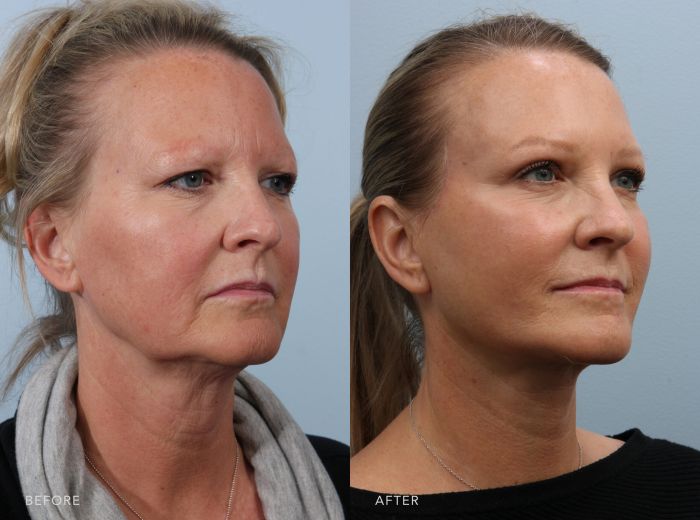
A deep plane facelift is an advanced surgical technique that works beneath the SMAS layer. Rather than lifting the skin and underlying tissues separately, the surgeon releases key facial ligaments and repositions the skin, fat, muscle, and connective tissue together as one unit.
By addressing the deeper structures responsible for facial aging, the procedure restores youthful contours without increasing skin tension. This allows the face to move naturally while reducing the risk of the overly tight or “windswept” appearance that patients often fear.
Key Advantages of a Deep Plane Facelift
- More natural-looking results
- Better improvement of the cheeks and midface
- Enhanced jawline and neck definition
- Less tension on the skin
- Longer-lasting results
- Preservation of natural facial expressions
Many surgeons consider the deep plane facelift the most advanced facelift technique available today because it treats the structural causes of aging rather than simply tightening loose skin.
Deep Plane Facelift vs. Traditional Facelift
| Traditional (SMAS) Facelift | Deep Plane Facelift | |
|---|---|---|
| Surgical Level | Skin and SMAS treated separately | Beneath the SMAS layer |
| Midface Lift | Moderate | Excellent |
| Natural Appearance | Very good | Often considered superior |
| Results Duration | Approximately 5–10 years | Approximately 10–15 years |
| Surgery Time | 2–5 hours | 4–6 hours |
| Recovery | 1–2 weeks of visible downtime | 2–3 weeks of visible downtime |
| Cost | $10,000 – $25,000 | $15,000 – $74,000 or more |
While both procedures can achieve significant facial rejuvenation, the deep plane approach generally offers more comprehensive correction of facial sagging and may provide longer-lasting results.
How Long Does a Deep Plane Facelift Take?
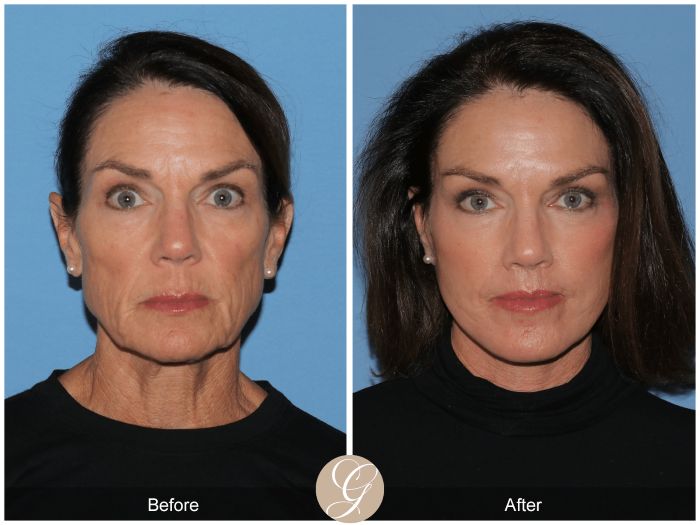
A deep plane facelift is a more technically demanding operation than a traditional facelift. Most procedures take between four and six hours, depending on the patient’s anatomy and whether additional procedures are performed simultaneously, such as a neck lift, eyelid surgery, brow lift, or fat grafting.
The procedure is typically performed under general anesthesia or deep intravenous sedation in an accredited surgical facility.
How Much Does a Deep Plane Facelift Cost?
This surgery is practically like discovering the fountain of youth, and the cost is equally out of reach for the average person. In the United States, patients can generally expect to pay $10,000–$25,000 for a traditional SMAS face lift, and anywhere from $15,000–$75,000 or more for a deep plane face lift.
An estimate for this procedure varies significantly depending on geographic location, surgeon expertise, facility fees, anesthesia costs, and whether additional procedures are performed. Highly sought-after surgeons in major metropolitan areas may charge substantially more. Celebrity surgeons and elite facial plastic surgeons can command fees well into six figures.
Because facelift surgery is considered cosmetic, it is usually not covered by health insurance.
What Does Recovery Look Like?
One of the most common questions patients ask is whether recovery is painful. Surprisingly, most facelift patients report more discomfort from swelling and tightness than actual pain. Immediately after surgery, patients can expect:
- Swelling
- Bruising
- Facial tightness
- Mild numbness
- Temporary difficulty opening the mouth widely
- Limited neck movement if a neck lift was performed
Drain tubes may be used during the first 24 to 48 hours, and a compression garment is often worn to minimize swelling and support healing. Always make sure you have someone by your side in the aftermath of any serious procedure where anesthesia was used!
Week 1: The first week is typically the most challenging. Swelling peaks during the first several days, and bruising is often most noticeable around the cheeks, jawline, and neck. Most patients spend this period resting at home and limiting physical activity.
Weeks 2-3: By the second week, bruising begins to fade and swelling decreases significantly. Many patients feel comfortable appearing in public with makeup after about two weeks. Social downtime for most deep plane facelift patients is approximately two to three weeks.
Months 1-3: Residual swelling gradually resolves, and facial contours continue to improve. Most patients resume normal exercise and activities after several weeks, with surgeon approval.
6 Months to One Year: Final results become fully apparent as all swelling subsides and tissues settle into their new position. Scars continue to fade and mature during this time.
How Long Do Results Last?
No facelift can stop the aging process, but a deep plane facelift can effectively turn back the clock. Many surgeons report that results last 10 to 15 years, although individual outcomes depend on genetics, lifestyle, skin quality, sun exposure, and overall health.
Maintaining a stable weight, using sunscreen, avoiding smoking, and following a good skincare regimen can help prolong results.
Read More: