If you’ve noticed that fitness conversations are shifting away from endless cardio toward smarter strength training, you’re not imagining it. One of the biggest trends right now is functional fitness: workouts designed to help your body move better in everyday life.
Instead of focusing on isolated muscles or punishing cardio sessions, functional fitness workouts train movements: squatting, hinging, pushing, pulling, rotating, and balancing. These movements mirror the way your body naturally moves throughout the day, such as picking up groceries, reaching overhead, getting up from the floor, or climbing stairs.
The result? More strength, better balance, improved mobility, and fewer aches and pains.
Even better, functional fitness workouts don’t require fancy equipment or hours in the gym. Many routines can be done at home in about 30 minutes, three to four times per week.
Why Functional Fitness Works So Well
Traditional workouts often isolate muscles. Think bicep curls or leg extensions. While those moves have their place, they don’t always translate to real-world strength.
Functional workouts train multiple muscle groups at once, improving:
- Stability
- Coordination
- Joint mobility
- Core strength
- Balance
This style of training also helps maintain muscle mass and bone strength, two critical factors for staying active and injury-free long term. Functional workouts are also adaptable. You can make them easier or harder depending on your fitness level.
The Functional Fitness Workout
Try this simple routine 3–4 times per week. Perform each exercise for 10–12 repetitions, rest 30–60 seconds between moves, and repeat the circuit 2–3 times.
You can do these exercises using just your body weight or light dumbbells.
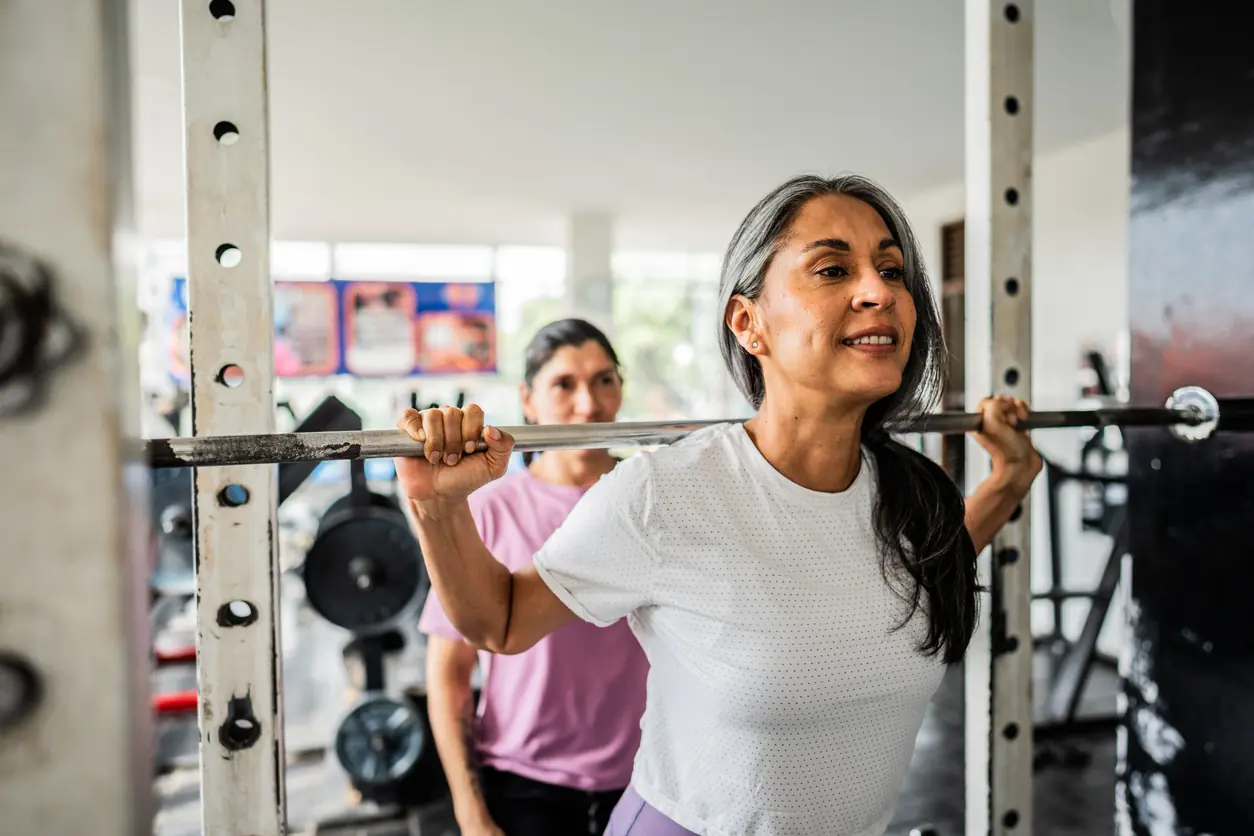
1. Squats
Squats are one of the most valuable exercises you can do. They strengthen the glutes, quads, hips, and core, which are essential for standing up, climbing stairs, and maintaining balance.
- Stand with feet hip-width apart.
- Keep your chest lifted and shoulders relaxed.
- Push your hips back as if sitting into a chair.
- Bend your knees and lower until thighs are about parallel to the floor.
- Press through your heels to stand back up.
Tips:
- Keep your knees aligned with your toes.
- Don’t let your chest collapse forward.
- Start with bodyweight before adding dumbbells.
Reps: 10–12
2. Step-Ups
Step-ups build strength in the legs and glutes while improving balance and coordination.
- Stand in front of a sturdy step, bench, or stair.
- Place your right foot on the step.
- Press through the heel and lift your body up.
- Bring your left foot up to meet the right.
- Step back down and repeat.
Switch legs halfway through.
Tips:
- Keep your core tight.
- Move slowly and with control.
- Hold light dumbbells for an added challenge.
Reps: 10 each leg
3. Bent-Over Rows
Bent-over rows strengthen the upper back and shoulders, helping counteract the effects of sitting and screen time.
- Hold a dumbbell in each hand.
- Hinge forward slightly at the hips, keeping your back flat.
- Let the weights hang toward the floor.
- Pull your elbows back toward your ribs.
- Squeeze your shoulder blades together, then slowly lower.
Tips:
- Keep your neck neutral.
- Avoid rounding your back.
- Think about pulling with your elbows.
Reps: 10–12
4. Glute Bridges
Glute bridges strengthen the glutes, lower back, and core, helping support the spine and improve hip mobility.
- Lie on your back with knees bent and feet flat on the floor.
- Place arms at your sides.
- Press through your heels and lift your hips toward the ceiling.
- Squeeze your glutes at the top.
- Lower slowly back to the floor.
Tips:
- Avoid arching your lower back.
- Keep your core engaged.
- Pause at the top for 2 seconds.
Reps: 12–15
5. Standing Core Rotation
This move strengthens the core and obliques while improving rotational mobility—important for everyday movements.
- Stand with feet shoulder-width apart.
- Hold a light dumbbell or medicine ball in front of you.
- Rotate your torso to the right.
- Return to center, then rotate left.
- Keep your hips facing forward.
Tips:
- Move slowly and with control.
- Focus on using your core rather than your arms.
Reps: 10 each side
6. Farmer’s Carry
This deceptively simple move builds full-body strength, grip strength, and core stability.
- Hold a dumbbell or kettlebell in each hand.
- Stand tall with shoulders back.
- Walk forward slowly for 30–45 seconds.
- Keep your core tight and posture upright.
Tips:
- Avoid leaning to one side.
- Walk slowly and steadily.
Time: 30–45 seconds
Weekly Workout Plan
To see the best results, combine functional training with light cardio and mobility work.
Example schedule:
- Monday: Functional workout
- Tuesday: Walk, bike ride, or yoga
- Wednesday: Functional workout
- Thursday: Active recovery (stretching or light walking)
- Friday: Functional workout
- Weekend: Optional outdoor activity
This balanced approach improves strength, endurance, and mobility without overtraining.
Read Next:
The Biggest Metabolism Mistake Women Over 50 are Still Making