

You apply your mascara, admire the result for maybe four minutes, and then one eye begins watering. By the time you reach your destination, the outer corner of your eye is damp, your concealer has migrated south, and someone is asking whether you are emotional.
You are not emotional. Your eye is simply behaving as though you have been watching the final scene of a very sad movie since breakfast.
Persistent watery eyes are surprisingly complicated because the obvious explanation—“I must be making too many tears”—is not always correct. Sometimes the eye really is producing extra fluid. Other times the surface of the eye is too dry, the tears are not functioning properly, the eyelid is no longer directing them toward the drainage system, or the tiny plumbing that normally carries tears into the nose has become narrowed or blocked.
Doctors call excessive tearing epiphora, and figuring out why it is happening is the important part. The American Society of Ophthalmic Plastic and Reconstructive Surgery explains that adult tearing generally involves either too many tears being produced or tears failing to drain normally. Sometimes more than one cause is present at the same time.
First, Here Is How Tears Are Supposed to Work
Your eyes are never completely dry, even when you are not crying. Every blink spreads a thin tear film across the cornea, helping keep the eye smooth, comfortable, protected, and optically clear.
According to the National Eye Institute, that tear film has three components: an oily outer layer that slows evaporation, a watery middle layer that moistens and nourishes the eye, and a mucus layer that helps the tears cling to the surface. After doing their job, tears normally drain through tiny openings near the inner corners of the eyelids and travel through the tear-drainage system into the nose.
This explains two familiar mysteries. It is why your nose runs when you cry, and it is why a problem anywhere along this production-and-drainage system can leave tears spilling down your cheeks.
Yes, Dry Eyes Can Make Your Eyes Water
One of the common reasons an eye waters excessively is that the surface of the eye is actually too dry. When the normal tear film does not adequately lubricate the eye, irritation can trigger the larger lacrimal gland to release a flood of reflex tears. Those watery emergency tears can overwhelm the normal drainage system and spill over the eyelid.
Think of the difference between a lawn sprinkler and the fire department. Your regular tear film is supposed to provide steady, controlled moisture. When the surface becomes irritated, your eye may respond with far more watery fluid than it can efficiently use.
The National Eye Institute lists age 50 or older and being female among the risk factors for dry eye. Dry-eye symptoms can include burning, scratchiness, redness, light sensitivity, and blurry vision, and the condition occurs when the eyes do not produce enough tears, the tears evaporate too quickly, or the tear film does not work properly.
So the woman saying, “My eyes cannot possibly be dry because I spend half the day wiping them,” may actually be describing a classic dry-eye pattern.
Notice What Your Eyes Feel Like Between the Tears
The additional symptoms can provide clues.
If your eyes water but also feel gritty, sandy, burning, tired, or as though an eyelash is permanently trapped beneath the lid, dry eye becomes more plausible. Episodes of fluctuating or blurry vision may also occur because a stable tear film helps create a smooth optical surface.
Wind, air conditioning, smoke, and long periods of screen use can worsen dry-eye symptoms. The National Eye Institute recommends reducing exposure to irritating air, using a humidifier in dry environments, taking breaks from prolonged screen use, and wearing wraparound sunglasses outdoors when needed.
This is one situation in which sunglasses that curve around the sides of the face are more than a fashion decision. They can reduce the amount of wind hitting the ocular surface, which is particularly useful during walks, travel, or afternoons spent confidently refusing to cancel outdoor plans because the weather is being dramatic.
Artificial Tears May Help a Watery Eye

If an eye-care professional believes dry eye is contributing, lubricating eye drops—usually called artificial tears—may be recommended. Yes, the solution to an excessively watery eye can sometimes involve putting more liquid into it.
Artificial tears are designed to improve lubrication rather than trigger reflex tearing. The National Eye Institute identifies over-the-counter artificial tears as the most common treatment for mild dry eye, with moisturizing gels and ointments also available for some patients.
If you need lubricating drops frequently, ask your ophthalmologist whether a preservative-free version is appropriate. The American Academy of Ophthalmology advises preservative-free artificial tears for people who require drops many times per day because preservatives in some multidose products can irritate the eye when used frequently.
Do not simply choose the bottle with the most aggressive claim on the pharmacy shelf. “Gets the red out” drops, allergy drops, antibiotic drops, and lubricating artificial tears are not interchangeable products.
Be Picky About What You Put in Your Eyes
Eye drops deserve a little more respect than we sometimes give them.
The FDA’s current eye-drop safety guidance reminds consumers that products placed directly in the eye must be sterile because they bypass some of the body’s natural defenses. The agency recommends washing your hands before applying drops and never allowing the bottle tip to touch your eye, fingers, clothing, or another surface.
The FDA has also issued recalls and warnings involving contaminated eye products, so check current safety alerts if you hear that a brand you use has been affected. Stop using a product and contact a healthcare professional if you develop new discharge, pain, vision changes, or significant discomfort after starting eye drops.
And please resist homemade eye remedies involving honey, herbal mixtures, or something a charming person on social media insists her grandmother used. Your eyes are not the ideal location for experimental cooking.
Check Your Eyelids
The drainage system relies partly on your eyelids working like tiny windshield wipers and pumps. Each blink spreads tears across the eye and helps move used tears toward the drainage openings near the nose.
With age, the lower eyelid can become looser. In some people it begins turning outward, a condition called ectropion. When that happens, the eyelid may no longer sit firmly against the eye, tears do not spread or drain normally, and the exposed eye surface may become irritated and dry—causing still more tearing.
Look in the mirror without pulling on the skin. Does one lower eyelid seem to sag away from the eyeball? Is the pink inner surface of the lid more visible than it used to be? Does one eye water far more than the other?
Those observations are worth mentioning at an eye examination. The American Society of Ophthalmic Plastic and Reconstructive Surgery notes that age-related tissue relaxation is a common cause of ectropion and that treatment may range from lubrication for temporary comfort to an eyelid-tightening procedure when the condition is significant.
This is not something a firmer eye cream can repair. Skin care can do many lovely things, but persuading an eyelid to resume its mechanical relationship with the eyeball is outside moisturizer’s job description.
Crusty Lashes May Point to Blepharitis
If your eyelids feel irritated and you notice flakes or crust along the lashes, another condition may be contributing.
Blepharitis is inflammation of the eyelid margins. The National Eye Institute lists watery eyes, itching, burning, redness, crusty eyelashes, and dry-eye symptoms among its common features. Oil glands in the eyelids can become clogged or irritated, disrupting the oily layer of the tear film and making tears less stable.
For uncomplicated blepharitis, regular eyelid hygiene and warm compresses are commonly recommended. The NEI advises gently cleaning along the lash line to remove crusts and help keep eyelid oil glands from clogging, although persistent symptoms deserve an examination because antibiotics, prescription drops, or other treatments may occasionally be necessary.
A reusable microwavable eye mask designed for warm compresses can make this routine easier than repeatedly reheating a washcloth. Choose one intended for eye use, follow its heating instructions carefully, and remember that comfortably warm is the goal—not “freshly removed from a restaurant oven.”
What If the Tears Cannot Get Out?
Sometimes tear production is perfectly reasonable. The problem is the drain.
Tears normally enter two tiny openings called puncta at the inner edge of the upper and lower eyelids. From there they pass through small channels into the lacrimal sac beside the nose and then through the nasolacrimal duct into the nasal cavity.
If part of that passageway narrows or becomes blocked, ordinary tears have nowhere to go. They collect along the eyelid and eventually spill over the cheek.
A blocked drainage system becomes more suspicious when watering is persistent, affects mainly one eye, or is accompanied by mucus collecting near the inner corner. Redness, tenderness, or swelling between the eye and nose can occur if fluid becomes trapped or infected.
Adults can develop tear-duct obstruction for several reasons, including inflammation, infection, injury, previous surgery, and, less commonly, growths that press on the drainage system. An ophthalmologist can examine the drainage openings and may flush fluid through the system to determine whether and where it is narrowed.
Do Not Massage an Adult Tear Duct Because You Saw It Online
Parents are sometimes taught specific tear-duct massage techniques for babies born with blocked ducts. That does not mean an adult should start aggressively pressing beside her nose because one eye is watering.
Adult tear-duct obstruction is a different situation and can involve different locations and causes. The American Society of Ophthalmic Plastic and Reconstructive Surgery notes that adult blockages may require procedures to reopen a narrowed passage or, in some cases, surgery to create a new drainage route around a blocked nasolacrimal duct.
If you have persistent one-sided tearing, especially with mucus or repeated infections, an eye examination is a considerably better investment than becoming unexpectedly forceful with your own face.
Allergies Usually Bring Itching to the Party
Allergies certainly can make eyes water, but they often arrive with additional clues. The American Academy of Ophthalmology lists itching, redness, swelling, burning, tearing, and sometimes light sensitivity among common eye-allergy symptoms. Nasal congestion and sneezing may accompany them when environmental allergies are involved.
The word to pay attention to is itching. When both eyes become intensely itchy and watery during pollen season or around a particular allergen, allergy moves higher on the list.
Avoid rubbing your eyes, tempting though it may be. Rubbing increases irritation and is particularly unhelpful when eye makeup, contact lenses, or delicate eyelid skin are involved.
If allergy symptoms are frequent, ask your physician or eye-care professional which type of allergy medication is appropriate. Some oral medicines can contribute to dry eye in susceptible people, so treating every watery eye with whichever antihistamine happens to be in the cabinet can occasionally make the overall picture more complicated.
Does One Eye Water More Than the Other?
This detail matters. Dry eye and environmental irritation commonly affect both eyes, although symptoms are not always perfectly symmetrical. Persistent tearing from one eye only, particularly when tears regularly run down the cheek, can make an eyelid or drainage problem more suspicious. Research on adults evaluated for epiphora has found that tear-duct obstruction, narrowing, eyelid abnormalities, and functional drainage problems are all important causes.
Do not panic if one eye waters during a windy afternoon. Instead, notice whether the pattern keeps happening day after day.
Your ophthalmologist will want to know when it started, whether the tearing is constant or intermittent, whether wind and cold make it worse, whether you have discharge or pain, and whether you have had previous sinus surgery, facial injury, eye surgery, or recurrent infections.
These details are much more useful than simply telling the doctor, “This eye has become incredibly annoying,” although that description may also be entirely accurate.
Stop Wiping the Same Direction All Day
Constant tearing creates a second problem: irritated skin. Repeatedly dragging a tissue outward beneath the eye can leave thin mature skin red, sore, and flaky. Instead of rubbing, gently blot tears with a soft tissue or clean cotton pad.
If the surrounding skin becomes irritated, a small amount of simple fragrance-free moisturizer can protect the skin around the orbital area, provided you keep it out of the eye itself. Avoid heavily fragranced eye creams while you are actively irritated because fragrance can become one more variable in an already crowded investigation.
Waterproof mascara may be useful for special occasions, but do not make cosmetics the only solution to chronic watering. A mascara capable of surviving a tropical storm still cannot unclog a tear duct.
Your Eye Doctor Can Learn Quite a Lot From a Simple Exam
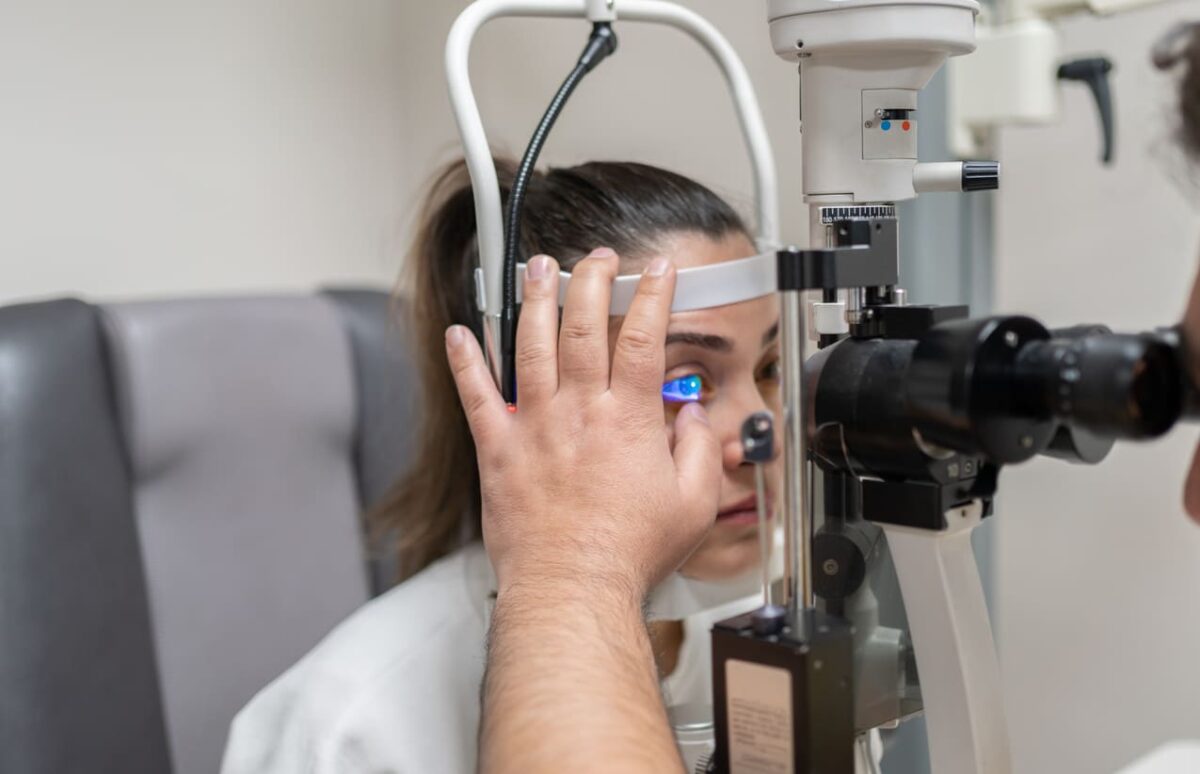
An evaluation for excessive tearing is generally focused on finding where the system has gone wrong.
The doctor may examine the tear film, cornea, eyelid position, eyelash line, blink strength, and drainage openings. Dry-eye evaluation can include checking how much tear fluid you produce, how quickly it evaporates, and whether the eyelids are contributing to the problem.
When drainage obstruction is suspected, additional tests can evaluate whether fluid passes through the tear ducts normally. Sometimes no single cause explains everything; ophthalmologists who treat epiphora have long noted that excessive tearing can be multifactorial.
That may mean treating eyelid inflammation and dry eye first, then reassessing how much watering remains before considering a drainage procedure.
The goal is not simply to “turn off” your tears. You need healthy tears. The goal is to restore the balance between making them, spreading them, and draining them.
When Watery Eyes Need Prompt Attention
Routine watery eyes are usually more irritating than dangerous, but certain accompanying symptoms change the situation.
Seek prompt eye care if excessive tearing appears with significant eye pain, a major increase in redness, pronounced light sensitivity, or a decrease or sudden change in vision. The National Eye Institute advises immediate evaluation for intense eye pain, vision changes, blurry vision, or a very red watery eye because corneal injuries and other serious eye conditions can produce those symptoms.
Redness, tenderness, swelling, or discharge concentrated between the inner corner of the eye and the nose may indicate an infected tear sac, especially when a blocked drainage system is present. Fever or rapidly worsening swelling also deserves prompt medical evaluation.
And if something is actually stuck in your eye, you have experienced significant eye trauma, or your vision suddenly changes, do not spend the afternoon testing different brands of artificial tears. That is what urgent eye care is for.
The Bottom Line
Watery eyes after 50 are not necessarily a sign that you suddenly produce too many tears.
Dry eye can trigger reflex flooding. Blepharitis can destabilize the tear film. Aging eyelids may stop spreading and pumping tears efficiently, while a narrowed tear duct can prevent otherwise normal tears from draining into the nose. Allergies, irritation, infection, and other eye conditions can add still more possibilities.
For mild dry-eye-type symptoms, properly selected artificial tears, a humidifier, wraparound sunglasses, and a warm compress may offer useful relief. Persistent one-sided tearing, recurring discharge, eyelid changes, or symptoms that simply refuse to improve deserve an examination rather than an ever-growing collection of random eye drops.
Your eyes are supposed to tear when you laugh too hard, chop an onion, or watch a granddaughter walk down the aisle. They do not need to provide a running commentary every time you apply mascara and leave the house. If they have become unusually emotional without your permission, it may be time to find out what they are actually trying to tell you.
Read Next: