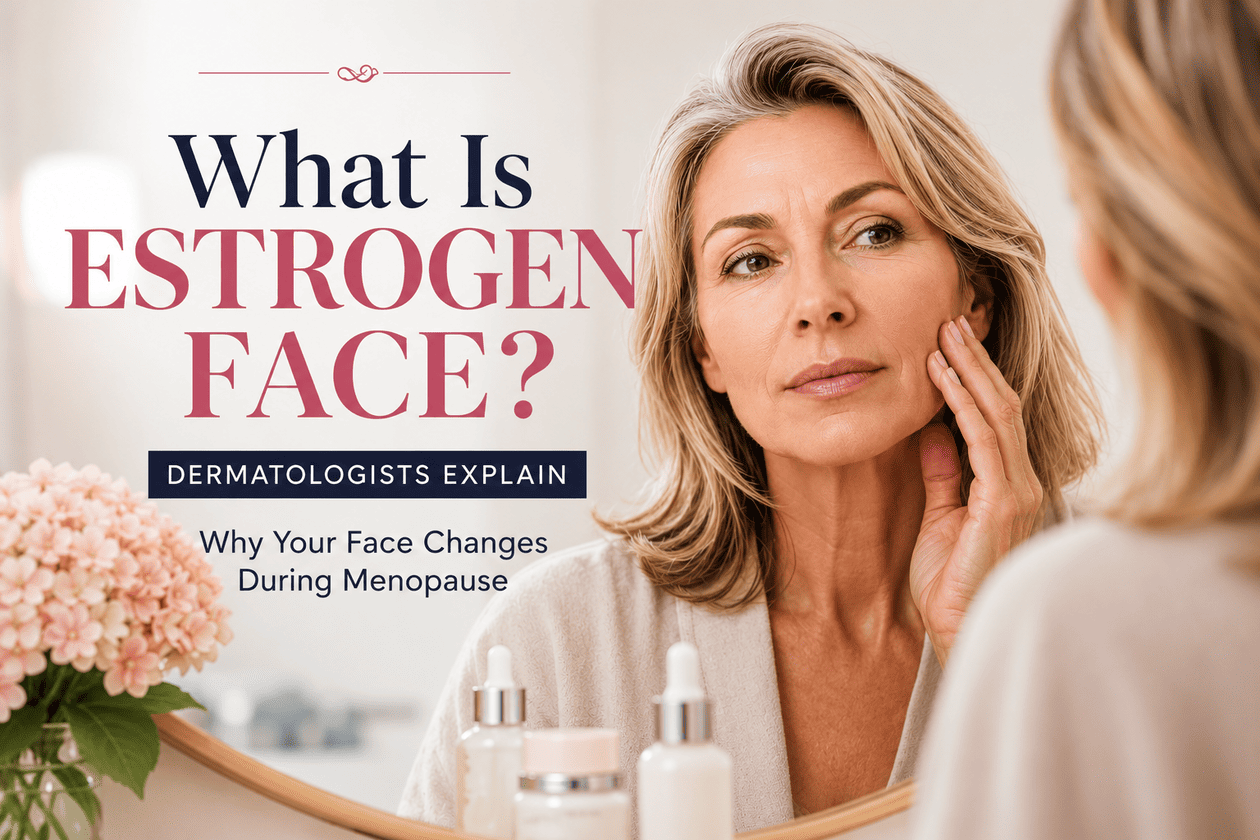
There’s a moment for many women when they catch their reflection and think, When did my face change? Not because there’s suddenly a wrinkle where there wasn’t one yesterday. It’s more subtle than that. Your cheeks don’t seem as full, your jawline isn’t quite as defined, your skin feels drier than it ever has, and somehow you look tired even after a solid eight hours of sleep.
If you’ve had that moment, you’re in very good company.
Dermatologists have started using the term “estrogen face” to describe the collection of facial changes many women notice as estrogen levels decline during perimenopause and menopause. While it isn’t an official medical diagnosis, it has become a useful way to explain why so many women feel like they’ve aged almost overnight. The reality is that these changes are happening beneath the surface long before you notice them in the mirror.
The encouraging news is that understanding what’s happening gives you the power to do something about it. You may not be able to stop menopause, but there are plenty of ways to support your skin and help it age as beautifully as the rest of you.
What Is Estrogen Face?
Estrogen is one of the most important hormones for healthy skin. Most of us associate it with our reproductive years, but it also quietly works behind the scenes to keep our skin thick, hydrated, elastic, and resilient. It encourages collagen production, helps maintain the skin’s natural moisture barrier, supports blood flow, and even influences where fat is stored in the face.
As estrogen begins to decline during perimenopause and menopause, all of those processes begin slowing down. The result isn’t usually one dramatic change. Instead, it’s a gradual shift that affects the overall structure of your face. Skin becomes thinner, collagen breaks down more quickly, facial volume decreases, and elasticity fades. Eventually, you may look in the mirror and feel like your face has somehow changed shape.
That’s what people are referring to when they talk about estrogen face.
Why Does Your Face Change So Much After Menopause?
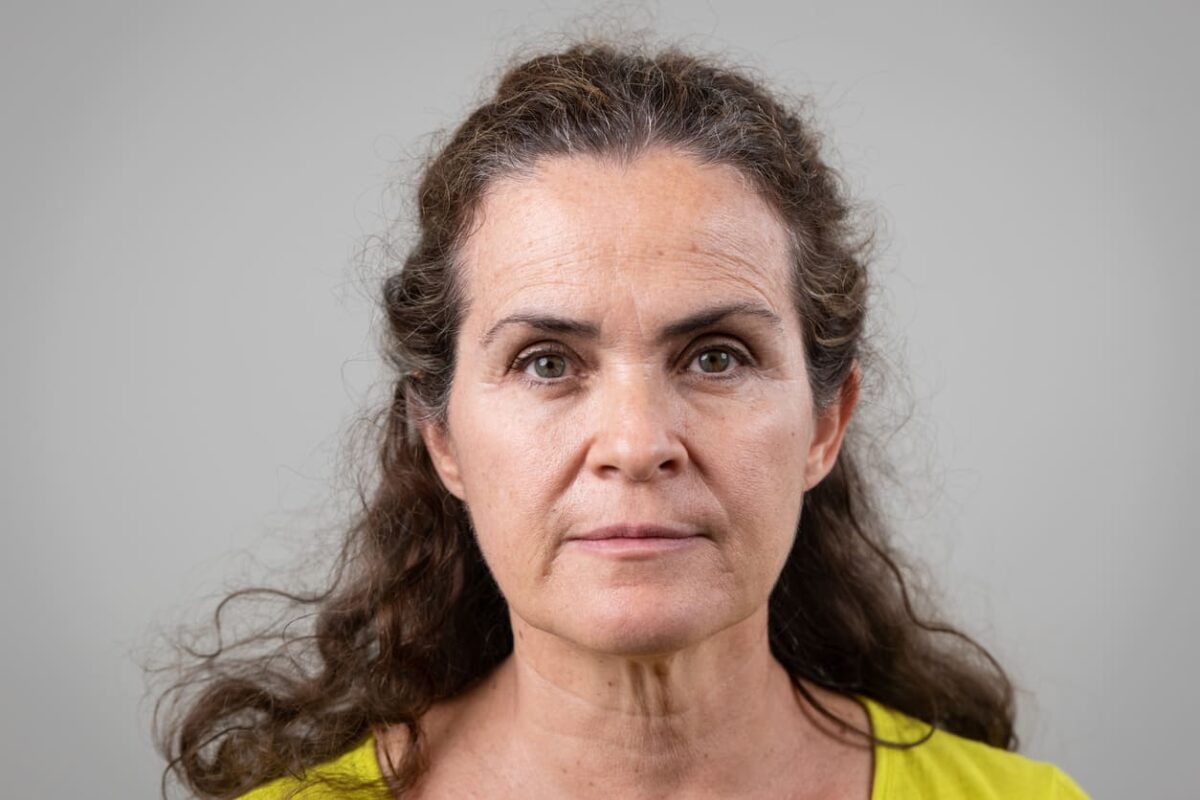
One of the biggest reasons is collagen loss. Collagen is the protein that gives skin its firmness and structure, almost like the framework holding everything in place. Research has shown that women can lose as much as 30 percent of their skin’s collagen during the first five years after menopause. After that, collagen continues to decline by approximately 2 percent each year.
Unfortunately, collagen isn’t the only thing disappearing. Your skin also produces less oil, making it harder to stay hydrated. Blood circulation slows, meaning skin doesn’t receive nutrients as efficiently. Elastin, the protein responsible for helping skin snap back into place, also decreases. At the same time, the natural fat pads that once gave your face youthful fullness begin shrinking and shifting downward.
None of these changes happen overnight, but together they create a very noticeable difference.
Signs You May Be Experiencing Estrogen Face
One of the first things many women notice is that their skin suddenly feels much drier. The moisturizer you’ve faithfully used for years suddenly seems completely inadequate, and your makeup may begin settling into fine lines instead of gliding smoothly across your skin. That’s because declining estrogen weakens the skin’s protective barrier, allowing moisture to escape more easily.
Another common complaint is the loss of facial volume. Cheeks that once looked naturally lifted begin appearing flatter, while the area beneath the eyes may become more hollow. Smile lines deepen, not necessarily because you’re smiling more, but because the tissue underneath the skin isn’t providing the same level of support.
Many women are also surprised by changes along the jawline. Instead of a crisp, defined profile, the lower face begins looking softer. This happens as collagen declines, skin becomes less elastic, and gravity gradually pulls tissue downward. Jowls often become more noticeable during this stage, even in women who haven’t gained weight.
Wrinkles also seem to appear more quickly after menopause. Fine lines around the eyes and mouth become more pronounced because thinner skin simply doesn’t bounce back the way it once did. Even sleeping on your side can leave temporary creases that eventually become permanent.
You may also notice that your skin bruises more easily or looks more translucent than it did in your forties. That’s another result of thinning skin and reduced collagen.
It’s Not Just Aging. It’s Hormones.
It’s easy to assume these changes are simply the result of getting older, but hormones play a much larger role than most people realize.
Women and men both lose collagen as they age, but women experience a much steeper decline because of menopause. Estrogen essentially acts like a maintenance crew for your skin, constantly repairing, rebuilding, and protecting it. Once estrogen levels drop, those repair systems become much less efficient.
That’s one reason two women who are the same age can have dramatically different skin depending on genetics, lifestyle, sun exposure, and where they are in the menopausal transition.
Can You Prevent Estrogen Face?
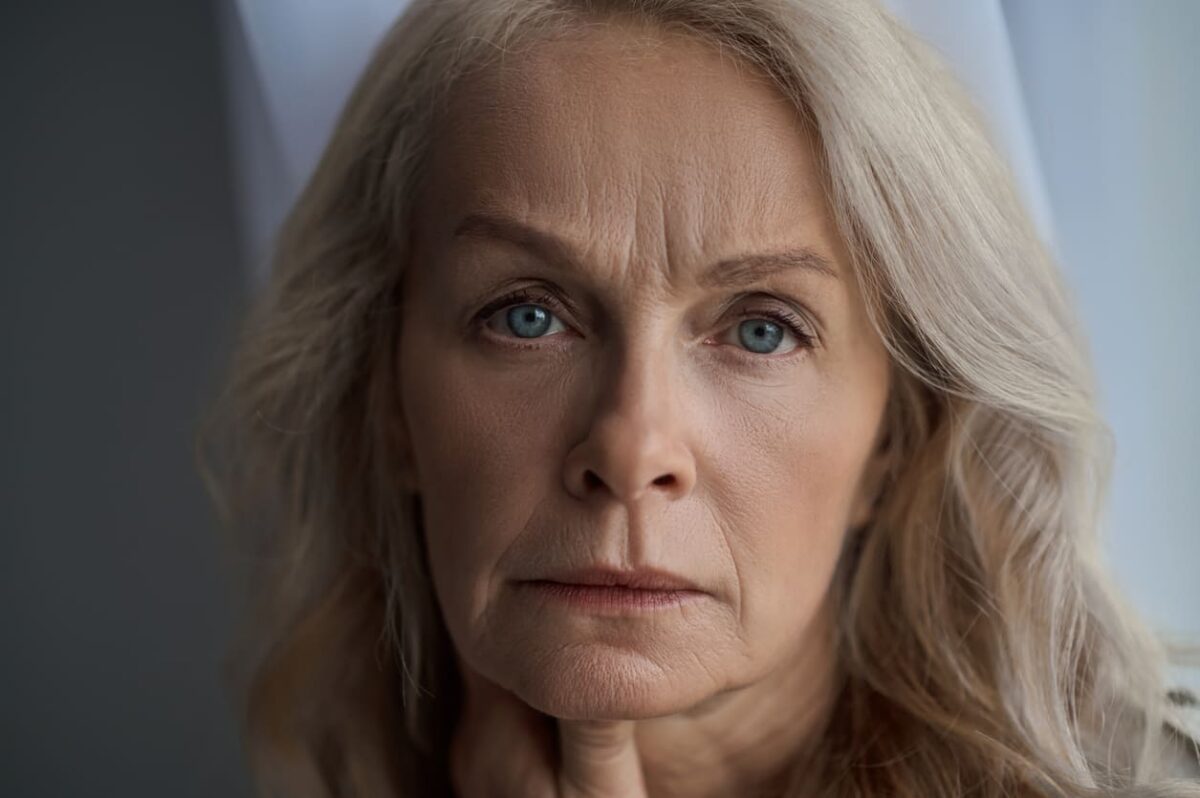
There isn’t a magic cream that stops hormonal aging, despite what some advertisements promise. However, dermatologists agree that the right skincare routine, healthy habits, and a little patience can significantly improve your skin’s appearance.
Think of it less as trying to look thirty again and more as helping your skin be the healthiest version of itself today.
Build a Skincare Routine That Supports Collagen
If there is one ingredient dermatologists consistently recommend for mature skin, it’s a retinoid. Whether you choose an over-the-counter retinol or prescription tretinoin, these vitamin A derivatives remain the gold standard for encouraging collagen production and improving skin texture. They require consistency and a little patience, but few ingredients have stronger scientific evidence behind them.
Vitamin C deserves a permanent spot in your morning routine as well. It helps protect collagen from environmental damage while brightening the complexion and supporting healthy skin repair. Pairing a vitamin C serum with sunscreen creates one of the best defenses against premature aging.
Peptides have also become increasingly popular because they act like tiny messengers, encouraging the skin to produce more collagen. While they aren’t miracle workers, they can be a valuable addition to a skincare routine focused on maintaining firmness.
For women struggling with dry menopausal skin, ingredients like ceramides and hyaluronic acid are especially helpful. Ceramides repair the skin barrier and reduce moisture loss, while hyaluronic acid attracts water into the skin, giving it a smoother, plumper appearance.
Sunscreen Is More Important Than Ever
If you’re investing in expensive skincare but skipping sunscreen, you’re fighting an uphill battle.
Ultraviolet radiation breaks down collagen and elastin far more quickly than natural aging alone. Dermatologists estimate that a large percentage of visible skin aging is caused by cumulative sun exposure rather than birthdays.
That doesn’t mean you need to avoid sunshine forever. It simply means making sunscreen as automatic as brushing your teeth. A broad-spectrum SPF 30 or higher every single day helps preserve the collagen you still have.
Yes, even if it’s cloudy. Yes, even if you’re mostly indoors. Windows don’t block all of the UVA rays responsible for skin aging.
Feed Your Skin From the Inside Out
Beautiful skin isn’t created entirely by serums and moisturizers.
Protein provides the amino acids your body needs to build collagen, while colorful fruits and vegetables deliver antioxidants that help protect skin from free radical damage. Healthy fats from foods like salmon, walnuts, avocados, and olive oil support the skin barrier and may help reduce inflammation.
Staying hydrated also matters more than many people realize. Drinking water won’t erase wrinkles, but dehydrated skin tends to emphasize every fine line you already have.
Exercise Benefits Your Skin Too
Regular movement improves circulation, helping deliver oxygen and nutrients to your skin cells. Strength training may be particularly beneficial during and after menopause because it supports muscle mass, bone health, and metabolic function while also improving circulation throughout the body.
No one is suggesting you spend two hours a day at the gym. Walking, Pilates, yoga, resistance training, or swimming several times a week can all contribute to healthier skin over time.
Should You Consider Hormone Therapy?
For some women, menopausal hormone therapy may improve skin thickness, hydration, and collagen production because it addresses the hormonal changes driving these symptoms.
However, hormone therapy isn’t appropriate for everyone, nor is it prescribed solely for cosmetic reasons. Whether it’s a good option depends on your overall health, medical history, and the severity of your menopausal symptoms. It’s a conversation worth having with your healthcare provider if you’re also dealing with hot flashes, night sweats, sleep disruption, or other menopause-related concerns.
What Treatments Can a Dermatologist Offer?
If your skincare routine isn’t delivering the results you’d like, there are several in-office treatments that specifically target collagen loss.
Fractional laser resurfacing stimulates new collagen while improving skin texture and tone. Radiofrequency microneedling combines two collagen-building technologies into one treatment and has become increasingly popular for women experiencing skin laxity. Traditional microneedling can also improve firmness, particularly when performed as a series of treatments.
For women bothered by volume loss, dermal fillers can restore fullness to the cheeks and soften deeper folds around the mouth. Biostimulatory fillers take things a step further by encouraging your own collagen production over time. Neuromodulators like Botox or Dysport remain effective for reducing expression lines across the forehead and around the eyes.
A consultation with a board-certified dermatologist can help determine which treatments make the most sense based on your goals, budget, and skin condition.
Give Yourself a Little Grace
Perhaps the most important thing to remember about estrogen face is that it isn’t a flaw. It’s a reflection of one of the biggest hormonal transitions your body will ever experience.
Our culture spends an awful lot of time convincing women that every sign of aging is something to fix, erase, or apologize for. But menopause isn’t a personal failure, and neither are the changes that come with it.
That doesn’t mean you can’t enjoy skincare, try new treatments, or invest in looking your best. There’s absolutely nothing wrong with wanting healthy, glowing skin at every age. The goal simply shifts from chasing the face you had at 35 to taking excellent care of the face you have today.
After all, this face has smiled through decades of family dinners, cried through heartbreak, laughed until mascara ran, and probably spent far too many years putting everyone else’s needs before its own. It deserves a little extra kindness, a good moisturizer, and maybe a reminder that aging isn’t the opposite of beauty. Sometimes it’s simply beauty with better stories.