
If you’ve ever been happily applying your favorite moisturizer, caught a glimpse of yourself in the mirror, and thought, “Wait…when did my neck start looking older than my face?” welcome to the club. It’s one of the biggest complaints dermatologists hear from women over 50.
You’ve spent all this time honing a skincare routine to have your face look fresh and glowing, until you realize you’ve been neglecting your neck all along. The thin and fragile skin on your neck develops horizontal lines, looseness, crepiness, and sagging. The frustrating part is that most of us don’t even notice it’s happening until one day we look down at our phone camera and wonder who invited our grandmother to the selfie.
The good news is that there are real biological reasons it tends to age faster than your face, and there are plenty of things you can do to slow it down. While there isn’t a miracle cream that can erase 30 years of aging in a weekend, there are ingredients, habits, and treatments that truly make a difference.
Your Neck Is Working Against You From the Start
The skin on your neck is simply different from the skin on your face. It’s thinner, contains fewer oil glands, and doesn’t produce as much natural moisture. That means it’s more likely to become dry, crepey, and wrinkled as you age.
On top of that, the neck doesn’t have the same level of structural support underneath the skin. Once collagen and elastin begin to decline, gravity has a much easier time pulling everything south. Gravity, by the way, remains undefeated. It doesn’t care how much Pilates you do or how expensive your moisturizer was.
Because the skin is naturally more delicate, small changes become much more noticeable. A tiny loss of elasticity that might not show on your cheeks can become obvious on your neck.
Menopause Changes Everything
If it feels like your neck aged five years in the span of one birthday, menopause may be the culprit. Estrogen plays a huge role in maintaining collagen, elastin, and skin hydration. As estrogen declines, so does your skin’s ability to stay firm and resilient. Research has shown that women can lose up to 30 percent of their skin’s collagen during the first five years after menopause. That’s a dramatic change in a relatively short period of time.
Collagen is what gives skin its strength and bounce. Elastin allows it to snap back into place after movement. When both begin disappearing, the neck often becomes one of the first places to show it because the skin there is already thinner to begin with.
Your Neck Never Stops Moving
Take a second and think about how many times you’ve moved your neck just since you started reading this article. You looked down at your phone, turned your head, nodded, maybe tilted your chin while reading. Your neck is constantly in motion from the moment you wake up until you go to sleep.
Every one of those movements creates tiny folds in the skin. When you’re young, collagen and elastin allow those folds to smooth back out almost immediately. As those proteins decline, the folds gradually become permanent lines. That’s why those horizontal rings around the neck become more noticeable with age.
You’ve also probably heard of the term “tech neck,” and unlike many internet buzzwords, this one is actually rooted in reality. Most of us spend several hours every day looking down at our phones, tablets, laptops, books, or crossword puzzles. Every time your chin drops toward your chest, your neck skin folds. Repeat that thousands of times over the course of years, and those temporary folds can become etched into the skin.
Poor posture can also make existing sagging look worse because the muscles supporting your neck become weaker over time. Raising your screen closer to eye level and taking regular posture breaks can reduce some of the repetitive stress your neck experiences every day.
The Sunscreen Stops Too Soon
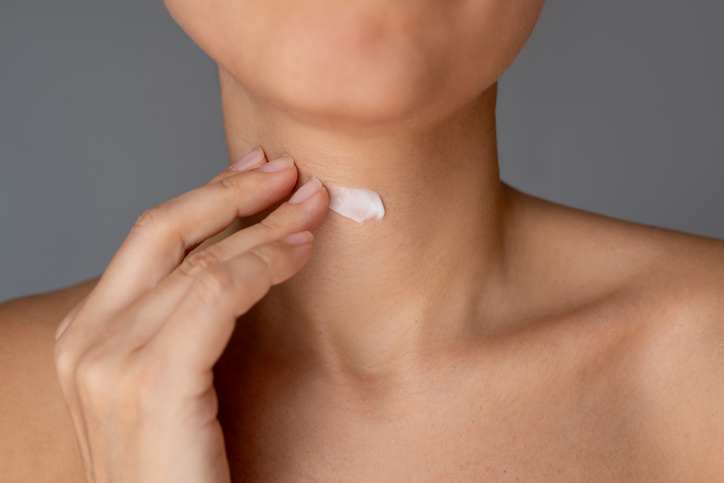
We carefully cleanse our faces, apply vitamin C, moisturizer, eye cream, sunscreen, maybe another serum or two, and then…we stop right at the jawline.
Meanwhile, our neck is sitting there wondering what it did to deserve such neglect. The neck receives just as much ultraviolet exposure as your face, especially if you spend time gardening, driving, walking, or enjoying outdoor activities. UV rays break down collagen, damage elastin, and contribute to wrinkles, discoloration, and sagging.
If you only change one habit after reading this article, make it this one. Every skincare product you apply to your face should continue all the way down your neck and onto your chest. Think of it as one continuous canvas, sometimes referred to as the decolletage, instead of three separate body parts.
What Actually Helps?
Now that we’ve covered why your neck seems determined to age ahead of schedule, let’s talk about what you can actually do about it. Spoiler alert: there isn’t one magic ingredient. Healthy-looking neck skin usually comes from combining several good habits consistently over time.
Retinoids Are Still the Gold Standard
If dermatologists had to choose one topical ingredient for aging skin, retinoids would almost always make the list. Prescription tretinoin has decades of research showing it can stimulate collagen production, improve skin texture, soften fine lines, and reduce sun damage. Over-the-counter retinal and retinol products can also produce noticeable improvements, although they typically work more gradually.
One important thing to remember is that neck skin is often more sensitive than facial skin. If you’re new to retinoids, start by applying them only a couple of nights each week before gradually increasing frequency as your skin adjusts. Pairing them with a good moisturizer can also reduce irritation.
Moisture Matters!
One reason neck wrinkles suddenly seem more noticeable is that dry skin exaggerates every little line. Keeping your neck well moisturized won’t rebuild collagen, but it can dramatically improve the skin’s appearance by plumping the outer layers and strengthening the skin barrier.
Look for moisturizers that contain ceramides, hyaluronic acid, glycerin, squalane, peptides, or shea butter. These ingredients help attract and retain moisture while supporting healthier skin over time.
Peptides Are Worth Adding
Peptides have become one of the biggest buzzwords in skincare, but unlike some beauty trends, there’s actually good science behind them. Peptides are small chains of amino acids that act as messengers, encouraging your skin to produce more collagen. They aren’t miracle workers, but several studies suggest they can improve firmness and elasticity with consistent use over several months.
Many neck-specific creams rely heavily on peptide technology because they help support the skin without the irritation that stronger ingredients sometimes cause.
Don’t Skip the Sunscreen
Yes, I’m mentioning sunscreen again because it’s that important.
Sun exposure is responsible for a large percentage of visible skin aging, and protecting your existing collagen is much easier than trying to replace it later. A broad-spectrum SPF 30 or higher applied every morning to your face, neck, and chest is one of the simplest anti-aging habits you can adopt.
What About Neck Exercises?
If you’ve spent any time on social media, you’ve probably seen someone insisting that making exaggerated kissing faces at the ceiling or sticking your tongue out repeatedly will eliminate neck wrinkles.
Wouldn’t that be nice?
While strengthening the muscles underneath your neck may improve posture and muscle tone, current research doesn’t show that facial exercises can significantly tighten loose skin or rebuild lost collagen. If you enjoy doing them, there’s no harm in continuing, but I’d spend far more time focusing on proven skincare than practicing fish faces in the bathroom mirror.
Can Red Light Therapy Help?

Red light therapy has become incredibly popular over the past few years, and this is one trend that actually has some encouraging research behind it. Studies suggest that specific wavelengths of red light may stimulate collagen production, improve skin texture, and reduce some signs of aging when used consistently over time.
Home devices generally require several sessions each week for a few months before noticeable improvements appear, so patience is essential. You’re unlikely to wake up looking ten years younger after one session, but gradual improvements can add up over time.
Professional Treatments That Deliver Real Results
If skincare alone isn’t giving you the improvement you’re hoping for, dermatologists have several treatments that can produce more noticeable changes.
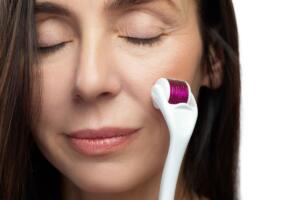
Microneedling stimulates collagen by creating tiny controlled injuries in the skin. Radiofrequency microneedling takes that concept one step further by combining microneedles with heat energy to tighten deeper layers of tissue.
Laser resurfacing treatments can improve wrinkles, sun damage, and skin texture while encouraging new collagen formation. Ultrasound and radiofrequency devices such as Ultherapy and Thermage work beneath the skin’s surface to gradually tighten tissue over several months.
Botox can soften the vertical platysmal bands that become more noticeable with age, while fillers may help improve deeper horizontal neck lines in carefully selected patients.
The Bottom Line
Your neck isn’t aging faster because you’ve done something wrong. It’s simply more vulnerable. Thinner skin, fewer oil glands, years of sun exposure, constant movement, declining estrogen, and shrinking collagen all combine to make it one of the first places to reveal your age.
Fortunately, there are plenty of ways to fight back. Extending your skincare routine below your jawline, wearing sunscreen every day, incorporating a retinoid, keeping the skin well moisturized, and considering treatments like red light therapy or microneedling can all make a meaningful difference over time.
Stop treating your neck like an afterthought. Give it the same attention you’ve been giving your face all these years, and it will reward you for it. Your face and neck should look like they belong to the same person, and with a little consistency, they absolutely can.
Read More:
LOLA Collective: The Secret to the Best Decolletage