
I’ve developed a few habits over the years that I have absolutely no intention of giving up, and my morning coffee is near the top of that list. Somewhere along the way, I started adding collagen and MCT oil to my coffee, and it has become part of my morning routine. It’s an incredibly easy addition, which is probably one reason I’ve stuck with it.
But is MCT oil actually doing anything beneficial, especially for women over 50? Or is it just another wellness trend that promises to solve everything from stubborn belly fat to brain fog? As it turns out, there’s some interesting science behind MCT oil, although not every claim you see on social media deserves a standing ovation.
What Exactly Is MCT Oil?
MCT stands for medium-chain triglycerides, which are a type of dietary fat. Unlike long-chain fats, which make up most of the fat in our diets, MCTs have a shorter chemical structure that allows the body to digest and absorb them differently.
Once absorbed, many MCTs travel directly to the liver, where they can be used for energy or converted into ketones. Ketones are molecules the body can use as an alternative fuel source, including in the brain.
MCTs naturally occur in foods such as coconut oil, palm kernel oil, and certain dairy products. However, the concentrated MCT oil sold in stores generally contains specific medium-chain fats, most commonly caprylic acid (C8) and capric acid (C10).
You may have heard that coconut oil and MCT oil are interchangeable, but they’re not quite the same thing. Coconut oil contains a mixture of fats, including substantial amounts of lauric acid (C12), which behaves differently from shorter MCTs. Concentrated MCT oil is generally a more efficient way to increase ketone production than simply adding coconut oil to your coffee.
1. MCT Oil May Provide a Convenient Source of Energy
One reason MCT oil has become popular is that the body can use these fats relatively quickly for energy. Because of how they’re metabolized, MCTs can be converted into ketones without requiring someone to follow a strict ketogenic diet.
For women juggling careers, families, aging parents, and everything else life throws at us, having a convenient source of dietary energy may sound appealing. And while MCT oil isn’t a stimulant like caffeine, it does provide calories that the body can use for fuel.
That doesn’t necessarily mean you’ll feel an immediate energy boost after drinking it. Research has demonstrated changes in ketone production, but evidence that MCT oil reliably improves everyday energy levels in otherwise healthy adults is much more limited.
Still, if you enjoy adding it to your breakfast or coffee, it’s an easy way to incorporate this type of fat into your diet.
2. There’s Interesting Research on MCT Oil and Brain Health
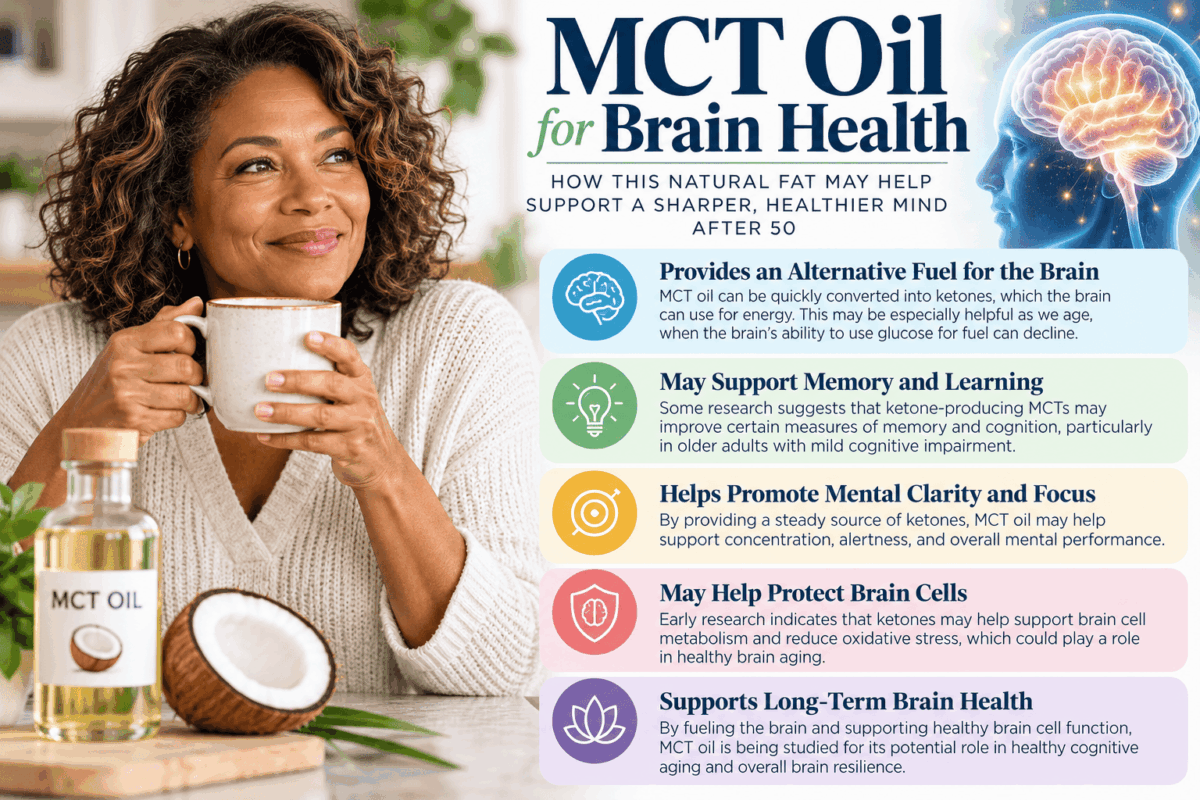
Of all the potential benefits of MCT oil, brain health may be one of the most interesting for women as we age. The brain normally relies heavily on glucose for energy, but it can also use ketones, which is why researchers have investigated whether increasing ketone availability might support cognitive function.
Some studies suggest that ketone-producing MCT supplements may improve certain measures of cognition in people with mild cognitive impairment or Alzheimer’s disease. However, the findings are mixed, the studies are often relatively small, and the benefits have not been consistently demonstrated in healthy older adults.
This is an important distinction because occasionally forgetting why you walked into the kitchen is not the same thing as having a diagnosed cognitive disorder. Although, frankly, I’d appreciate a solution for both.
Researchers are still investigating whether MCT supplementation could have a meaningful role in supporting brain function as we age. For now, the evidence is promising enough to warrant further research, but not strong enough to claim that adding MCT oil to your coffee will prevent dementia, improve memory in everyone, or protect against Alzheimer’s disease.
It’s also worth remembering that regular exercise, adequate sleep, managing cardiovascular risk factors, and staying socially and mentally engaged have much broader evidence supporting their role in healthy aging.
3. Could MCT Oil Help With Weight Management After 50?

If you’ve noticed that maintaining your weight after 50 requires considerably more effort than it did in your 30s, you’re certainly not imagining things. Changes in body composition, physical activity, sleep, and hormonal status can all influence weight management during midlife.
MCT oil has attracted attention because some studies suggest that replacing long-chain fats with MCTs may slightly increase energy expenditure or support modest reductions in body weight and fat mass.
A 2015 systematic review and meta-analysis published in the Journal of the Academy of Nutrition and Dietetics found that diets containing MCTs, compared with long-chain triglycerides, were associated with modest improvements in several measures of body weight and composition.
The important word here is modest. MCT oil is not a magical belly-fat remover, and pouring it into an already calorie-heavy coffee doesn’t automatically lead to weight loss.
A tablespoon of MCT oil contains approximately 115 to 120 calories, depending on the product. Those calories count, even when they’re hiding in your favorite coffee mug.
If you’re interested in MCT oil for weight management, think of it as a possible replacement for some of the fat you already consume rather than an additional ingredient you can use without considering your overall diet.
4. It May Influence Feelings of Fullness
Another reason MCT oil is frequently discussed in weight-management circles is its potential effect on appetite.
Some small studies have found that consuming MCTs instead of certain other fats can influence satiety and, in some circumstances, reduce food intake at a subsequent meal. Researchers have investigated whether these effects involve changes in appetite-related hormones and the way MCTs are metabolized.
However, the findings aren’t consistent enough to promise that MCT oil will keep everyone satisfied until lunch. Responses may vary depending on the amount consumed, what else is eaten, and individual metabolism.
For women who enjoy coffee in the morning but don’t necessarily want a large breakfast, adding a small amount of MCT oil may make the drink feel more substantial. Just remember that oil provides fat and calories, not the protein, fiber, vitamins, and minerals found in a balanced breakfast.
And after 50, getting enough protein is particularly important for maintaining muscle mass. I wouldn’t trade a protein-rich breakfast for a cup of oily coffee and call it a nutritional victory.
5. MCT Oil Can Fit Into a Healthy Eating Routine
One of the appealing things about MCT oil is its versatility. It has a relatively neutral flavor, especially compared with coconut oil, and can be incorporated into several everyday foods without dramatically changing their taste.
I prefer adding mine to coffee, but you can also blend a small amount into smoothies, stir it into yogurt, or use it in homemade salad dressings.
MCT oil isn’t particularly rich in essential fatty acids or the beneficial plant compounds found in foods such as extra-virgin olive oil, nuts, and seeds. It also shouldn’t replace all the other healthy fats in your diet.
The Mediterranean-style eating pattern, which emphasizes olive oil, vegetables, legumes, whole grains, fish, and nuts, has substantially stronger evidence for long-term cardiovascular health than MCT oil supplementation alone.
Think of MCT oil as an optional addition to an otherwise nutritious diet, not a substitute for the foods we already know support healthy aging.
How I Add MCT Oil to My Morning Coffee
Personally, coffee is my preferred way to use MCT oil. It’s convenient, requires almost no extra effort, and doesn’t involve remembering another supplement later in the day.
Some people blend MCT oil into their coffee to create a creamier consistency, similar to the popular butter coffee or bulletproof-style coffee trend. You don’t need to add butter, however, and doing so increases the saturated fat and calorie content even further.
If you’re trying MCT oil for the first time, I would strongly recommend starting with a small amount rather than immediately adding a full tablespoon.
Here’s a sensible way to get started:
- Begin with approximately 1 teaspoon mixed into coffee or food.
- Take it with food if you’re prone to digestive discomfort.
- Increase gradually only if you tolerate it well and have a reason to use more.
- Remember that adding oil also adds calories.
- Use a blender or milk frother if you prefer a smoother, creamier texture.
There is no established daily MCT oil dose that all women over 50 should take. The amount used in research varies considerably, and more isn’t necessarily better.
What to Look for When Buying MCT Oil
Not all MCT oils are formulated the same way, so it helps to understand what you’re buying before grabbing the first bottle with an impressive-looking label.
C8 (caprylic acid): This eight-carbon medium-chain fatty acid is particularly effective at increasing ketone production. Products emphasizing C8 are often marketed toward people interested in nutritional ketosis and cognitive research.
C10 (capric acid): Another medium-chain fatty acid commonly found in MCT supplements. Many everyday MCT oils combine C8 and C10.
C8/C10 blends: These are widely available and may be a practical option for someone who simply wants to incorporate MCT oil into their routine without paying extra for a C8-only formula.
When shopping, look for a clearly labeled fatty-acid composition, a straightforward ingredient list, and preferably independent quality testing. Be skeptical of products claiming to burn belly fat, reverse cognitive decline, or dramatically boost metabolism.
More expensive doesn’t automatically mean more effective, particularly when research hasn’t established that one specific formulation produces better long-term health outcomes for otherwise healthy women.
Are There Any Downsides to Taking MCT Oil?
Absolutely, and this is something I think deserves more attention in articles promoting MCT oil. The most common side effects are digestive. Taking too much, particularly when you’re first starting, can cause nausea, abdominal cramps, bloating, and diarrhea.
In other words, this is not a supplement I’d recommend experimenting with right before a long car ride or an important meeting.
MCT oil also contributes calories and contains saturated fat. Although MCTs are metabolized differently from many other saturated fats, that doesn’t mean they are automatically heart-healthy or suitable for unlimited consumption.
Research on their effects on cholesterol is mixed, and some studies have found increases in blood lipids compared with certain unsaturated fats. If you have elevated LDL cholesterol or a history of cardiovascular disease, it’s worth discussing regular MCT oil use with your healthcare professional.
People with significant liver disease, pancreatic disorders, fat-malabsorption conditions, or other medical issues affecting fat digestion should also seek individualized medical advice before using concentrated MCT supplements.
And if you’re taking medications or following a medically prescribed diet, don’t assume that something is automatically appropriate simply because it’s sold in the grocery store.
Is MCT Oil Worth Taking After 50?
I think MCT oil is interesting, particularly because of the ongoing research into ketone metabolism and brain health. I also appreciate that it’s incredibly easy to incorporate into something I already enjoy every morning.
But I wouldn’t tell every woman over 50 that she needs to start taking it. We have encouraging early findings in certain areas, modest evidence for some weight-related outcomes, and plenty of questions that researchers are still trying to answer.
If you enjoy it, tolerate it well, and can fit it into your overall nutritional needs, MCT oil may be a reasonable addition to your routine. Just don’t expect it to compensate for poor sleep, inadequate protein, or a lack of physical activity.
My morning coffee isn’t going anywhere, and for now, neither is my MCT oil. I simply like knowing what the science actually says about the things I put into my body, rather than trusting every wellness claim that comes across my social media feed.
Because at this stage of life, I’d much rather spend my money on things that might actually be useful. Preferably with enough left over for really good coffee.
Sources and Further Reading
- Mumme K, Stonehouse W. Effects of medium-chain triglycerides on weight loss and body composition: A meta-analysis of randomized controlled trials. Journal of the Academy of Nutrition and Dietetics, 2015.
- Cunnane SC et al. Can ketones compensate for deteriorating brain glucose uptake during aging? Implications for the risk and treatment of Alzheimer’s disease. Annals of the New York Academy of Sciences, 2016.
- Fortier M et al. A ketogenic drink improves brain energy and some measures of cognition in mild cognitive impairment. Alzheimer’s & Dementia, 2021.
- World Health Organization. Saturated Fatty Acid and Trans-Fatty Acid Intake for Adults and Children: WHO Guideline, 2023.