

You are lying in bed when you hear music. At first, you assume someone left a television on. Perhaps the neighbors are playing an old hymn, or a car has stopped outside with its radio turned up. You listen more carefully and realize the same melody seems to be repeating itself.
So you walk through the house looking for the source. Nothing. The television is off. Your phone is silent. Your husband cannot hear a thing, and the neighbor’s house is dark. Yet you can still hear the song as clearly as though a tiny radio station has taken up residence somewhere behind your ears.
It sounds bizarre, but there is a recognized medical phenomenon that can cause exactly this experience. It is called a musical hallucination, and it has been documented particularly in older adults and people with hearing loss. Importantly, hearing phantom music does not automatically mean you are developing dementia or a psychiatric illness. The causes are varied, and hearing impairment is one of the most important possibilities to investigate.
What Is a Musical Hallucination?
A musical hallucination is the perception of music when there is no external music being played. People may hear complete songs, fragments of melodies, singing, instrumental music, choirs, jingles, or music that seems vaguely familiar but cannot quite be identified.
This is different from having a song stuck in your head.
We have all spent an afternoon mentally replaying a chorus we would very much like to evict. With an ordinary “earworm,” you recognize that you are thinking about or imagining the song. A musical hallucination has a more perceptual quality: it can feel as though you are actually hearing music, either inside your head or somewhere in the room.
It is also somewhat different from the tinnitus most of us have heard about. The National Institute on Deafness and Other Communication Disorders describes tinnitus as a phantom sound that is commonly perceived as ringing, buzzing, roaring, whistling, humming, clicking, or hissing. Musical hallucinations involve organized musical material rather than a simple tone or noise, although the two can certainly occur together.
Apparently, once the auditory system decides to improvise, it does not always limit itself to a tasteful little buzz.
This May Be More Connected to Hearing Loss Than You Realize
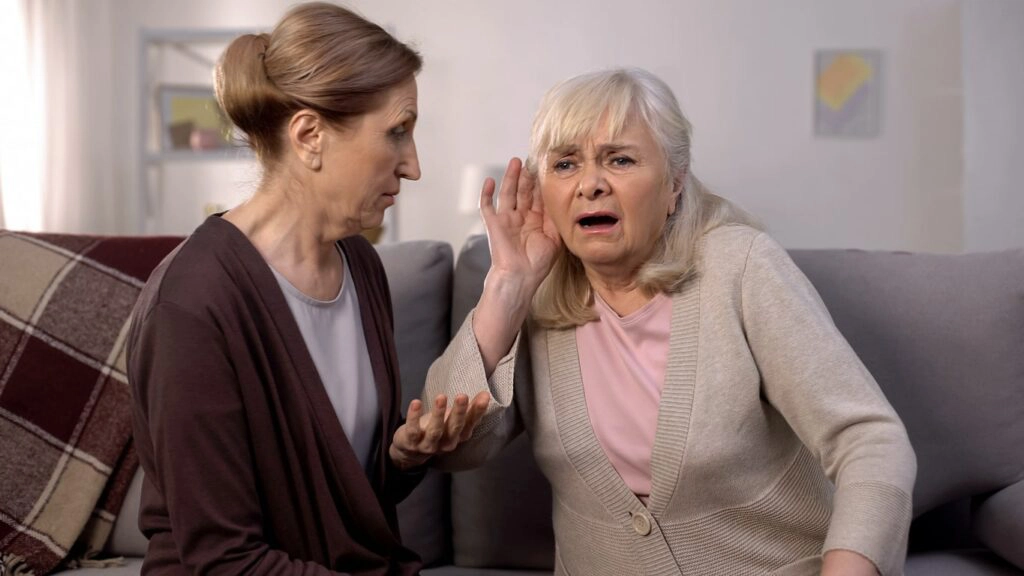
One of the strongest associations researchers have found is hearing impairment.
In a large 2018 study published in Psychological Medicine, researchers interviewed 1,007 adults who had been referred for hearing tests. Among 829 participants with objectively measured hearing impairment, 16.2% reported experiencing some type of auditory hallucination during the previous four weeks, compared with 5.8% of people without hearing impairment. Among the hallucinations reported by the hearing-impaired group, 36% involved music. The likelihood of auditory hallucinations also increased as hearing loss became more severe.
That does not mean everyone with hearing loss will eventually wake up to an imaginary marching band. Most will not. It does mean that when someone begins hearing music that no one else can hear, checking her hearing is a very reasonable place to start.
Your Brain May Be Trying to Fill in Missing Sound
Researchers do not yet have one complete explanation for musical hallucinations, but sensory deprivation is one important theory.
When the ears deliver less auditory information because hearing has declined, the brain does not simply stop processing sound. Researchers think reduced input may allow parts of the brain involved in auditory perception, memory, and musical processing to become spontaneously active, creating the perception of music even though no external sound is present.
There is a similar general concept in tinnitus research. NIDCD notes that when damage in the inner ear changes the signals reaching the auditory system, phantom sound appears to be generated within brain networks involved in processing sound.
The brain is wonderfully resourceful. Occasionally, it may become a little too resourceful and start supplying its own soundtrack.
Hearing Loss Can Sneak Up on You
A woman who develops musical hallucinations may insist that her hearing is perfectly fine. She may sincerely believe that.
Age-related hearing loss usually develops gradually, often in both ears, so it can be difficult to notice. According to the National Institute on Deafness and Other Communication Disorders, approximately 1 in 3 people between ages 65 and 74 has hearing loss, and nearly half of those older than 75 have difficulty hearing.
You may compensate without realizing it. Perhaps you turn on captions because actors “mumble now,” choose the quietest table in a restaurant, lean toward people during conversations, or routinely ask family members to repeat themselves.
None of these proves you have significant hearing loss, but when phantom music joins the picture, a proper audiology evaluation becomes especially useful.
The Music Is Often Surprisingly Familiar
If your imaginary playlist contains songs from Sunday school, your childhood, or music your mother used to play, you are not unusual.
A newly published 2026 Journal of Neurology study examined 80 eligible participants with musical hallucinations. Their average age was 65, and 58.8% were women. More than three-quarters reported hearing familiar music at least some of the time.
Among participants who heard familiar music, more than half reported music exclusively from earlier periods of their lives. Religious music was the most frequently reported category overall, followed by children’s songs and popular music.
This fits with the idea that musical memory may be involved. Your brain may not compose an entirely new jazz album at three in the morning; it may instead reach into a lifetime of stored music and pull out something it already knows.
Sometimes the Music Sounds Like It Is Coming From the Room
One particularly confusing feature is that musical hallucinations do not always seem to originate “inside your head.”
That can understandably lead someone to search the house, unplug electronics, investigate the attic, or become convinced a neighbor is playing music. If this begins happening, ask another person whether she hears the sound before spending an afternoon dismantling your smoke detector.
Once you establish that the music has no external source, write down what you are experiencing rather than repeatedly hunting for the invisible radio. Those details can be surprisingly useful during a medical evaluation.
Does Hearing Music Mean You Have Dementia?
Musical hallucinations can occur in people who remain fully aware that the music is not real. They have been associated with hearing loss, neurological conditions, epilepsy, certain medications or substances, psychiatric illnesses, and combinations of several factors. In the 2026 cohort, hearing loss and psychiatric conditions were each present in half of participants, while structural neurological changes were identified in 28%; overlapping conditions were common.
Only one participant in that cohort’s structural-neurological group had dementia documented, illustrating why musical hallucinations should not automatically be treated as evidence of dementia. At the same time, the range of possible causes means a new symptom still deserves medical attention rather than reassurance based on an article alone.
Your goal is not to prove that the music is harmless. It is to find out why your auditory system has decided to become Spotify.
Keep a “Phantom Playlist” for a Week
Before your appointment, create a short symptom diary. Record what you hear, approximately what time it begins, how long it lasts, whether it seems to come from one side or both, and whether you recognize the music. Note whether it becomes more obvious at bedtime or in a quiet house, and whether television, conversation, or actual music changes it.
Also document accompanying symptoms such as ringing in the ears, hearing difficulty, dizziness, headaches, memory changes, unusual smells or visual experiences, episodes of lost awareness, or new balance problems.
Finally, write down any recent medication changes. Musical hallucinations have been reported in association with several different medical and neurological circumstances, including medication or substance effects, so the timing may help your clinician narrow the possibilities.
Bring your actual medication bottles or an updated pharmacy list rather than trying to recreate everything from memory in the examination room.
Start With a Hearing Test
For many women, an audiologist should be part of the evaluation. Pure-tone audiometry can determine whether hearing loss is present and whether one ear is significantly different from the other. Depending on your history, a primary-care clinician or ENT may also examine your ears for wax, infection, or other problems and decide whether additional neurological or imaging tests are appropriate.
Do not assume you can accurately judge your hearing by whether you can hear the television. Hearing loss can affect particular frequencies and speech understanding long before the world becomes noticeably quiet.
Would Hearing Aids Make the Music Stop?

Sometimes addressing hearing loss may improve auditory hallucinations, but this is not guaranteed.
Research on treatment remains limited, and there are currently no universally accepted treatment guidelines specifically for musical hallucinations. A 2024 case series and literature review emphasized that treatment is generally directed toward whatever underlying factor appears to be contributing—such as improving hearing, reviewing medications, or treating a neurological or psychiatric disorder when one is present.
If testing shows that you have hearing loss, your audiologist may recommend hearing aids based on the severity and type of impairment. Hearing aids amplify external sound and are well-established tools for age-related hearing loss, but you should buy them to address a documented hearing problem rather than because an advertisement promises to silence phantom music.
Real Sound May Temporarily Turn Down the Imaginary Music
In the 2026 study, 34 of the 80 participants tried listening to external sound from a radio, television, or another device. For 18 people, the musical hallucination temporarily stopped or faded into the background. Other participants found that conversation, distraction, humming, or singing along made the experience easier to tolerate, although none of these strategies produced a lasting effect in the study.
A small bedside radio, smart speaker, fan, or tabletop sound machine can therefore be a reasonable comfort tool if the music becomes intrusive in quiet rooms. Choose a pleasant, low-volume sound rather than blasting the television loudly enough to create an actual hearing problem on top of the imaginary one.
If the symptom is strongest when you are trying to sleep, soft background audio may also give your attention something neutral to focus on. This is management, not treatment. The fact that a radio masks the music does not tell you why the hallucination began.
When the Music Needs Faster Medical Attention
A gradual, isolated musical hallucination with no other symptoms is generally a reason to make a medical appointment rather than panic. Certain combinations of symptoms, however, deserve much faster attention.
If the music begins at the same time as sudden hearing loss, particularly in one ear, seek immediate medical care. The NIDCD considers sudden sensorineural hearing loss a medical emergency because delaying diagnosis and treatment can reduce the chance of recovering hearing.
Call 911 if a new auditory experience occurs with sudden weakness or numbness on one side, difficulty speaking or understanding speech, sudden vision problems, severe unexplained headache, or abrupt loss of balance or coordination. Those are recognized warning signs of stroke, according to the CDC’s current stroke guidance.
New confusion, loss of consciousness, seizure-like episodes, or hallucinations in several senses also deserve prompt medical assessment because musical hallucinations can occur in neurological conditions as well as hearing disorders.
And if the music is causing severe distress, preventing sleep for days, or making you feel unsafe, tell someone and seek help promptly.
Please Tell Your Doctor What You Are Actually Hearing
Women may hesitate to describe musical hallucinations because the phrase “I hear music no one else hears” sounds like the opening sentence of a conversation they very much do not want to have.
Researchers have specifically noted that some people delay seeking care because they fear being labeled psychotic or developing dementia. That hesitation can prevent physicians from identifying hearing impairment or another treatable contributor.
Use direct language: “I am hearing recognizable music when nothing is playing, and other people cannot hear it.” Then describe whether you know the music is not real. That information matters.
There is an enormous difference between experiencing a strange perceptual symptom and losing your ability to evaluate reality, and your clinician needs the complete story to sort through the possibilities.
The Bottom Line
If you begin hearing hymns, old pop songs, instrumental music, or another melody that no one else can hear, do not automatically assume that your neighbor has acquired an unusually persistent stereo system.
You may be experiencing musical hallucinations, a documented auditory phenomenon that has a particularly important association with hearing loss and older age. A large 2018 hearing-clinic study found auditory hallucinations substantially more often in people with hearing impairment, while the latest 2026 research confirms that musical hallucinations can arise from several different—and sometimes overlapping—causes.
Start with a medical conversation and a proper hearing evaluation. Keep notes about what you hear, review your medications with your clinician, and mention any neurological, hearing, or cognitive symptoms that occur alongside the music.
You just should not have to spend another evening wandering through the house trying to figure out who keeps playing a song that apparently exists only for you.