There comes a point when your body starts sending little reminders that it’s no longer 25. You stand up after gardening and sound like a bowl of Rice Krispies. You throw your back out sneezing. Your knees suddenly have opinions about the weather. Aging is certainly creative!
One thing many women don’t think about until they’re told they have osteopenia or osteoporosis is bone health. The frustrating part is that bone loss happens quietly. Your bones aren’t texting you updates saying, “Hey, we’re getting a little fragile over here.” They simply become weaker over time, often due to hormonal changes, until a minor fall turns into a major problem.
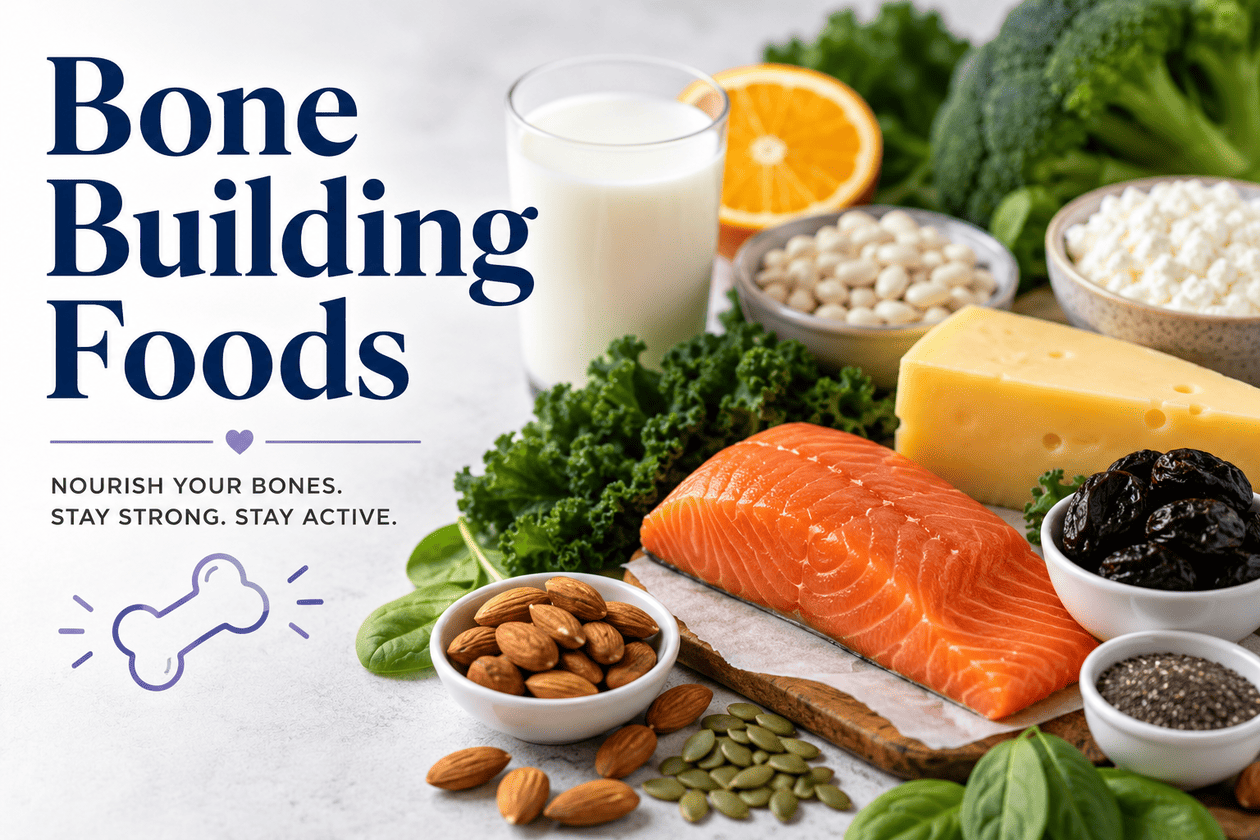
The good news? While no food can magically rebuild decades of bone loss overnight (wouldn’t that be nice?), the right nutrition can help maintain bone density, slow bone loss, and give your skeleton the building blocks it needs to stay strong. And unlike some wellness trends that involve expensive powders harvested under a full moon, these are actual foods you can find at your grocery store.
Why Bone Health Changes After 50
Women lose bone faster after menopause because estrogen plays a major role in protecting bone density. As estrogen levels decline, bone breakdown begins to outpace bone rebuilding.
In fact, women can lose up to 20% of their bone density during the five to seven years after menopause. That’s why osteoporosis affects women far more often than men.
The goal isn’t simply to avoid osteoporosis. Strong bones help you stay active, maintain balance, recover from injuries more easily, and continue doing everything you love, whether that’s traveling, chasing grandchildren, hiking national parks, or carrying far too many shopping bags because making two trips is apparently beneath us.
Calcium Is Still the MVP
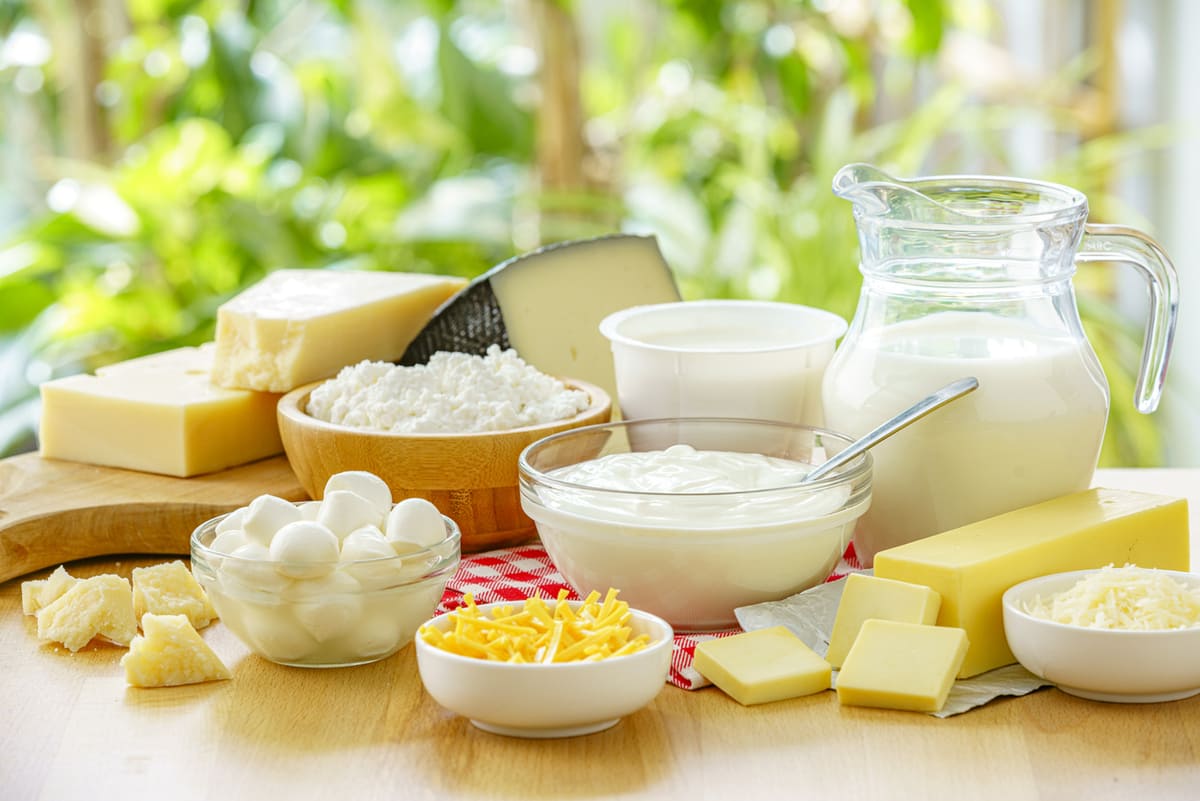
Calcium is the primary mineral that gives bones their strength. Adults over 50 generally need around 1,200 milligrams each day, and many women don’t get enough.
Some of the best calcium-rich foods include:
- Plain Greek yogurt
- Cottage cheese
- Milk
- Cheese (finally, some good news)
- Sardines with bones
- Canned salmon with bones
- Calcium-fortified plant milks
- Calcium-set tofu
- Fortified orange juice
While supplements have their place, food is usually the better option because it provides protein, vitamins, and other nutrients that work together.
Don’t Forget Vitamin D
Here’s the catch: calcium doesn’t do much if your body can’t absorb it. That’s where vitamin D comes in. Think of it as the key that unlocks calcium absorption. Many women over 50 have low vitamin D levels because our skin becomes less efficient at making it from sunlight as we age.
Good food sources include:
- Salmon
- Trout
- Tuna
- Egg yolks
- Fortified milk
- Fortified cereals
- UV-exposed mushrooms
Unfortunately, it’s difficult to meet vitamin D needs through food alone. Your doctor may recommend a supplement after checking your blood levels.
Protein Isn’t Just for Building Muscle
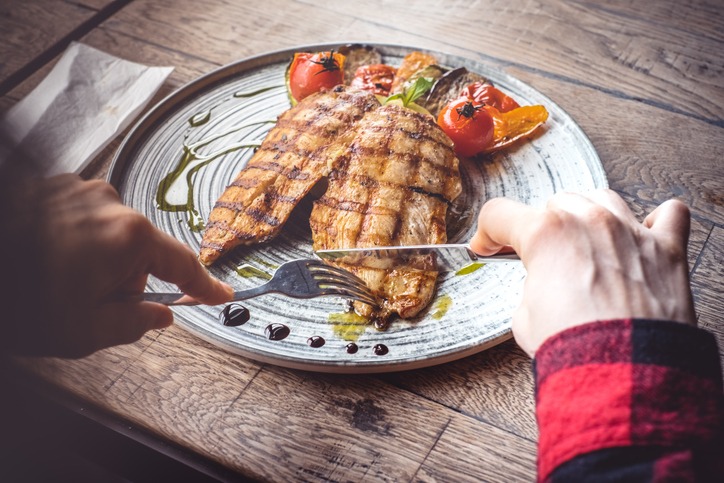
For years, protein got all the attention for muscle health, but your bones need it, too. Bones aren’t simply made of minerals. They’re built on a collagen framework made from protein. Without enough protein, your body can’t properly maintain bone tissue. Aim to include protein with every meal.
Excellent choices include:
- Chicken
- Turkey
- Fish
- Eggs
- Greek yogurt
- Beans
- Lentils
- Edamame
- Lean beef
- Cottage cheese
Bonus: Protein also helps preserve muscle, which improves balance and reduces your risk of falling in the first place.
Magnesium: The Quiet Achiever
Magnesium doesn’t get nearly enough attention. It helps activate vitamin D, supports bone formation, and plays a role in hundreds of chemical reactions throughout the body.
Foods rich in magnesium include:
- Pumpkin seeds
- Almonds
- Cashews
- Spinach
- Swiss chard
- Black beans
- Avocados
- Dark chocolate
See? Healthy eating doesn’t have to be all kale and sadness.
Vitamin K Helps Put Calcium Where It Belongs
Vitamin K helps activate proteins that bind calcium into your bones. Leafy greens remain one of the best sources.
Fill your plate with:
- Kale
- Spinach
- Collard greens
- Broccoli
- Brussels sprouts
- Cabbage
If you’re taking blood-thinning medication like warfarin, don’t suddenly load up on vitamin K-rich foods without talking with your physician, since vitamin K affects how these medications work.
Potassium Helps Protect Bones
A diet rich in fruits and vegetables helps reduce the acid load on the body, which may help preserve calcium in bones.
Some excellent potassium-rich choices include:
- Sweet potatoes
- White potatoes
- Bananas
- Oranges
- Tomatoes
- Beans
- Yogurt
- Avocados
Another reason to stop fearing carbs entirely.
Omega-3 Fats May Help, Too
Research suggests omega-3 fatty acids may help reduce inflammation that contributes to bone loss.
You’ll find them in:
- Salmon
- Mackerel
- Sardines
- Walnuts
- Chia seeds
- Flaxseed
These healthy fats are also wonderful for heart and brain health, making them one of those rare nutritional overachievers.
Prunes Deserve a Standing Ovation
This may be the biggest surprise on the list. Several studies have found that eating five to six prunes daily may help slow bone loss in postmenopausal women.
Researchers believe the combination of antioxidants, vitamin K, boron, and fiber may help preserve bone density. No, you don’t have to become your grandmother and keep them in your purse. Just toss a few into oatmeal, yogurt, or a smoothie.
Foods That Can Work Against Your Bones
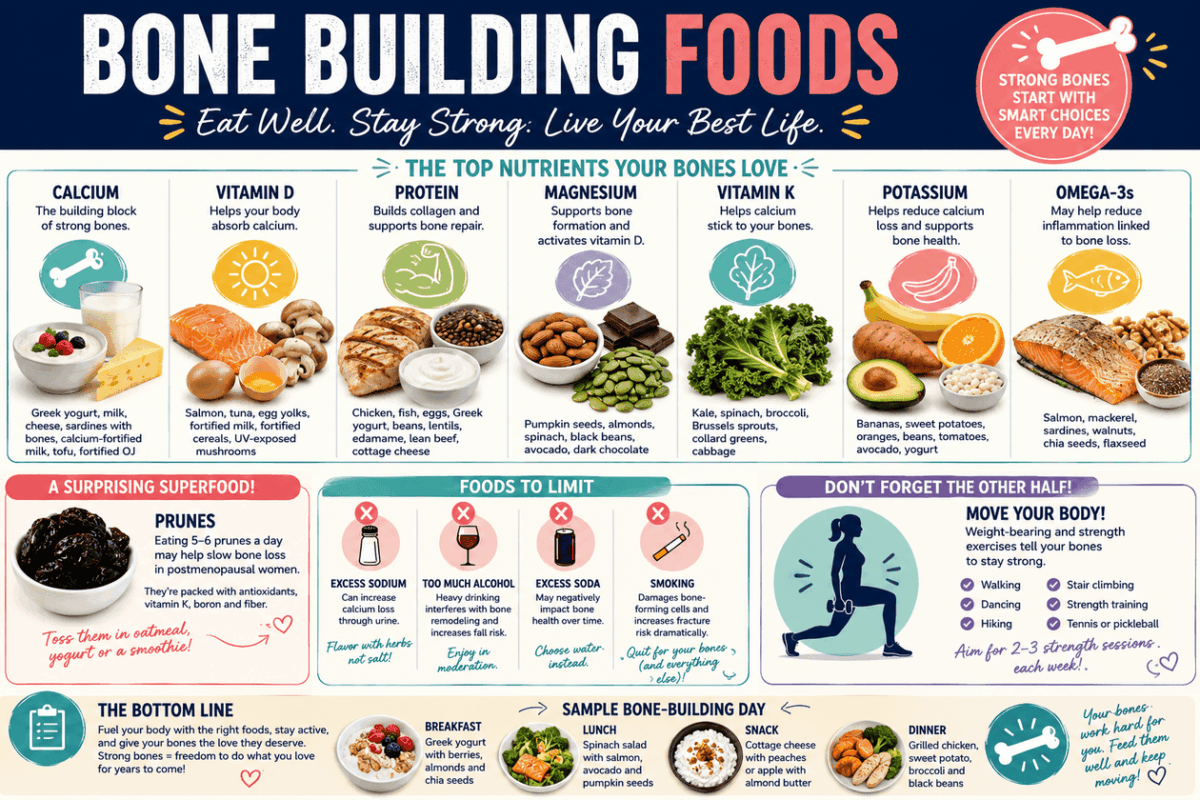
Building strong bones isn’t only about what you add. It’s also about what you don’t overdo. Too much of these can work against bone health:
Excess Sodium
Very high sodium intake can increase calcium loss through urine. Try flavoring foods with herbs, garlic, citrus, and spices instead of relying on the salt shaker.
Too Much Alcohol
An occasional glass of wine isn’t the problem. Heavy alcohol use, however, interferes with bone remodeling and increases fall risk.
Excessive Soft Drinks
Some research suggests regularly replacing milk or nutrient-rich beverages with sugary soft drinks may negatively affect bone health. Hydration matters, but water still wins.
Smoking
Smoking damages bone-forming cells and dramatically increases fracture risk. If you’ve been looking for another reason to quit, here’s one more.
Bone Building Meal Ideas
Sometimes knowing what to eat is easier when you can picture an actual meal.
Breakfast: Greek yogurt topped with berries, chopped almonds, chia seeds, and a few sliced prunes.
Lunch: Spinach salad with grilled salmon, avocado, tomatoes, pumpkin seeds, and a citrus vinaigrette.
Snack: Cottage cheese with fresh peaches or an apple with almond butter.
Dinner: Roasted chicken, baked sweet potato, steamed broccoli, and a side of black beans.
These meals check multiple bone-building boxes without feeling like “health food.”
Don’t Forget the Other Half of the Equation
Here’s where many people get tripped up. You can’t eat your way to stronger bones if you never challenge them.
Weight-bearing exercise tells your body that your bones need to stay strong. Walking, dancing, tennis, hiking, climbing stairs, pickleball, and strength training all stimulate bone remodeling.
Resistance training is especially important because stronger muscles pull on bones, encouraging them to stay dense. Even two or three strength sessions each week can make a meaningful difference.
Should You Take a Bone Supplement?
Not necessarily. If you’re eating a balanced diet, you may already be getting much of what you need. Taking large doses of calcium without medical guidance isn’t always recommended and may not provide additional benefit.
Instead, ask your healthcare provider whether you should have your vitamin D level checked and whether you need a bone density (DEXA) scan, especially if you’re over 65 or have additional risk factors like a family history of osteoporosis, early menopause, smoking, or previous fractures.
The Bottom Line
Your bones are quietly supporting you every single day. They deserve a little attention before they start filing complaints.
Focus on eating plenty of calcium-rich foods, getting enough protein, adding leafy greens, nuts, seeds, fatty fish, beans, fruits, and vegetables to your meals, and don’t underestimate the power of a few humble prunes. Pair those foods with regular strength training and weight-bearing exercise, and you’ll be giving your skeleton exactly what it needs to stay strong for years to come.