
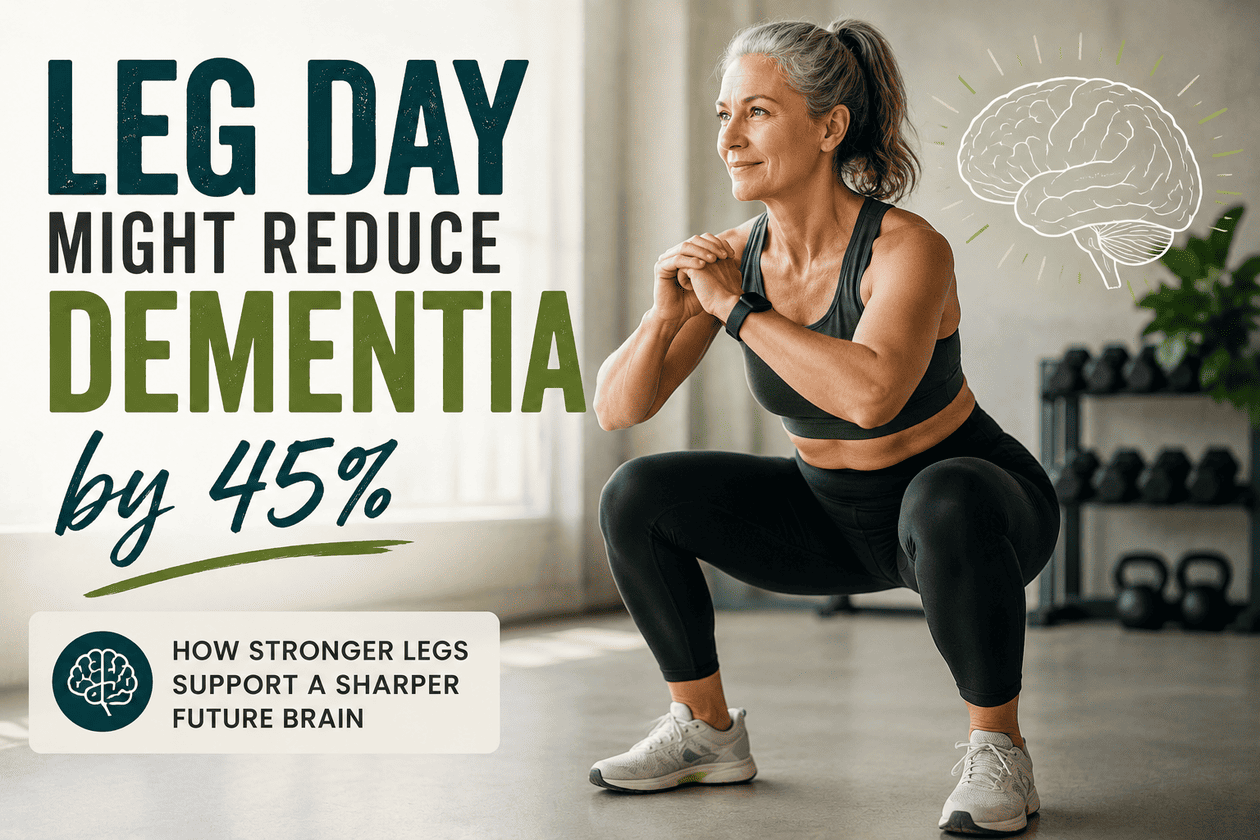
There are few universally accepted truths in life. Taxes are annoying. Reading restaurant menus now requires flashlight-level lighting. And everyone skips leg day eventually. But science may have just handed us the most compelling reason yet to stop ignoring our lower bodies: stronger legs may dramatically reduce your risk of dementia.
Yes. Your glutes are entering the chat. Several studies over the past decade have found a fascinating connection between lower-body strength and brain health, with some research suggesting that stronger leg strength is associated with up to a 45% lower risk of cognitive decline.
Which means your squat rack may officially be doing more for your future than your multivitamin.
How Are Legs Connected to the Brain?
It sounds ridiculous at first. You’re doing lunges. Your quadriceps are screaming. How exactly is this helping your memory?
Turns out, quite a bit. Researchers have discovered that leg strength is one of the strongest physical predictors of healthy aging and cognitive function. One twin study published in Gerontology followed female twins over ten years and found that the twin with greater leg strength experienced less cognitive decline over time.
Even after accounting for genetics and lifestyle. That’s right. Your thighs may know things.

Why Lower-Body Strength Matters So Much
Your legs contain some of the largest muscles in the body. When you use them regularly like walking, squatting, climbing stairs, and strength-training, there are several important things happening:
Blood Flow Improves
Exercise increases circulation, including blood flow to the brain. Better circulation means more oxygen and nutrients reaching the brain tissue. Your brain enjoys oxygen almost as much as your dermatologist enjoys suggesting retinol.
Inflammation Decreases
Chronic inflammation is linked to cognitive decline and dementia. Regular strength training helps reduce inflammatory markers throughout the body.
The Brain Gets Chemical Support
Exercise stimulates the release of compounds like BDNF (brain-derived neurotrophic factor), often called “fertilizer for the brain.” That sounds fake, but it’s real. BDNF helps support the growth and protection of brain cells, especially in areas involved with learning and memory.
Balance and Mobility Stay Stronger
Lower-body strength helps preserve mobility, balance, and independence as we age, all of which correlate with better long-term cognitive health.
Because once you stop moving consistently, other systems tend to decline too. The body really loves an all-or-nothing approach after 50.
About That “45%” Statistic
Before everyone starts power squatting in Costco parking lots, a quick clarification. The “45% lower risk” figure comes from observational research showing strong associations between muscle strength, physical activity, and reduced dementia risk. It does not mean leg day is a magical dementia vaccine.
Dementia is complex and influenced by:
- Genetics
- Cardiovascular health
- Sleep
- Nutrition
- Stress
- Social connection
- Hormones
- Overall physical activity
But exercise, particularly strength training and walking ha consistently shown up as one of the most protective lifestyle habits for brain health. And importantly, the benefits will appear at any age. Meaning it is not too late because you currently make a small sound every time you stand up from the couch.
You Don’t Need to Become a Fitness Influencer
The good news is that brain-supportive leg work does not require:
- A neon matching workout set
- Jump squats
- Tire flipping
- Posting “Rise and grind” at 5 a.m.
- Calling yourself a “biohacker”
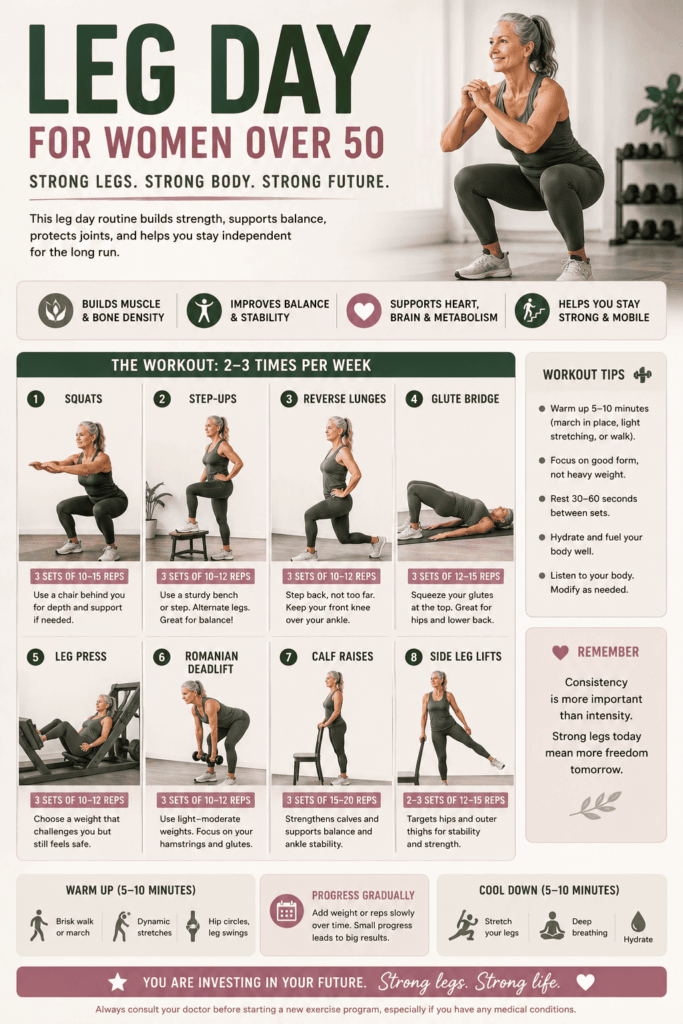
Simple lower-body strength work counts:
- Walking hills
- Bodyweight squats
- Resistance bands
- Step-ups
- Lunges
- Leg presses
- Stair climbing
- Dancing
- Gardening
- Carrying heavy grocery bags with determination
Walking Alone Helps More Than Most People Realize
One of the most underrated forms of leg training is simply walking consistently. Walking improves circulation, coordination, cardiovascular health, insulin sensitivity, mood, and cognitive resilience. And unlike burpees, walking does not make you question your life choices halfway through.
Research has repeatedly linked regular walking with lower dementia risk, especially brisk walking combined with strength work a few times per week.
Take your walking to the next level by rucking
Why This Matters Especially for Women
Women are disproportionately affected by Alzheimer’s disease and dementia, particularly after menopause. Hormonal shifts, muscle loss, sleep disruption, and metabolic changes all play a role. After age 40, women naturally begin losing muscle mass unless they actively work to maintain it. Lower-body muscles are especially important because they support stability, metabolism, mobility, and overall resilience.
Translation: Maintaining strength is no longer about fitting into skinny jeans from 2007. It’s about protecting your future brain. And, also your knees, but mostly your brain.
The Bottom Line
Leg day may never become emotionally enjoyable. But growing evidence suggests that maintaining lower-body strength could significantly reduce your risk of cognitive decline and dementia as you age.
So the next time you’re debating whether to skip squats, remember: you are not just training your legs. You are potentially investing in future-you remembering where she left her car keys. Which, at this point, feels like a worthy cause. I lose my keys everyday.
Read Next: