

Sending a child off to college is one of life’s proudest milestones. For many families, however, paying for that education requires more than savings and scholarships. The cost of higher education has become farther and father out of reach in recent years, and parents are often asked to co-sign student loans. Most parents would do anything to support their child’s future, but first, you have to understand the hidden cost of co-signing student loans to make the right decision for you and your child.
While co-signing may seem like a simple way to support your child’s future, it can create financial obligations that last for decades. Remember, a loan can impact your credit and even your retirement savings in the long term. Before signing on the dotted line, it’s important to understand exactly what you’re agreeing to—and how it could affect your own financial future.
Why Parents Are Asked to Co-Sign Student Loans
The average cost of attendance for a 4-year institution has skyrocketed over the course of the past century. Right now, that amounts to about $108,000 for four years at a public in-state school and up to $226,000 for a private non-profit school. That cost includes tuition, fees, books, supplies, and room and board.
The simple fact of the matter is that most students, and their families, simply don’t have that kind of money to pay up front. And these days it’s easier than ever to to click a few buttons on your student’s online portal, stick your digital signature on a few forms, and receive a student loan.
Federal student loans are typically issued directly to students and generally do not require a co-signer. However, there are limits on how much undergraduate students can borrow each year through federal loan programs. Once those limits are reached, families often turn to private lenders to cover the remaining costs.
Private lenders evaluate borrowers based on income, credit history, and debt-to-income ratio. Since most college students have little or no credit history, they often need a parent or another financially established adult to co-sign the loan.
Parents may also borrow directly through the federal Parent PLUS Loan program. This is different from co-signing because the parent becomes the primary borrower rather than guaranteeing someone else’s loan.
The Most Common Types of Student Loans Parents Sign
Private Student Loans
Private student loans are offered by banks, credit unions, and online lenders. In most cases, a student cannot qualify independently, making a parent co-signer almost a necessity.
By co-signing, the parent promises to repay the loan if the student cannot or does not make payments.
Parent PLUS Loans
Parent PLUS Loans are federal loans borrowed solely in the parent’s name. Unlike a co-signed private loan, the parent is entirely responsible for repayment from the beginning.
Although these loans offer federal protections such as income-driven repayment options in certain circumstances, they still represent a significant financial obligation.
The Hidden Cost of Co-Signing Student Loans

You’re Responsible for the Entire Debt
A common misconception is that co-signing simply provides a financial “backup.” In reality, co-signers are legally responsible for the full loan balance.
If the student misses payments, becomes disabled, loses a job, or simply stops paying, the lender can pursue the co-signer for the entire remaining balance.
Your Credit Is on the Line
Every payment, or missed payment, appears on the co-signer’s credit report. Late payments can lower your credit score, making it more difficult or expensive to:
- Qualify for a mortgage
- Refinance your home
- Purchase a vehicle
- Obtain business financing
- Secure favorable interest rates
Even if your child intends to make every payment, unexpected financial hardships can quickly become your credit problem.
It Can Increase Your Debt-to-Income Ratio
Student loans count as debt when lenders evaluate your future borrowing. This can limit your financial flexibility for years.
A large co-signed loan may reduce your ability to qualify for:
- Home loans
- Home equity lines of credit
- Investment property financing
- Personal loans
Retirement Savings May Suffer
Many parents co-sign loans during their highest earning years. This is also precisely when you should be maximizing your retirement contributions.
If loan payments become necessary, parents may find themselves:
- Reducing retirement contributions
- Delaying retirement
- Withdrawing retirement savings early
- Working longer than planned
Unlike students, parents have fewer years remaining to rebuild retirement savings.
Read More: How to Pay for College Without Ruining Your Retirement
Co-Signing Can Last Longer Than You Expect
Many borrowers assume they can be removed from a loan after graduation, but unfortunately, that is often not the case.
While some private lenders advertise co-signer release programs, they often require the student borrower to have:
- Multiple years of consecutive on-time payments
- Strong income
- Excellent credit
- Formal approval by the lender
Many borrowers never qualify, leaving their parents responsible for the loan for 10, 15, or even 20 years.
Family Relationships Can Become Strained
Money is one of the leading causes of family conflict. If financial hardship arises, parents may have to face difficult conversations about missed payments, budgeting decisions, responsibility for repayment, and future financial support. Even close families experience tension when large debts are involved.
What Happens If Your Child Can’t Repay the Loan?
If payments stop, lenders generally do not wait long before contacting the co-signer. Potential consequences include:
- Collection efforts
- Damage to both borrowers’ credit scores
- Lawsuits in some cases
- Wage garnishment where permitted by law and applicable court procedures
- Additional interest and collection costs
Many parents discover they have little practical ability to avoid repayment once the loan enters default.
Alternatives to Co-Signing Student Loans
Before committing to a private loan, families should consider other options that may reduce borrowing or eliminate the need for a co-signer.
Maximize Federal Student Aid
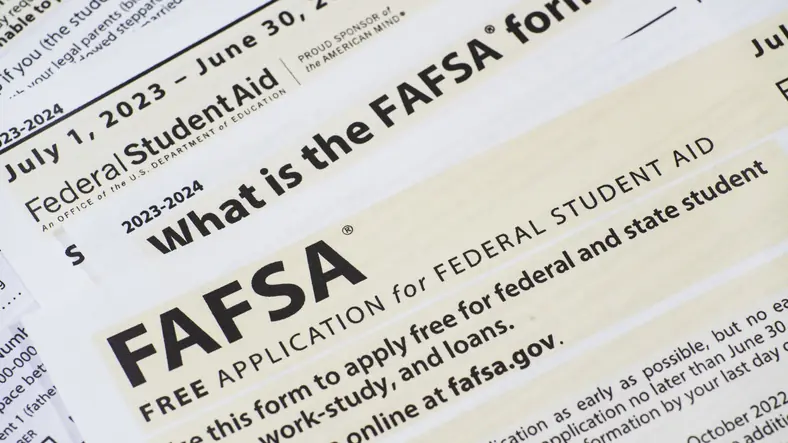
Always make sure your child fills out the Free Application for Federal Student Aid, or FAFSA. The form must be filled out for every year your child wishes to attend school. This opens up the opportunity for your child to receive federal grants and scholarships that don’t require repayment.
After filling out the FAFSA, your student may also be offered federal student loans that are more flexible and forgiving that private loans. Federal student loans typically offer:
- Fixed interest rates
- Flexible repayment plans
- Income-driven repayment options
- Deferment and forbearance protections
- Potential forgiveness programs for eligible borrowers
Students should exhaust federal borrowing options before considering private loans.
Apply for Scholarships and Grants
Unlike loans, scholarships and grants generally do not require repayment. Even smaller awards can significantly reduce borrowing over four years.
Many families overlook local scholarships offered by:
- Community organizations
- Employers
- Foundations
- Professional associations
Consider a More Affordable School — Some Are Free!
Graduating with less debt is often more rewarding in the long-run than attending your dream school.
Choosing an in-state public university or community college can dramatically lower total education costs. You can save even more money if the school is close enough that your child can live at home throughout their studies. Many people attend a local or state school for just the first two years, saving a substantial chunk of change. If the student maintains good grades, they may be eligible to transfer and even earn some scholarships.
Many schools offer merit-based financial aid. That means the better your grades, the more assistance you get.
Recently, more and more schools are offering substantial aid or even free tuition based on household income. Yes, free school, even from top private universities. If your student is lucky enough to get into schools like Yale, Harvard, Stanford, Princeton, or the Massachusetts Institute of Technology, they’re offering free tuition for students below a certain household income threshold. For some, the threshold is as high as $200,000. For others, the cap is around $100,000.
Some state schools are offering this as well. The University of Texas System covers tuition for qualifying Texas residents with an adjusted gross income up to $100,000. Tuition support (but not full coverage) is available for incomes up to $125,000. The University of California System will cover tuition and fees for California residents whose families earn less than $80,000 a year.
Here is a complete list of schools that offer free tuition for certain students. Keep in mind, each has different requirements and considerations. See if any of these schools are close to you and what the requirements are.
Find a Niche Area of Study

The rat race doesn’t end when your student gets into college. Scholarships and opportunities to do work and research are also highly competitive. If a degree program is incredibly popular, it will be harder for your student to be considered for scholarships, work, and research opportunities that actually pay.
If your child has a niche interest or is considering a less popular degree program, that doesn’t necessarily mean that their degree will be useless. It could actually be the opposite! If your child is able to get competitive work opportunities or conduct research, they can make money while in school. They will also be better positioned to get a job after graduation, helping them pay off student loans.
As always, make sure you and your child do the proper research on any school or degree program they are interested in. There could be opportunities you’re overlooking.
Pay As You Go
Part-time employment, summer jobs, work studies, and research opportunities can help reduce the amount that must be borrowed and help your student pay off loans in time.
Borrow Only What’s Necessary
Students are often approved for more than they truly need. Creating a realistic budget for tuition, housing, books, transportation, and living expenses can help families avoid unnecessary debt.
Explore Employer Tuition Assistance
Many employers now offer tuition reimbursement or educational assistance benefits. Students who work while attending school, or delay enrollment until they qualify for these programs, may be able to significantly reduce borrowing.
Questions Every Parent Should Ask Before Co-Signing Student Loans
Before co-signing student loans, consider asking:
- Can my child realistically afford these payments after graduation?
- How would this loan affect my retirement plans?
- Could I comfortably make these payments if necessary?
- Is there a less expensive education option?
- Are scholarships, grants, or other forms of financial aid still available?
- Does the lender offer a realistic path to co-signer release?
Honest answers can help families make more informed financial decisions. While helping a child pursue higher education is an admirable goal, parents should carefully weigh the risks before taking on legal responsibility for thousands of dollars in debt. Don’t just take my advice. Speak with financial advisors at your child’s high school and prospective universities, and don’t forget to loop in your personal finance advisor if you have one.
Read More:
How to Pay for College Without Ruining Your Retirement