Somewhere in your fifties, skincare stops behaving the way it used to. Products that worked at 45 seem to do less. The standard advice to drink more water and get more sleep stops producing a visible difference.
That is not your imagination, and it is not simply aging. During and after menopause, skin goes through two specific, measurable changes. Only one of them gets talked about.
What Actually Changes in Skin After 50
The first change is the familiar one: estrogen falls. Collagen and elastin break down faster than skin can replace them. Cell turnover slows. Circulation to the skin decreases, so it receives less oxygen and fewer nutrients. The visible result is skin that looks thinner, drier, and duller, with sagging and lines that become harder to soften.
A study published in the BMJ in 1983 found that women lose collagen at a rate of 1 to 2% per year after menopause, with as much as 30% of it lost in the first five years. A 2025 review confirmed that this decline tracks with menopausal status rather than age alone, and that it arrives alongside reduced elasticity, thinner skin, and a weakened moisture barrier.
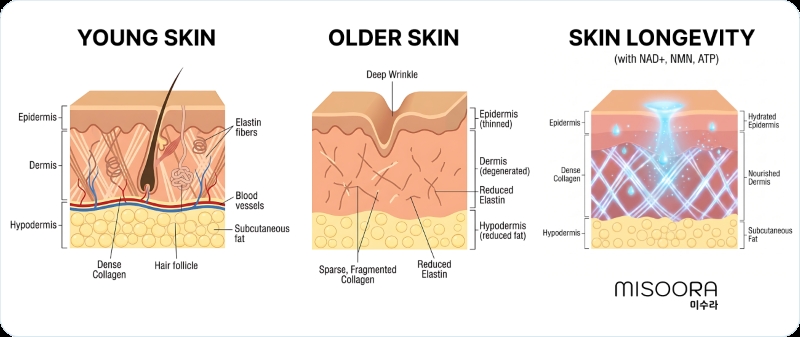
The second change is quieter, and it is the one most conversations skip. Skin cells run on a molecule called NAD+ (nicotinamide adenine dinucleotide). It powers energy production and DNA repair in every cell you have, and research in human tissue shows that NAD+ levels drop substantially with age.
Less cellular energy means slower repair and slower renewal. That is what produces the particular quality women tend to describe as tired rather than wrinkled — and it is the part a richer moisturizer cannot correct, because the problem is not sitting on the surface.
Why can’t you just put NAD+ on your face?
Because the molecule is too large to get in. Your skin’s outer barrier exists to keep large molecules out. Compounds above roughly 500 Daltons generally cannot penetrate it — a threshold established in dermatological research and known as the 500 Dalton Rule. NAD+ weighs about 663 Daltons. It does not clear the bar.
NMN (nicotinamide mononucleotide), the precursor skin converts into NAD+, weighs about 334 Daltons and does.
This is the part most NAD+ skincare leaves out. A serum can list the ingredient on the front of the bottle and still deliver very little of it into the cells that need it. A formula that holds up has to include precursors small enough to absorb, not just the headline molecule.
How do you judge an NAD+ serum?
| What to Check | Why it Matters | What Good Looks Like |
| Stated concentration | “Contains NAD+” says nothing about dose | A number on the label, not a proprietary blend |
| Molecular weight | NAD+ is ~663 Da; skin’s limit is ~500 Da | Smaller precursors such as NMN, ~334 Da |
| Independent verification | Self-certification is NOT verification | MoCRA registration, FDA listing, third-party testing |
| Built for reactive skin | Postmenopausal skin recovers slowly | Fragrance-free, ethanol-free, no aggressive acids |
| Honest timeline | Cellular change is not same-day | Results described in weeks, not hours |
Most products on the shelf fail the first two. Oftentimes, labels will not tell you how much NAD+ is actually in the bottle. The amount sits inside a proprietary blend, which means you are buying the name of an ingredient rather than a dose of it. It also means there is no way to compare two products that both say NAD+ on the front.
Editor’s Pick: MISOORA NAD+ Peptide Boosting Serum, $45
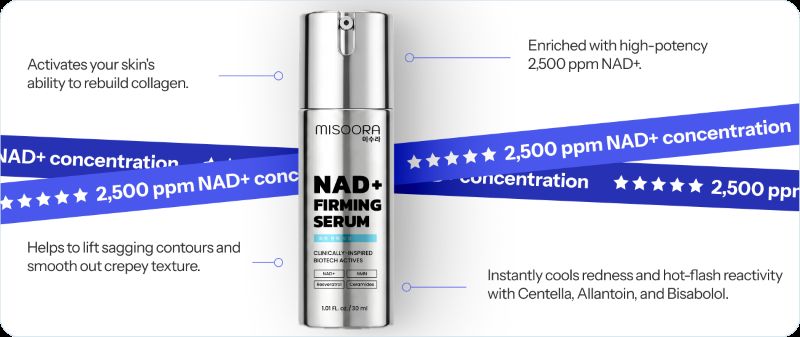
MISOORA, a K-beauty brand built around skin longevity prints active concentrations on the bottle. The brand’s other commitments follow the same logic, with MoCRA registration, FDA listing, and third-party testing. Their formulas are built to nourish rather than aggressively exfoliate. This NAD+ serum is ethanol-free, fragrance-free, and appropriate for skin that has become more reactive than it used to be.
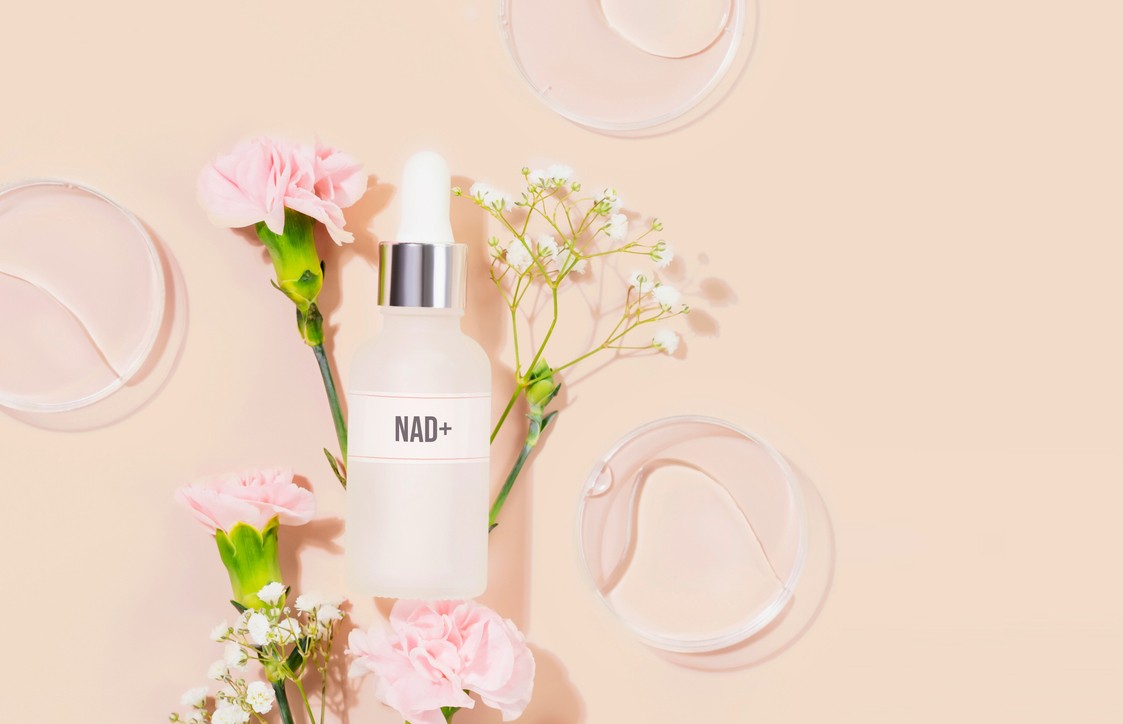
The MISOORA NAD+ Peptide Boosting Serum is a firming serum built around the cellular energy pathway rather than around a single fashionable ingredient. It discloses 2,500 ppm of NAD+ alongside NMN, ATP, resveratrol, and ergothioneine.
You can use coupon code PRIME25 to get 25% off.
| Active | What it Does |
| NAD+, 2,500 ppm | The coenzyme behind cellular energy and DNA repair — the disclosed dose is the point |
| NMN | The smaller precursor, ~334 Da, that skin can absorb and convert into NAD+ |
| ATP | The energy currency cells spend on repair and renewal |
| Resveratrol | A polyphenol shown to activate SIRT1, a regulator of skin cell renewal and oxidative stress response |
| Ergothioneine | An antioxidant carried into mitochondria by the OCTN-1 transporter, where it clears reactive oxygen species |
| Ceramide NP, cholesterol, linoleic acid | mixture measurably accelerated barrier recovery in chronologically aged human skin |
| Centella asiatica, sodium hyaluronate | Calming and hydration, for skin that has become reactive |
| The barrier lipids | A cholesterol-dominant |
That last row deserves attention. The lipid research it refers to was conducted specifically in aged skin rather than in 20-year-olds — which is more than can be said for most of the evidence quoted in anti-aging marketing.
Does it work, and how fast?
In a four-week consumer perception study with 30 participants, 93% reported firmer-looking skin and 97% reported a more even skin tone. Participants rated the serum 9.7 out of 10 on likelihood to recommend, and no irritation was reported. It is a perception study rather than a clinical trial, and it is worth reading it as exactly that.
Most users notice skin looking less tired within the first one to two weeks. Firmer-looking skin and a more even tone tend to appear after three to four weeks of consistent use.
“I’ve been using it for two weeks and I’m genuinely impressed. My skin feels noticeably more cushioned and hydrated, and the difference in the bounce around my cheeks has been incredible.” — Susan L., verified buyer
The absence of reported irritation carries weight after menopause, when skin is often more reactive and slower to recover. A formula that is both effective and gentle is a requirement at this stage in life.
What does it cost to use?
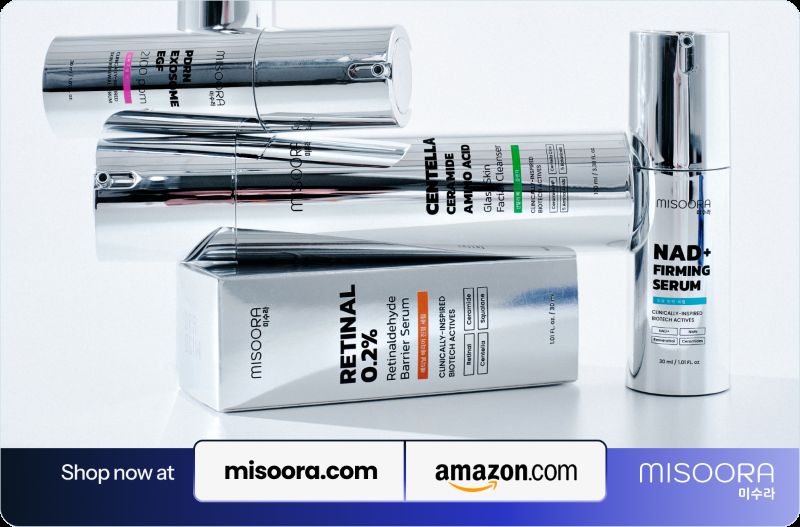
$45 for a 30 ml bottle, which at three to four drops per application lasts roughly 30-60 days. That’s under 2 dollars a day. Shipping is free on US orders over $40, so the bottle qualifies on its own, and first orders are 20% off. That’s worth knowing before comparing it to a $200 cream that discloses nothing.
Available at misoora.com and on Amazon.
How do you use it?
Apply to clean, slightly damp skin. Three to four drops, pressed rather than rubbed in across the face, neck, and jawline is all you need. The neck and jawline are where thinning shows first and where most routines stop. It is formulated to be used there, which means you are not buying a separate neck-firming serum on top of it. Wait about thirty seconds, seal with moisturizer, and finish with SPF 30 or higher in the morning.
It layers without conflict alongside retinoids, vitamin C, and peptides. Because it supports the barrier rather than exfoliating it, it is generally suitable after in-office treatments, though your provider should have the final word on timing.
Give it a full four weeks before deciding. Cellular energy is not a same-day result.
Is NAD+ skincare worth it after 50?

It depends on what you expect. If you want a deep line filled by Friday, no. If you want to support the mechanism that has genuinely slowed — the one behind skin that looks tired rather than lined — it addresses something most anti-aging products do not touch at all.
Also, NAD+ and retinol do different jobs and are not alternatives. Retinol accelerates cell turnover and has the deeper evidence base for wrinkles, but it is also the most common cause of irritation in postmenopausal skin. NAD+ supports the energy cells need to carry out repair in the first place. Many women use both, introducing them on alternate evenings rather than together.
Is NAD+ safe for sensitive or reactive skin?
Generally yes, and this is where it differs from the usual anti-aging route. NAD+ and its precursors support the barrier rather than exfoliating it, so they do not carry the stinging, peeling, and purging associated with retinoids and acids. Fragrance and ethanol trigger more reactions in mature skin than the actives do, which is why their absence matters as much as what is in the formula.
What the Serum Does — and What It Doesn’t
It does not replace sunscreen, moisturizer, retinoids or professional dermatological treatment. It also does not directly address estrogen-related collagen loss. That question belongs with your doctor, not your serum.
What it does is support the energy side of the equation: the part that determines how well your skin can repair and renew itself over the coming years.
The goal was never to reverse aging. It is to support skin that is actively changing, with mechanisms that can be explained, doses that can be read, and results that arrive gradually and honestly.
Giveaway — Misoora Skincare
✨ WIN A FREE SKIN RECHARGE SET FROM MISOORA SKINCARE! ✨
Want to join? It’s super easy:
- Follow Misoora Skincare on Instagram:
@misooraskincare - Send us a DM saying:
“I am a Prime Woman.” 💫 - Wait for the giveaway results! 🎁
Good luck, Prime Women!
Disclaimer: This article is for general educational purposes and does not constitute medical advice. MISOORA products are cosmetics intended for topical skin support; they are not intended to diagnose, treat, cure, or prevent any disease, and they do not address hormone-related skin changes directly. Consumer perception study results are self-reported. Individual results may vary.
References
1. Brincat M, Moniz CJ, Studd JW, et al. Sex hormones and skin collagen content in postmenopausal women. BMJ. 1983;287(6402).
2. Viscomi B, et al. Managing Menopausal Skin Changes: A Narrative Review of Skin Quality Changes, Their Aesthetic Impact, and the Actual Role of Hormone Replacement Therapy in Improvement. J Cosmet Dermatol. 2025.
3. Massudi H, et al. Age-Associated Changes in Oxidative Stress and NAD+ Metabolism in Human Tissue. PLOS ONE. 2012;7(7):e42357.
4. Bos JD, Meinardi MM. The 500 Dalton Rule for the Skin Penetration of Chemical Compounds and Drugs. Exp Dermatol. 2000;9(3).
5. Bielach-Bazyluk A, Zbroch E, Mysliwiec H, et al. Sirtuin 1 and Skin: Implications in Intrinsic and Extrinsic Aging — A Systematic Review. Cells. 2021;10(4):813. 6. Liu HM, Tang W, Wang XY, et al. Safe and Effective Antioxidant: The Biological Mechanism and Potential Pathways of Ergothioneine in the Skin. Molecules. 2023;28(4):1648.
7. Zettersten EM, Ghadially R, Feingold KR, Crumrine D, Elias PM. Optimal ratios of topical stratum corneum lipids improve barrier recovery in chronologically aged skin. J Am Acad Dermatol. 1997;37(3 Pt 1):403–408.