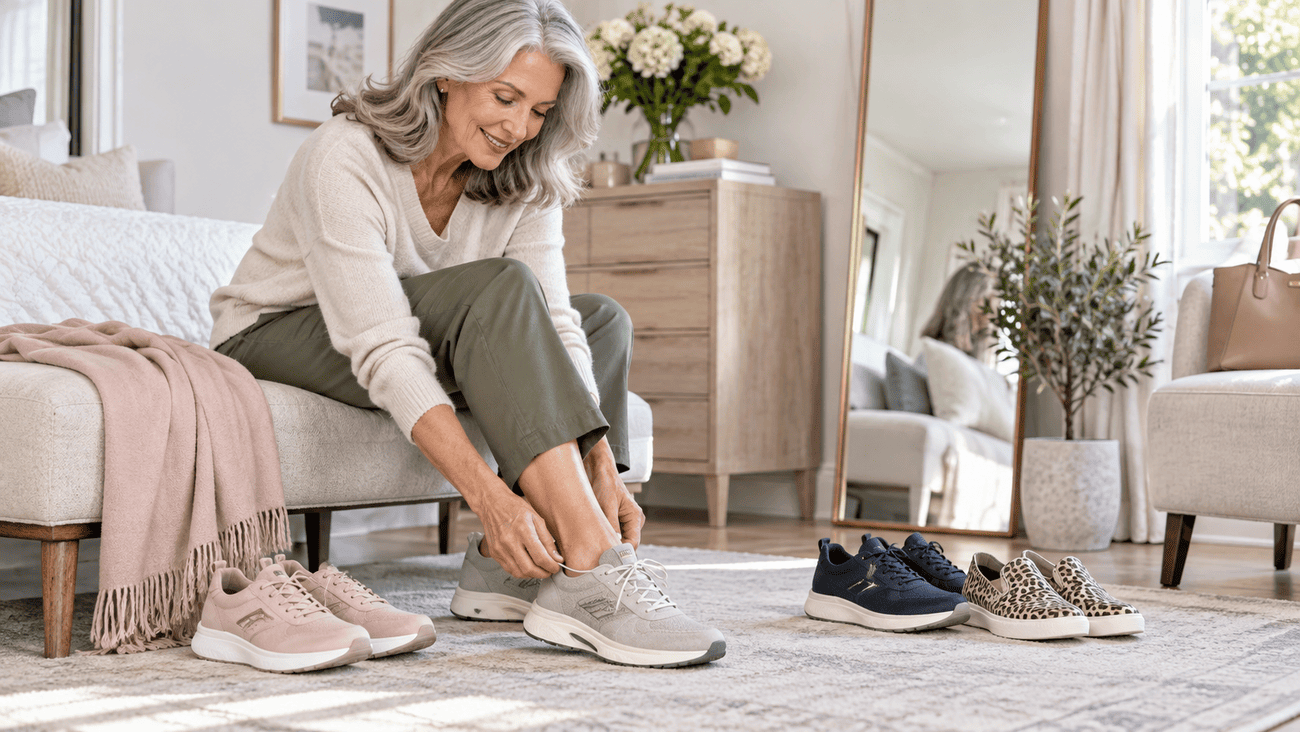
If you have flat feet, you probably already know that not every cute shoe deserves access to your closet.
Some shoes feel perfectly fine for the first 20 minutes and then, somewhere between running errands and standing in line for coffee, your feet begin sending angry little messages up through your ankles, knees, and lower back. By the end of the day, you are wondering why you paid good money for footwear that seems personally offended by your arches.
Flat feet, medically known as pes planus, simply means the arches of the feet are low or flatten when you stand. Plenty of people have flat feet and never experience pain, but others develop fatigue, aching arches, heel pain, ankle discomfort, or overpronation, where the foot rolls inward more than usual while walking.
The right shoe will not magically create a new arch, but it can make walking, exercising, traveling, and standing for long periods much more comfortable. And fortunately, supportive shoes have come a long way from the orthopedic-looking beige contraptions our grandmothers were expected to wear.
What Should You Look for in a Shoe for Flat Feet?
The first mistake many women make is assuming that the softest shoe is automatically the most comfortable.
For flat feet, structure matters just as much as cushioning.
Podiatrists commonly recommend stability or motion-control shoes for people whose flat feet are accompanied by overpronation. These shoes are designed to help control excessive inward rolling while still allowing the foot to move naturally. Features to look for include a firm heel counter, stable midsole, broad base, supportive arch area, and enough room for the toes to spread comfortably.
A shoe that twists like a dish towel when you hold it at both ends usually does not provide much structural support. You want some flexibility at the forefoot, where your toes bend, but the middle of the shoe should generally feel more stable.
And please do not assume that a towering built-in arch is automatically better. Too much arch support can be uncomfortable if it does not match the shape of your foot.
The goal is support, not punishment.
Brooks Adrenaline GTS
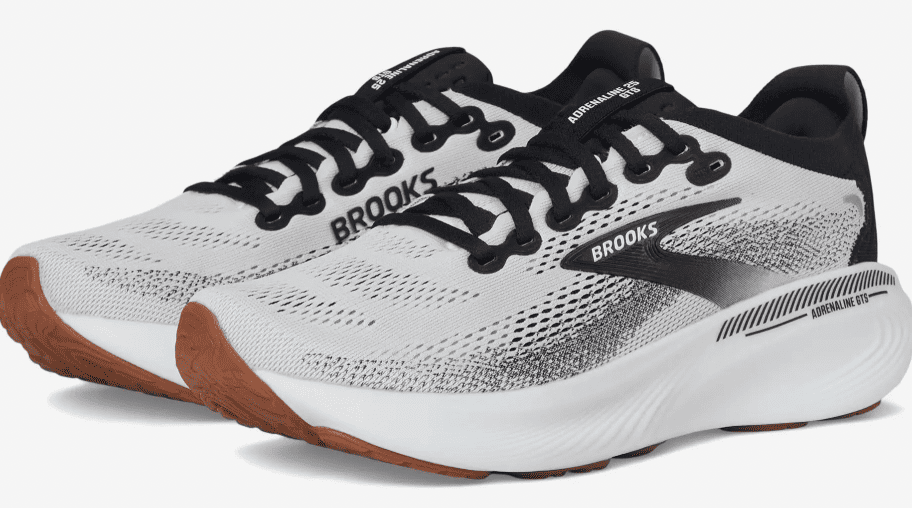
The Brooks Adrenaline GTS continues to be one of the most widely recommended stability shoes for people with flat feet and overpronation.
Brooks uses its GuideRails support system rather than a traditional rigid medial post. The idea is to help guide excessive movement without making the shoe feel overly stiff. Current podiatry recommendations frequently include the Adrenaline among top choices for mild-to-moderate overpronation.
It is cushioned enough for everyday walking but still feels stable underneath the foot, making it a good choice for travel, long walks, or days when you know you will be standing for hours.
Another bonus is that Brooks offers multiple widths in many models, which is useful because flat feet often spread outward when you stand.
Best for: Walking, everyday exercise, travel, and women who want support without an extremely heavy shoe.
ASICS Gel-Kayano
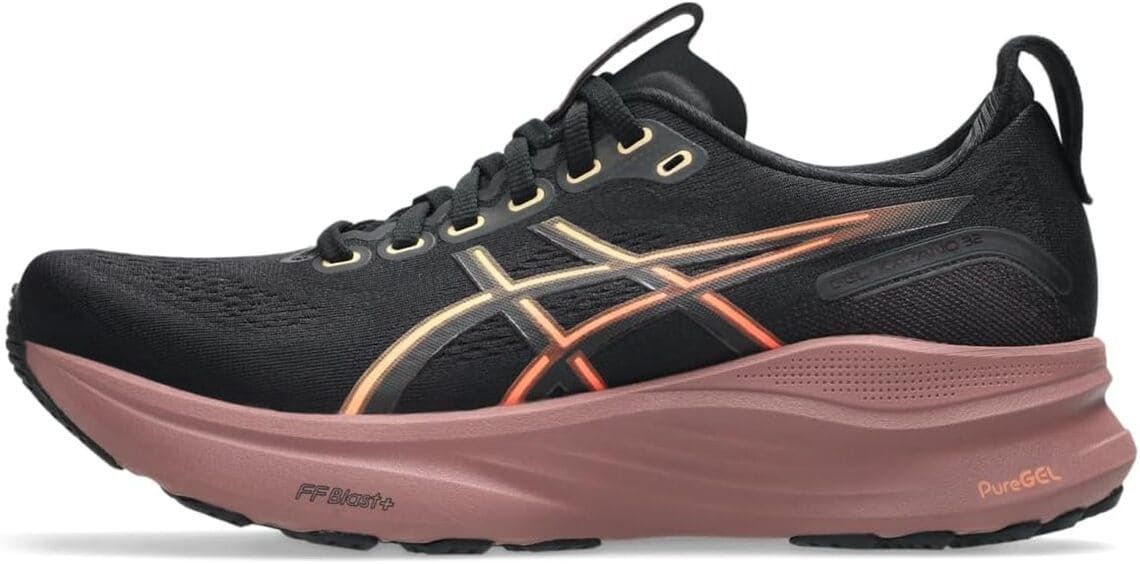
The ASICS Gel-Kayano has been a favorite among runners and walkers who need extra stability for years, and the current versions continue to appear on podiatrist-recommended lists for flat feet.
The Kayano provides substantial cushioning while also offering a structured base that helps reduce excessive inward motion. It tends to feel slightly more supportive than a neutral running shoe while still offering plenty of shock absorption.
If your feet feel tired after long walks or you tend to experience discomfort around the ankles or knees, this type of stability shoe may feel noticeably better than an ultra-soft sneaker with very little structure.
Best for: Longer walks, treadmill workouts, travel days, and women who like plenty of cushioning.
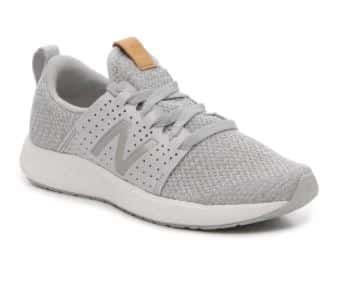
New Balance Fresh Foam X 860
Women with flat feet often discover another irritating fact: their feet may also be wider than they used to be.
That makes New Balance especially appealing because the brand offers an unusually broad range of widths.
The Fresh Foam X 860 is New Balance’s stability running and walking shoe, designed to combine cushioning with additional support for overpronation. Current podiatry recommendations frequently include the 860 among top shoes for flat feet.
The wider base also gives the foot a more stable platform, which can feel especially reassuring during longer periods of walking.
Best for: Wide feet, walking, running, and women who need multiple width options.
HOKA Arahi
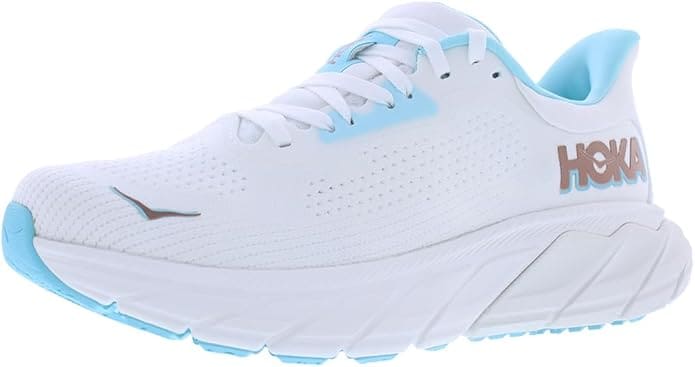
If you love the thick cushioning of HOKA shoes but need more stability than a neutral model provides, look at the HOKA Arahi.
The Arahi is designed as a lightweight stability shoe. It provides the familiar cushioned feel HOKA is known for but adds support intended to help control excessive pronation.
One thing to remember with highly cushioned shoes is that more foam does not automatically mean more support. Flat feet generally benefit from cushioning combined with a stable platform, which is why choosing one of HOKA’s stability models may make more sense than simply buying whichever shoe has the thickest sole.
Best for: Women who want lightweight cushioning with added stability.
Saucony Guide
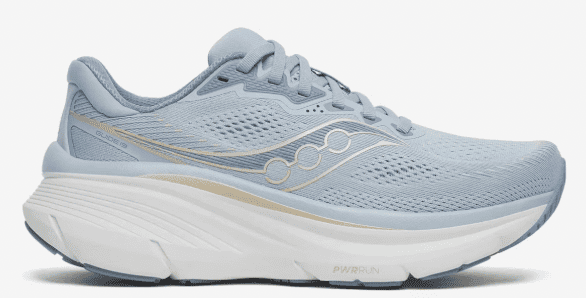
The Saucony Guide is another strong option if you want support without feeling as though you are wearing corrective footwear.
Current versions use a broad, supportive platform to provide guidance while keeping the shoe relatively lightweight. It regularly appears among recommended stability shoes for flat feet and overpronation.
For women who dislike very bulky sneakers, the Guide can be a nice middle ground between a minimalist shoe and a heavier motion-control model.
Best for: Everyday walking, fitness, and women who prefer a slightly lighter shoe.
Brooks Addiction Walker
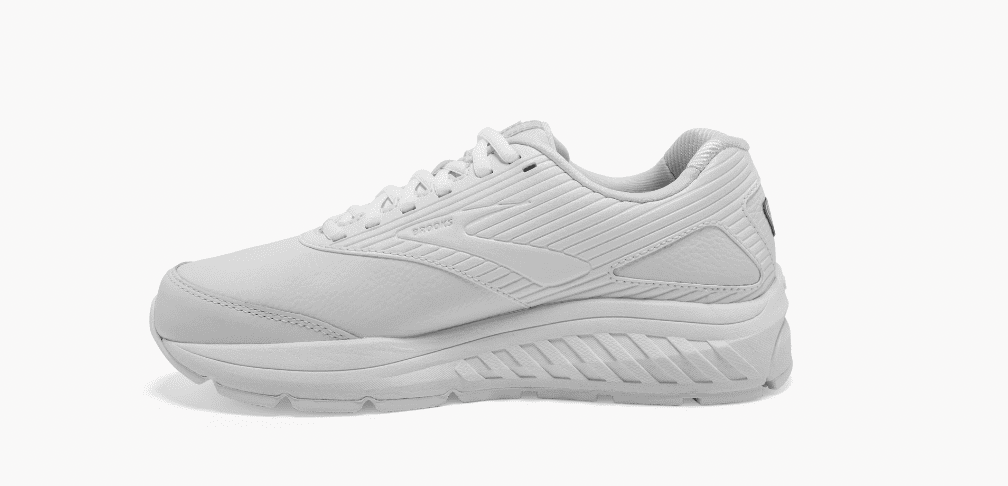
Not everyone needs a running shoe.
If your biggest issue is spending long days on your feet, the Brooks Addiction Walker is worth considering. It is a walking-specific shoe designed with a more structured, supportive base.
Podiatry guides frequently recommend it for people with flat feet who need substantial stability for standing or walking.
It is not the sleekest sneaker on this list, but sometimes comfort wins. There are days when fashion gets a vote, and there are days when your feet have veto power.
Best for: Work, long periods of standing, walking, and women who prioritize stability.
Orthofeet
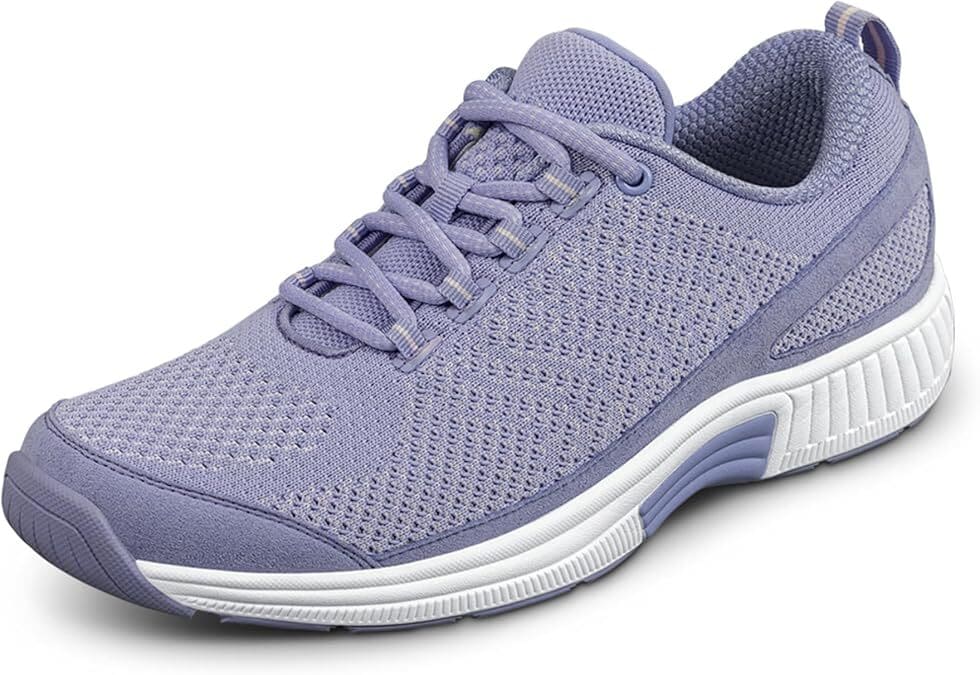
Women dealing with flat feet plus bunions, swelling, plantar fasciitis, or sensitive toes may also want to look at Orthofeet.
The brand focuses heavily on roomy toe boxes, adjustable fits, cushioning, and removable insoles. Some of its walking shoes are regularly recommended by podiatrists for women who need extra width or accommodation.
They are especially useful if your feet seem to change size throughout the day or if traditional sneakers press uncomfortably across the forefoot.
Best for: Wide feet, sensitive feet, bunions, swelling, or women who use orthotics.

Do You Need Insoles Too?
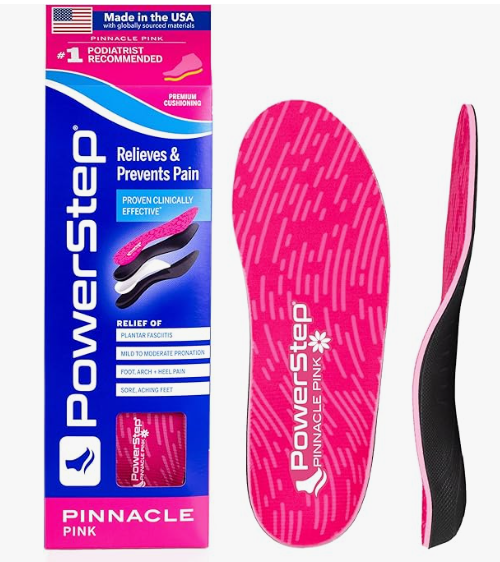
Not necessarily.
A good stability shoe may provide enough support on its own. However, some women prefer additional arch support from an over-the-counter insole.
Brands commonly recommended for supportive insoles include PowerStep, Superfeet, and Aetrex. Current podiatry guidance often recommends trying a quality over-the-counter insole before jumping directly to custom orthotics.
The key is making sure the shoe has enough internal space to accommodate the insert. Remove the original liner before adding another full-length insole rather than stacking two on top of each other and wondering why your shoes suddenly feel two sizes too small.
If you’re still experiencing pain despite supportive shoes and insoles, a podiatrist can determine whether custom orthotics or another treatment makes sense.
Shoes Women With Flat Feet May Want to Avoid
Very flexible ballet flats may look harmless, but most provide almost no structural support.
The same goes for completely flat sandals, worn-out sneakers, and shoes that collapse inward around the heel.
Minimalist or zero-drop shoes are not automatically bad, but they are not necessarily the best starting point for someone already experiencing pain from flat feet or significant overpronation. A podiatry evaluation can help determine whether that style makes sense for your specific foot.
And then there are high heels.
You do not have to throw them all away. Life is short, and occasionally the shoes are worth it. Just understand that very high heels shift pressure forward and provide little opportunity for the arch to function naturally.
Maybe do not choose them for the museum tour.
Your Feet May Have Changed After 50
One reason women suddenly begin searching for shoes for flat feet in midlife is that foot shape can change with age.
Ligaments and tendons can become less firm, arches may gradually lower, and the foot may spread slightly. Weight changes, pregnancy history, arthritis, injuries, and years of wearing narrow shoes may also affect how your feet look and feel.
That is why the shoe size you have purchased automatically for the past 25 years may no longer be correct.
Have both feet measured periodically, preferably later in the day when they are slightly larger. Always fit the larger foot. Your size is just a number printed inside the shoe. There is no medal for staying loyal to it.
When Flat Feet Need More Than Better Shoes
Flat feet without pain often require no treatment at all.
But if you develop persistent arch pain, ankle swelling, heel pain, weakness, difficulty walking, or one foot suddenly becomes noticeably flatter than the other, make an appointment with a podiatrist or orthopedic foot specialist.
Adults can develop conditions such as posterior tibial tendon dysfunction, which can cause a previously normal arch to collapse over time. Persistent symptoms should not simply be blamed on aging or poor shoes.
The Bottom Line
The best shoes for flat feet combine stability, cushioning, a supportive heel, adequate width, and enough room for your toes.
For most women, excellent places to start include the Brooks Adrenaline GTS, ASICS Gel-Kayano, New Balance 860, HOKA Arahi, Saucony Guide, and Brooks Addiction Walker. Women who need additional width or accommodation may also find Orthofeet helpful.
But no shoe wins simply because someone online declared it the best. Your feet decide.
Try shoes on later in the day, walk around in them, and pay attention to how your arches, heels, knees, and hips feel, not just whether they match your leggings. Because after 50, we are far too experienced to spend an entire day suffering for a shoe.