
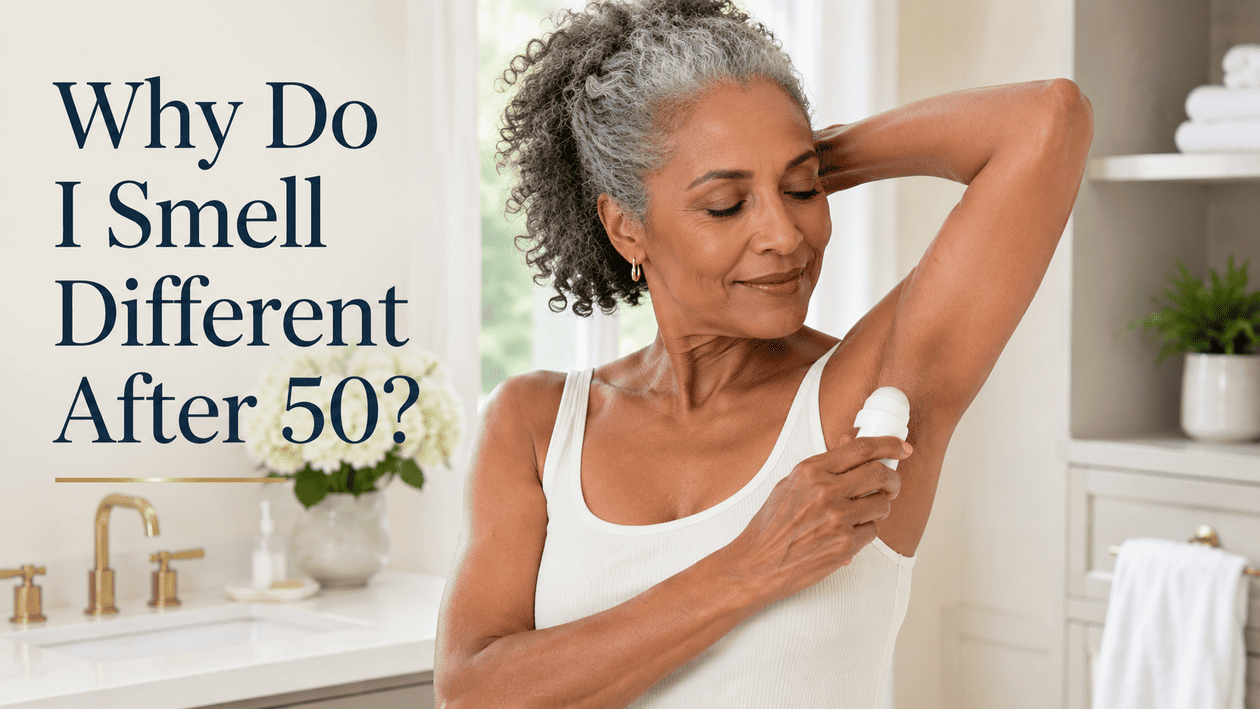
There are certain changes after 50 that people warn us about. Hot flashes? Absolutely. Reading glasses? Practically issued at the door. Waking up stiff, after doing nothing more athletic than sleeping? Apparently part of the package. What no one mentions is that you may suddenly begin to smell different.
Perhaps your trusted deodorant no longer gets you through the day. Maybe your pajamas smell less than fresh after a night sweat, even though you washed them yesterday. You might notice a new scent around your scalp, under your breasts, in your groin, or on clothing that has been hanging in the closet longer than you care to admit.
Before you panic or begin bathing in perfume, know that changing body odor can happen during and after menopause. Hormonal shifts, increased sweating, changes in skin, medications, diet, and ordinary aging may all play a part. Most causes are manageable, but a sudden or dramatic change is sometimes worth discussing with a healthcare professional.
Sweat Is Not Actually the Smelly Part
Sweat itself is mostly odorless. The familiar smell we call body odor develops when sweat and skin secretions interact with bacteria and yeast living naturally on the skin.
The body has two major types of sweat glands. Eccrine glands are found across much of the body and produce the watery sweat that helps cool us down. Apocrine glands are concentrated in areas such as the armpits and groin. Their thicker secretions contain substances that skin bacteria can break down, producing odor.
This is why sweating more often can lead to stronger body odor, even when your personal hygiene has not changed. According to the Cleveland Clinic’s overview of body odor, hormones, medications, certain foods, health conditions, and the amount a person sweats can all affect how that odor develops.
In other words, you may be perfectly clean and still notice that your body chemistry seems to have rewritten the rules.
Menopause Can Make You Sweat More

Hot flashes and night sweats are among the best-known symptoms of the menopause transition. They occur when hormonal changes affect the body’s temperature-regulating system, creating sudden waves of heat that may be followed by considerable sweating. Those extra episodes of sweating create more opportunities for moisture to mingle with skin bacteria, especially under the arms, breasts, abdomen, and in the groin.
The Cleveland Clinic also lists unexpected body odor among lesser-known symptoms associated with low estrogen, largely because hot flashes and night sweats can leave women perspiring more often than they did before.
You may notice the effect most clearly in the morning. Even if the sheets do not feel soaked, repeated smaller bursts of perspiration can leave moisture in pajamas, bedding, or skin folds. Add a warm bedroom, synthetic fabric, and several hours without air circulation, and the result may be less “fresh linen” and more “what happened in here?”
Aging May Change the Scent of the Skin Itself
Researchers have also identified age-related changes in the volatile compounds released from human skin. One compound that receives considerable attention is 2-nonenal, an unsaturated aldehyde associated with changes in skin lipids and oxidative processes.
An early study published in the Journal of Investigative Dermatology found that 2-nonenal was detected primarily in participants aged 40 and older and appeared to increase with age. More recent laboratory research has continued to study 2-nonenal as one component associated with aging-related body odor. This compound has sometimes been rather rudely labeled “old-person smell.”
Age-related scent is not proof that someone is dirty, nor is it necessarily strong or unpleasant. Research has even found that people can distinguish body odors from different age groups and that odor from older adults was not consistently judged as more unpleasant than odor from younger adults.
Drier Skin Can Complicate Matters
Estrogen decline can contribute to thinner, drier, more easily irritated skin. The American Academy of Dermatology notes that menopause can leave skin dry, slack, and thin, while the skin barrier may become less resilient.
This creates a slightly irritating contradiction. You may sweat more during hot flashes while the rest of your skin feels drier than ever. Scrubbing aggressively with strong antibacterial cleansers may worsen dryness, itching, or inflammation, particularly beneath the breasts or in other delicate areas.
A gentle, fragrance-free body wash is usually a better everyday choice than a heavily perfumed or harsh deodorizing soap. Products such as Dove Sensitive Skin Body Wash, CeraVe Hydrating Body Wash, or Vanicream Gentle Body Wash are examples of mild cleansers designed for easily irritated skin, although individual reactions can vary.
Deodorant and Antiperspirant Are Not the Same Thing
Many people use the terms interchangeably, but deodorants and antiperspirants perform different jobs. Deodorant helps reduce or mask odor. Antiperspirant reduces the amount of sweat reaching the skin. A combination product attempts to do both.
The American Academy of Dermatology recommends antiperspirant for people trying to control excessive sweating and notes that it often works best when applied to completely dry skin before bed. Applying it at night gives the active ingredients time to form temporary plugs in the sweat ducts while the glands are less active.
If your old deodorant no longer works, the solution may be switching to an antiperspirant-deodorant rather than buying the same formula in a stronger scent. Clinical-strength options from brands such as Secret, Certain Dri, and Degree are widely available, but sensitive skin may need a gentler formula.
Whole-Body Deodorants Can Help
Whole-body deodorants have become extremely popular, and they can be useful in areas where sweat and friction encourage odor, such as beneath the breasts, along the inner thighs, or in external groin creases.
Products from Lume, Dove, Native, and Secret are available in creams, sticks, and sprays. Some use acids or other ingredients intended to make the skin less hospitable to odor-producing bacteria.
A persistent or distinctly vaginal odor should not simply be covered with deodorant. Hormonal changes, infections, and changes in vaginal pH may all affect odor. The vagina cleans itself and should not be douched; the Cleveland Clinic advises seeking medical evaluation for ongoing odor concerns rather than trying to wash them away internally.
Your Clothing May Be Holding On to Odor
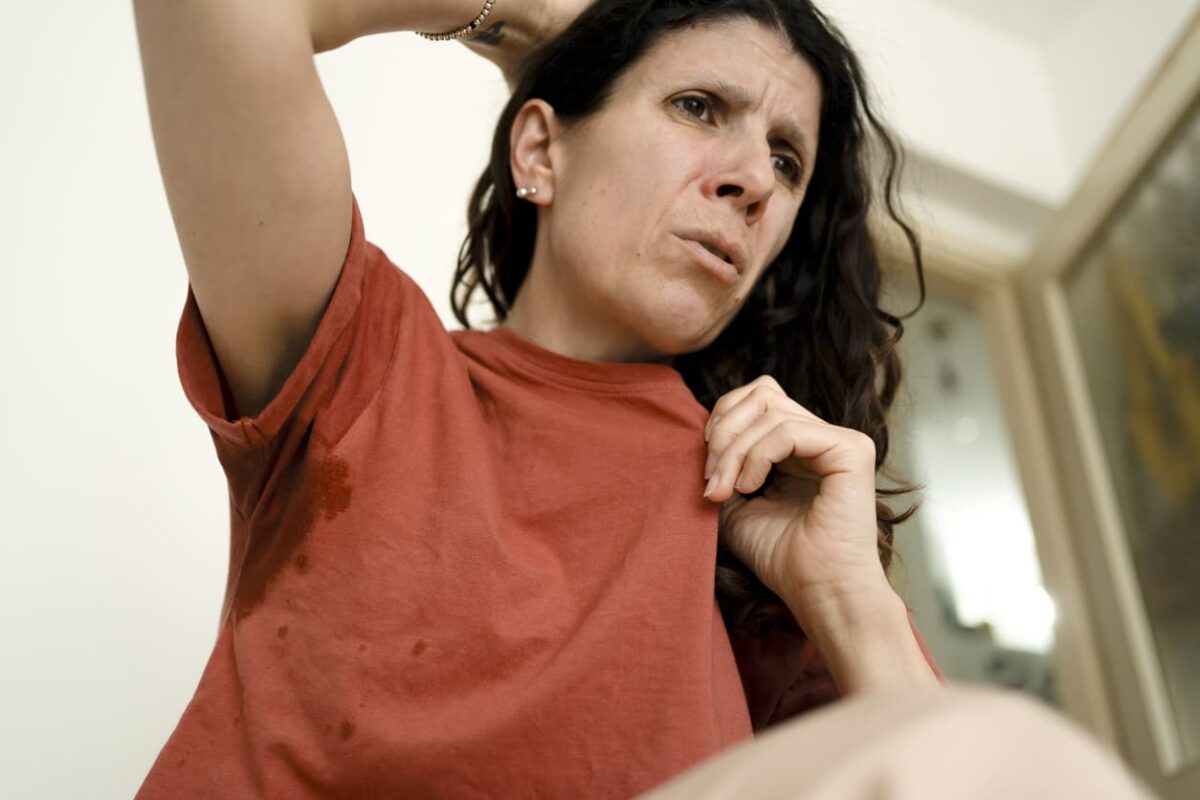
Sometimes the problem is not your body. It is the polyester blouse that remembers every meeting you have ever sweated through. Synthetic fabrics can retain oils and odor-producing compounds, especially in close-fitting activewear, bras, shapewear, and sleepwear. A garment may smell perfectly fine when it comes out of the dryer and then reactivate the moment it warms against your skin.
Breathable cotton, linen, merino wool, and certain moisture-wicking fabrics may feel more comfortable during hot flashes. Natural fibers are not always odor-proof, but they often allow better airflow.
Wash sweaty clothing promptly rather than leaving it in a hamper for several days. An enzyme-based laundry detergent may help break down body oils and residue. Periodically soaking stubborn activewear according to its care label can also help, although fabric softener may coat performance fibers and reduce their ability to move moisture.
Do Not Forget the Bra Zone
The area beneath the breasts is warm, covered, and prone to friction, making it an ideal place for sweat, bacteria, and yeast to gather.
Dry the area thoroughly after bathing. A clean cotton cloth, soft towel, or cool setting on a hair dryer can help when skin folds remain damp. A breathable, properly fitted bra can also reduce trapped moisture and rubbing.
Moisture-absorbing body powders or anti-chafing products may be helpful, but avoid inhaling loose powder and do not apply it to broken or irritated skin. Products such as Megababe Bust Dust, Gold Bond Friction Defense, or Body Glide may provide comfort for some women, though a recurring rash deserves medical attention.
Redness, itching, cracks, tenderness, or a persistent musty odor beneath the breasts may indicate intertrigo or a yeast-related rash rather than ordinary perspiration. That calls for appropriate treatment, not another layer of perfume.
Food, Alcohol, and Medications May Contribute

Garlic, onions, cruciferous vegetables, heavily spiced foods, and alcohol may affect body odor in some people. Certain foods also increase sweating, which can indirectly intensify odor.
This does not mean you must give up broccoli because your armpits filed a complaint. Instead, notice whether a particular food consistently changes your scent and decide whether the effect matters enough to adjust your intake.
Medications can also increase sweating or alter body odor. Antidepressants, some pain medicines, thyroid medications, diabetes treatments, and several other drugs may play a role. Do not stop a medication on your own, but mention the change to your prescriber if it is persistent or bothersome.
A pharmacist can also review your medication list for products known to increase perspiration. Pharmacists are remarkably useful people whom we tend to consult only after standing confused in the cold-remedy aisle for 20 minutes.
A Smarter Routine for Staying Fresh
Start with the least complicated approach. Bathe regularly with a gentle cleanser, paying attention to areas where moisture collects. Dry thoroughly, put on clean breathable clothing, and apply antiperspirant to dry underarms at night if sweating is the main problem.
Change out of damp clothing promptly. Rotate shoes so they can dry fully, wash bras and sleepwear often enough to prevent residue buildup, and keep bedding fresh if night sweats are frequent.
You might also keep a small kit in your bag containing unscented body wipes, a clean pair of underwear, and travel-size deodorant. That is not an admission of defeat. It is the midlife equivalent of carrying reading glasses in every room.
Avoid trying five new fragranced products at once. If irritation develops, you will have no idea which enthusiastic tropical scent caused it.
When a Change in Body Odor Needs Attention
A gradual change around menopause is often harmless, but a sudden, intense, or unusual odor deserves attention, especially if it comes with other symptoms.
The Cleveland Clinic notes that conditions involving the thyroid, liver, kidneys, infections, or diabetes can sometimes affect body odor. A fruity smell may occur with dangerously high ketone levels in diabetic ketoacidosis, while other health problems can create different unusual scents.
Seek medical advice if the change is dramatic, unexplained, or accompanied by excessive sweating, fever, unexplained weight loss, intense thirst, frequent urination, pain, a persistent rash, discharge, wounds that will not heal, or a new lump.
You should also speak with a healthcare professional if sweating regularly soaks your clothes, disrupts sleep, or interferes with normal activities. Excessive sweating may be treatable with prescription antiperspirants, medicated wipes, oral medicines, injections, or other therapies depending on the cause.
The Bottom Line
Your natural scent may change after 50 because your hormones, sweat patterns, skin oils, medications, and skin microbiome are changing too. It does not mean you are unhygienic, and it certainly does not mean you need to disappear beneath a cloud of perfume.
Gentle cleansing, breathable clothing, properly used antiperspirant, thoughtful laundry habits, and attention to moisture-prone areas can make a significant difference. When the change is sudden, persistent, or accompanied by other symptoms, let a healthcare professional help identify the cause.