
At a certain age, your knees begin filing formal complaints. They object to stairs. They protest lunges. They make unsettling noises when you stand up from the sofa. And somehow they become deeply offended by weather changes occurring three states away. Yet despite all this betrayal, strength training becomes more important after 60, not less.
The good news? You absolutely can build strength, improve mobility, protect your joints, and feel stronger with knee pain. You just need the right approach. This is not the moment for boot camp workouts led by a 27-year-old fitness instructor named Blade yelling about “beast mode.” Your knees deserve better.
Why Strength Training Matters More After 60
As women age, muscle mass naturally declines. This process, called sarcopenia, begins as early as our 30s and accelerates after menopause. Strength training helps:
- Preserve muscle mass
- Support joint stability
- Improve balance
- Protect bone density
- Reduce fall risk
- Increase mobility
- Ease arthritis symptoms
- Maintain independence
And contrary to popular belief, avoiding movement entirely often makes knee pain worse. Strong muscles help take pressure off the knees. Weak muscles force the joints to do all the work themselves, which explains why your knees are currently behaving like overworked interns.
First: Know What Type of Knee Pain You Have
Not all knee pain is the same. Common causes include:
- Osteoarthritis
- Old injuries
- Tendonitis
- Meniscus wear and tear
- Muscle weakness
- Joint instability
If pain is severe, sudden, or causes swelling or instability, it’s worth checking with a doctor or physical therapist before starting a new routine. But for many women, moderate movement and strength training are actually part of the solution.
The Golden Rule: Low Impact, High Consistency
The best workout is not the hardest one. It’s the one you can actually continue doing without needing three days of recovery and a heating pad the size of a throw blanket. For women over 60 with knee pain, the goal is:
- Build strength safely
- Protect the joints
- Improve function
- Avoid high-impact stress
That means fewer jumping exercises and more controlled movement. Your knees are no longer accepting applications for burpees.
The Best Strength Training Exercises for Women Over 60 With Knee Pain
1. Chair Squats
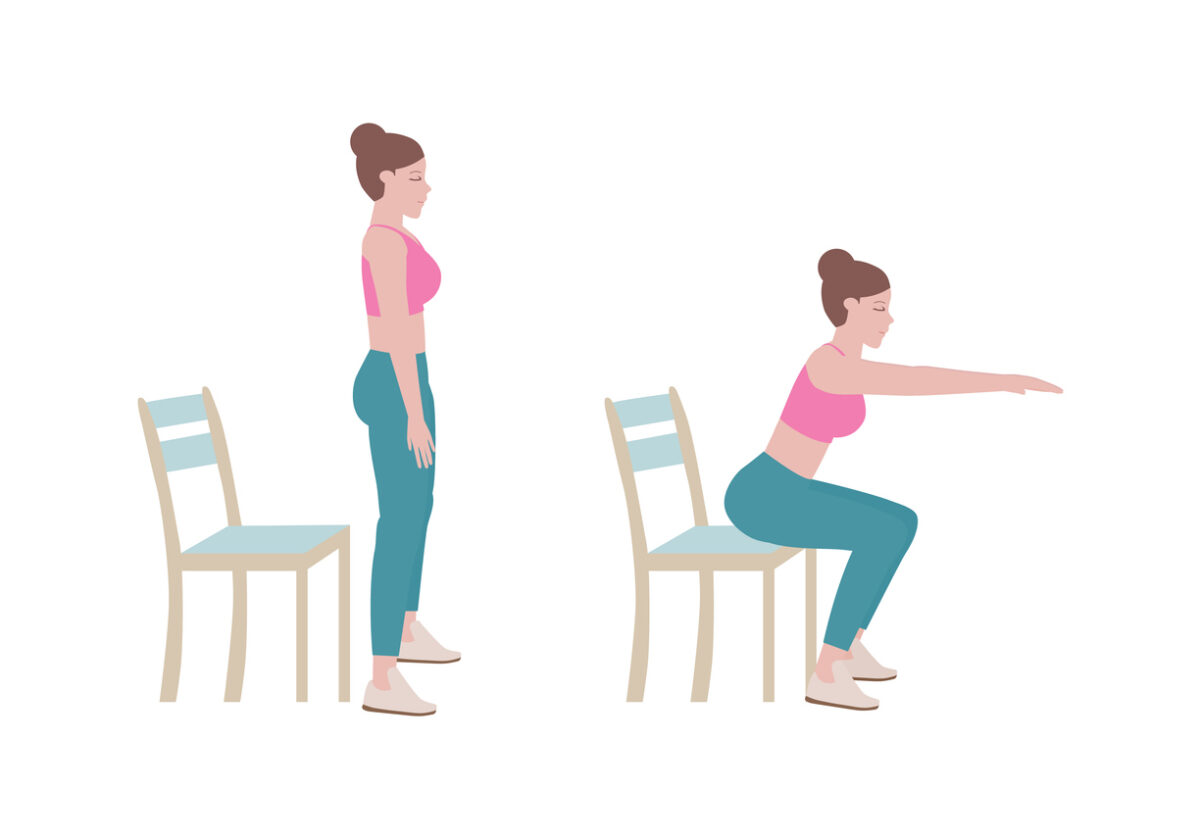
Chair squats strengthen the quads, glutes, and hips while providing support and reducing strain.
How to do them:
- Stand in front of a sturdy chair
- Slowly lower yourself until you lightly touch the seat
- Stand back up using your legs, not momentum
If needed, use the chair arms for assistance.
Bonus: this movement directly improves daily life because eventually we all make strange little noises getting off the couch.
2. Wall Sits
Wall sits build quad strength without repetitive knee movement.
How to do them:
- Lean against a wall
- Slide down slightly into a partial squat
- Hold for 10–30 seconds
Important: partial squat. This is not a contest to see how low you can go before regretting your choices.
3. Glute Bridges

Weak glutes often contribute to knee pain. Glute bridges strengthen the hips and support knee alignment.
How to do them:
- Lie on your back with knees bent
- Lift hips slowly
- Squeeze glutes at the top
- Lower with control
Also unexpectedly humbling.
4. Step-Ups
Step-ups improve balance and leg strength while mimicking everyday movement.
Use:
- A low step
- A railing or wall for balance if needed
Keep movements slow and controlled.
Your goal is “strong and stable,” not “auditioning for an action movie.”
5. Resistance Band Leg Work
Resistance bands are ideal for older adults because they strengthen muscles without heavy joint compression.
Great options include:
- Side leg lifts
- Seated leg extensions
- Standing hamstring curls
- Clamshells
Plus, resistance bands store easily in a drawer, where many of us also keep unused yoga mats and aspirational wellness equipment. Want to increase the work out try Banded Squats.
The Best Weekly Routine
Here’s a simple beginner-friendly structure:
2–3 Days Per Week: Strength Training
Focus on:
- Legs
- Glutes
- Core
- Upper body
Aim for:
- 1–3 sets
- 8–12 repetitions
- Slow, controlled movement
2–3 Days Per Week: Gentle Cardio
Good options:
- Walking
- Swimming
- Water aerobics
- Cycling
- Elliptical
Water aerobics, by the way, remains one of the greatest underrated workouts in existence. It’s low impact, highly effective, and filled with women who could absolutely destroy all of us in a life crisis.
Daily: Mobility & Stretching
Gentle stretching improves flexibility and joint function. And yes, stretching counts even if you complain the entire time like I do.
Focus on:
- Calves
- Hamstrings
- Hips
- Quads

Exercises to Avoid With Knee Pain
Not every trendy workout is knee-friendly. Exercises that commonly aggravate knee pain include: jump squats, box jumps, deep lunges, high-impact aerobics, running on hard surfaces or heavy weighted squats with poor form. This does not mean you’re weak. It means your knees have entered their “absolutely not” era. Respect that.
Don’t Ignore the Core
A strong core improves posture, balance, and movement mechanics, reducing stress on the knees. And no, you do not need six-pack abs. At this stage of life, most of us would settle for standing up without making sound effects. Helpful core exercises include:
- Bird dogs
- Dead bugs
- Modified planks
- Seated core twists
What About Weights?
Yes, weights are absolutely okay and beneficial for women over 60. The goal is gradual progress, not proving anything to anyone. Start light:
- 3–8 pound dumbbells
- Resistance bands
- Bodyweight exercises
Signs You’re Doing Too Much
There’s a difference between muscle soreness and joint pain. Stop or modify exercises if you experience: sharp pain, swelling, instability, pain lasting more than 24–48 hours, or limping afterward. A little discomfort can be normal. Feeling like your knees are plotting revenge is not.
The Bottom Line
Strength training after 60 isn’t about chasing impossible fitness standards. It’s about staying mobile, independent, strong, and confident enough to carry your own groceries without requiring a recovery day. Even with knee pain, movement matters.
The right exercises can reduce discomfort, improve stability, and help you feel stronger in everyday life. If we can maintain muscle mass and continue getting ourselves off the floor after gardening incidents, we’re doing exceptionally well.