

Doctors, scientists, and the media warn us that stress is toxic. They instruct us to “calm down” or suffer the health consequences. This causes a dilemma for many of us. How many people do we know who lead stress-free lives? And how often do we encounter stress on a regular basis, despite our best efforts to manage stress or avoid it entirely? Can there be such a thing as positive stress?
The problem is that stress is the result of caring about something; it is human and it is inevitable. – Donald Meichenbaum
Neurologically, a stress response is simply a milder form of a fear response (such as fight, flight, or freeze). Whenever we feel vulnerable, our brain releases stress hormones that enable us to react quickly, aiming to protect us from physical and emotional harm. Even a remote threat of shame, failure, or loss can trigger a stress response.
Eustress: The Healthier Stress?
Health psychologist Kelly McGonigal explains that we experience two types of stress responses: distress and the lesser-known eustress. Eustress is considered to be distress’s healthier and more helpful cousin.
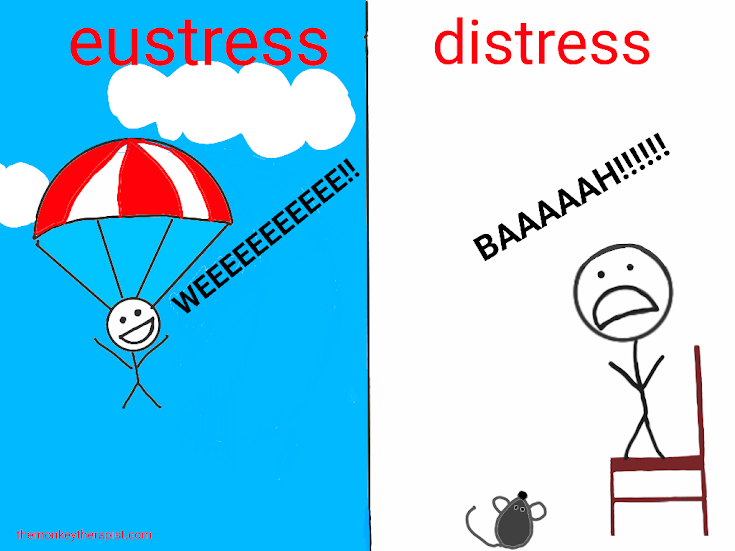
When we feel stressed, the hormones cortisol and adrenaline enable us to react swiftly by bypassing our critical thinking. Ever had an emotional outburst that left you feeling perplexed or remorseful later? Blame your distress response.
However, McGonigal’s research suggests that if we feel prepared for a stressful event, our brain also releases neurochemicals that counter the kneejerk emotional reaction. Our eustress response releases DHEA and oxytocin that help us to focus, learn from our mistakes, and connect with others.
We may switch between eustress and distress easily in the same situation. An activity like skiing can trigger eustress while we are enjoying the steep slopes and then can intensify into distress when we get tired or hit an icy patch.
Read More: Stress Eating! Why It Happens and How to Stop Emotional Eating
Turn Distress Into Eustress
If you want to manage stress, you have to change your perspective. Strangely, our eustress and distress responses depend more on whether we think we can handle the stressor than on the stressor itself. Thus, changing our perceptions about stress can significantly impact our ability to cope with stressful events. Here is how.
Name It to Tame It
Lack of clarity about our own stress makes it hard to know which resources we need to cope. Nick Hall, author of I Know What To Do, So Why Don’t I Do It, suggests that the first step to manage stress is to name it:
- Name the stressor. The terms “future,” “family,” or “relationship” are too vague to be useful. What particular part of your future is stressful? What about your family is giving you distress? Be as specific as possible.
- Name your reactions. What thoughts, bodily sensations, emotions, and actions occur when you are stressed? What is your role in maintaining the stress level? For example, do you tend to procrastinate when you need to have a difficult conversation with someone?
- Name the changeable. Identify which aspects you can change, which ones are challenging but doable, and which ones you can’t change.
- Focus on what you can change. Choose one thing at a time, and focus on changing that one thing. Then move on to the next.
Steps to Manage Stress and Strengthen Coping Skills

1. Reflect
First, reflect on a past occasion when you coped well with a stressful situation. What was the source of the stress? Which skills and strengths did you use to manage it (imagination, resilience, determination, knowledge, compassion)? How did you feel after overcoming the stressful situation?
On the other hand, reflect on an occasion where you were unable to cope with a stressful situation. What was the source, and which tactics were unhelpful? Is there anything you could have done differently?
Read More: 20 Journaling Prompts for Mental Health
2. Prepare
Learn and prepare. Stress is often caused by uncertainty. What more can you find out about the situation? The more you know, the more you can prepare for eventualities and manage stress.
Focus on your skills and resources. Based on what you learned from reflecting, which of your strengths can you use to cope now? What external resources can you employ to help, such as support from others or training?
3. Embrace Stress
Imagine that your stress response is actually helping you cope well with the stressor. When you change your perception of stress, your brain chemicals also change. So when you encounter a dilemma, visualize yourself using your resources to overcome it.
Motivation researcher Gabriele Oettingen suggests that visualization is not only good for problem-solving but also relieves stress. This is because our brain rewards us with the feel-good chemical dopamine, no matter whether our accomplishments are real or imagined.
4. Set Small Goals
Make and complete small attainable goals every day. When we set a goal such as ‘Do Taxes’ or ‘Learn Spanish,’ we clump all of the time, effort, and resources that it will take into one image of far-off, fuzzy, unachievable-ness. Then every day that we don’t achieve it, we let ourselves down.
This repeated sense of failure conditions our brain to associate the goal with feelings of distress. That means we are more likely to procrastinate, causing further distress. On the other hand, when we set and achieve small tasks, we can manage stress in more bite sized pieces. Each time you complete even a small goal, it increases confidence in our abilities. This increases the likelihood of a eustress reaction.
5. Reward Yourself
Lastly, don’t forget to include rewards! Just as we tend to avoid unpleasantness, our brains thrive on positivity. A pat on the back, or a margarita at sunset, reinforces our sense of achievement. Stick with it. The positive effects are cumulative. If you achieved a major goal or overcame a stressful situation, you should take the time to soak it in and reward yourself.
Change the Way You View and Manage Stress

Changing attitudes towards stress may not change the stressful situation. However, when we believe that our stress response is evidence that we are not coping well and that our distress is harming our bodies, we are piling stress on top of stress. Consider the number of times per day, week, or month that we think about stress and the cumulative effect that negative self-talk has on us.
Changing our stress perception makes us less fearful of stressful situations. McGonigal suggests that if we believe that stress is an inevitable and normal part of our everyday experience and can help us, we pave the way for a healthier stress response.
References
- Dan Siegel. (2010). Mindsight: The New Science of Personal Transformation.
- Kelly McGonigal. (2015). The Upside of Stress: Why Stress Is Good for You, and How to Get Good at It.
- Gabriele Oettingen. (2014). Rethinking Positive Thinking: Inside the New Science of Motivation.
- Nick Hall. (2007). I Know What To Do, So Why Don’t I Do It?
- David Allen. (2002). Getting Things Done: The Art of Stress-Free.
- Kelly McGonigal. (2013). How to make stress your friend. TED Talk.
- Paul Gilbert. (2010). The Compassionate Mind.
- Stuart Brown & Christopher Vaughan. (2009). Play: How It Shapes the Brain, Opens the Imagination, and Invigorates the Soul.
Read Next:
11 Steps to Focus and Destress Through the Power of Yoga
Make Stress a Thing of the Past With The Help of This Wellness App