

If you’re reading this, chances are you’re carrying more than you intended — juggling appointments, meds, meals, and the emotional weight that comes with caring for someone you love. I want you to know first: I see you. Caring for a spouse, parent, sibling, or close friend can be deeply rewarding and utterly exhausting at the same time. Let’s talk openly about caring fatigue: what it looks like, how it’s different from burnout, and practical, gentle ways to protect your health and your heart.
What Is Caring Fatigue?
Caring fatigue is the physical, emotional, and mental exhaustion that builds up when you provide ongoing care for someone, often while trying to keep up with the rest of life. Depending on the severity of the situation, you can have it less than a week into caring for someone. It can include stress, chronic tiredness, irritability, and a shrinking sense of patience or joy. Think of it as your internal warning light — telling you you can’t keep pouring from an empty cup.
How Caring Fatigue Differs From Burnout or Compassion Fatigue
- Caring fatigue: Often tied to long-term caregiving responsibilities at home (detailed daily duties, chronic stress).
- Burnout: A broader sense of exhaustion from work or long-standing stressors that reduce your ability to function.
- Compassion fatigue: Emotional exhaustion specifically from exposure to someone else’s trauma or suffering (common in healthcare workers or caregivers of trauma survivors).
They overlap, and you can experience more than one at once. The important part is recognizing when you need help.
Warning Signs: Take This Short Self-Check
If several of these feel familiar, consider it your cue to pause and act:
- Constant physical tiredness even after sleep
- Trouble falling asleep or waking often
- Frequent headaches, stomach issues, muscle tension
- Irritability, short temper, snapping at loved ones
- Feeling detached or numb around the person you care for
- Anxiety, persistent worry, or hopelessness
- Neglecting your own health appointments or medication
- Withdrawing from friends and activities you used to enjoy
- Feeling guilty for wanting time away
If you have thoughts of harming yourself or are worried you might act impulsively, seek emergency help right away.
Why It Happens (So You Can Stop Blaming Yourself)
- Chronic stress: Caring is often long-term and unpredictable.
- Role change: You might be parenting a parent or balancing caregiving with work and family.
- Lack of boundaries: Saying “yes” to everything assumes you have unlimited energy.
- Isolation: Caregivers often lose social support and time for themselves.
- Sleep and health erosion: Poor sleep and skipped self-care build fatigue quickly.
You are not weak for feeling this. You are human.
My Story: The Reality No One Tells You About
I’ve tried taking care of my dad, and honestly, most days it feels impossible. He has Dementia, though he’s in deep denial about what’s happening. He will not take the medicine that could help with his memory because he refuses to believe there’s anything wrong. Every single day, he asks me the same questions — multiple times a day. The same questions I answered ten minutes ago, an hour ago, this morning. Over and over and over.
But here’s what makes it unbearable: he gets incredibly pissed off at me. He will scream at me, cuss me out, and insults me in ways that cut deep. He calls the police on me. He texts people that he’s scared of me, that I want to murder him. I’m trying to help him, and he’s telling anyone who will listen that I’m a threat to his life.
His spending is totally out of control. He just keeps buying more and more stuff. He accidentally subscribes to Amazon subscriptions and ends up with hundreds of drinks or vitamins showing up at the door — cases and cases of things he doesn’t remember ordering. When I take him out in public, he tells people crazy things, like offering to give them guns. I’m mortified, exhausted, and terrified of what he’ll say or do next.
And he doesn’t want help. He doesn’t care how many times he wrecks his car, he wants to drive. He resents me driving him. He resents my help. There is no appreciation, no acknowledgment, no moment where he says “thank you.” Just anger, suspicion, and endless resistance.
Some days, I don’t know if I’m a caregiver or a punching bag.
Quick, Gentle Steps You Can Take Today
1. Take One 10-Minute Break — Seriously
- Step outside for fresh air, sit with a cup of tea, or put on a favorite song. Ten minutes of movement or quiet can reset your nervous system more than you’d expect.
2. Set a Small, Non-Negotiable Boundary
- Example: “I need one hour every evening for my walk or phone call.” Tell family members and post it where it’s visible.
3. Ask for Small, Specific Help
- Instead of “Can you help?” try: “Can you come by on Tuesdays to do groceries?” or “Can you pick up meds on Thursday?” Specific asks make it easier for others to say yes.
4. Quick Mindfulness Reset (2–3 minutes)
- Breathe in for 4, hold for 4, out for 6. Repeat 4 times. It calms the heart rate and helps you think clearer.
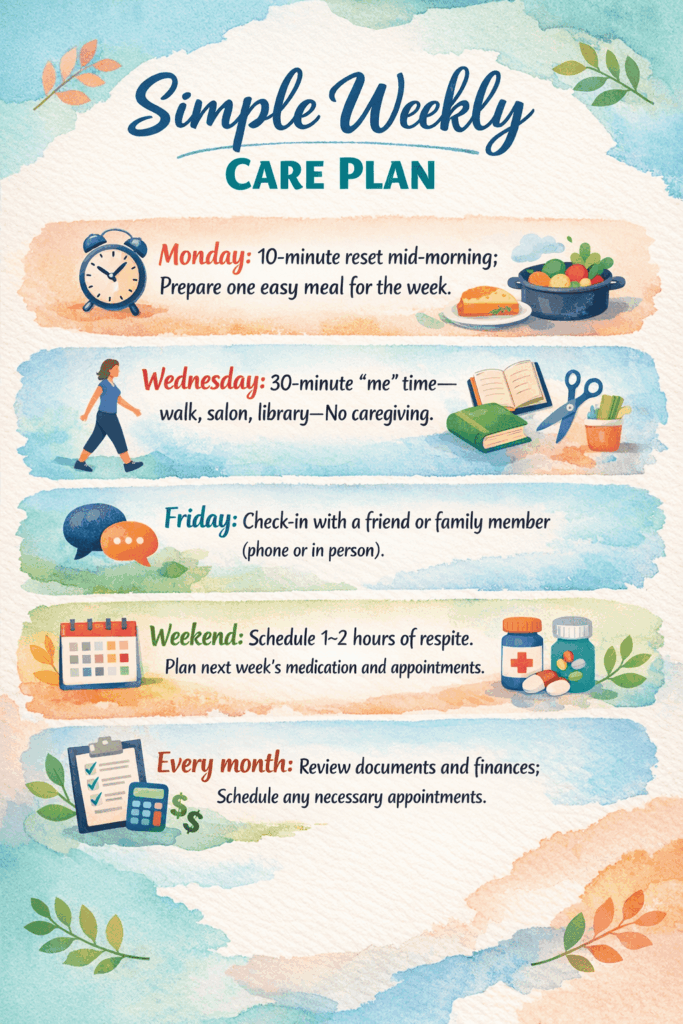
Practical Strategies: Build a Caregiving Toolkit
Daily Routines That Help
- Keep a simple two column list: “Must do” and “Can wait.” Do the musts in your best energy window.
- Meal shortcuts: double-cook a casserole or use a grocery delivery service at least once a week.
- Medication management: use a simple pill organizer and a smartphone alarm, or ask the pharmacy about blister packs.
Delegate — Even Small Things
- Outsource what you can: housecleaning, grocery delivery, lawn care. Even hiring help for a few hours a month changes your energy budget.
- Rotate duties among siblings or friends; make a weekly schedule so responsibilities don’t default to you.
Respite Is Not Optional
- Plan regular breaks: a half-day each week, one full day a month, and longer if possible. Respite care can be arranged through adult day programs, in-home carers, or family rotations.
- Think of respite like sleep for your emotional battery: it is vital and life-sustaining.
Organize Documents and Medical Info
- Keep one binder or digital folder with: doctor contacts, medication list, insurance info, emergency contacts, legal papers (powers of attorney), and a current list of symptoms/concerns.
- Make a short “care snapshot” page for anyone helping that lists routines, likes/dislikes, and critical health info.
Money and Legal Basics
- If you haven’t, start by checking whether someone has a durable power of attorney, advanced healthcare directive, and clear beneficiary designations.
- A quick consult with an elder law attorney or financial planner can save headaches later. Local Area Agency on Aging can often give referrals or free guidance.
How to Ask for Help—Scripts that Feel Natural
With Family:
- “I love that we’re all in this together. I’m feeling stretched thin and need help with [specific task]. Can you take [task] on Wednesdays?”
With Friends:
- “It would mean the world if you could come by for coffee for an hour on Saturday. I need adult company and a short break.”
When Talking to a Doctor:
- “I’m a caregiver and I’ve been feeling exhausted, anxious, and have trouble sleeping. Can we talk about how this is affecting my health and what supports I might need?”
Self-Care That Actually Works for Busy Caregivers
Sleep
- Prioritize sleep as medical necessity. Even small boundaries like “no caregiving after 10 p.m.” can protect rest.
Movement
- Gentle movement counts: stretches, a 15-minute walk, or a short online dance. It helps mood and sleep.
Nutrition
- Keep healthy staples easy to grab: nuts, yogurt, frozen fruit for smoothies, precooked grains.
Social Connection
- Schedule a weekly call or coffee with a friend. Social time is restorative, not optional.
Therapy and Support Groups
- Counseling (individual or family) and caregiver support groups reduce isolation and give practical tips. Online groups can be a lifeline if leaving the house is hard.
When to Seek Professional Help
If you notice any of the following, reach out sooner rather than later:
- Persistent sadness or hopelessness lasting more than two weeks
- Trouble functioning at home or work because of mood or exhaustion
- Thoughts of harming yourself or the person you care for
- Serious physical symptoms: fainting, chest pain, or severe weight loss/gain
- The person you care for is neglecting medical needs or safety concerns are rising
Make an appointment with your primary care provider, ask for a referral to a mental health professional, or contact a crisis line if you are in immediate danger.
A Real-Life Reminder
I once knew a woman — let’s call her Joan — who prided herself on being the “rock” for everyone. She kept saying she’d rest “after things settle.” Years later, she realized there was no “after” unless she chose it. Joan started by taking a single class at the senior center once a week (pottery!), asked a neighbor to help with laundry, and scheduled a monthly respite day. Little by little, her patience and health returned. She told me later: “Asking for help didn’t make me less loving. It made me more present.”
Closing Encouragement
You don’t have to do this alone, and taking care of yourself isn’t selfish, it’s essential. Small changes add up: one 10-minute break, one delegated errand, one honest conversation with a family member. Start there.
If you want, keep a short daily journal this week: one thing you did for the person you care for and one thing you did for yourself. Notice how it changes your days.
You’re doing the hard work, and you deserve care too. Be gentle with yourself and pick one small step today.
Resources to Explore
- Your local Area Agency on Aging (call or search your county)
- Alzheimer’s Association (For dementia-specific help and local support because dealing with this can be much worse.)
- Local faith communities and community centers (often offer volunteer help and respite)
- Geriatric social workers and elder care lawyers for paperwork and planning
Read Next: