
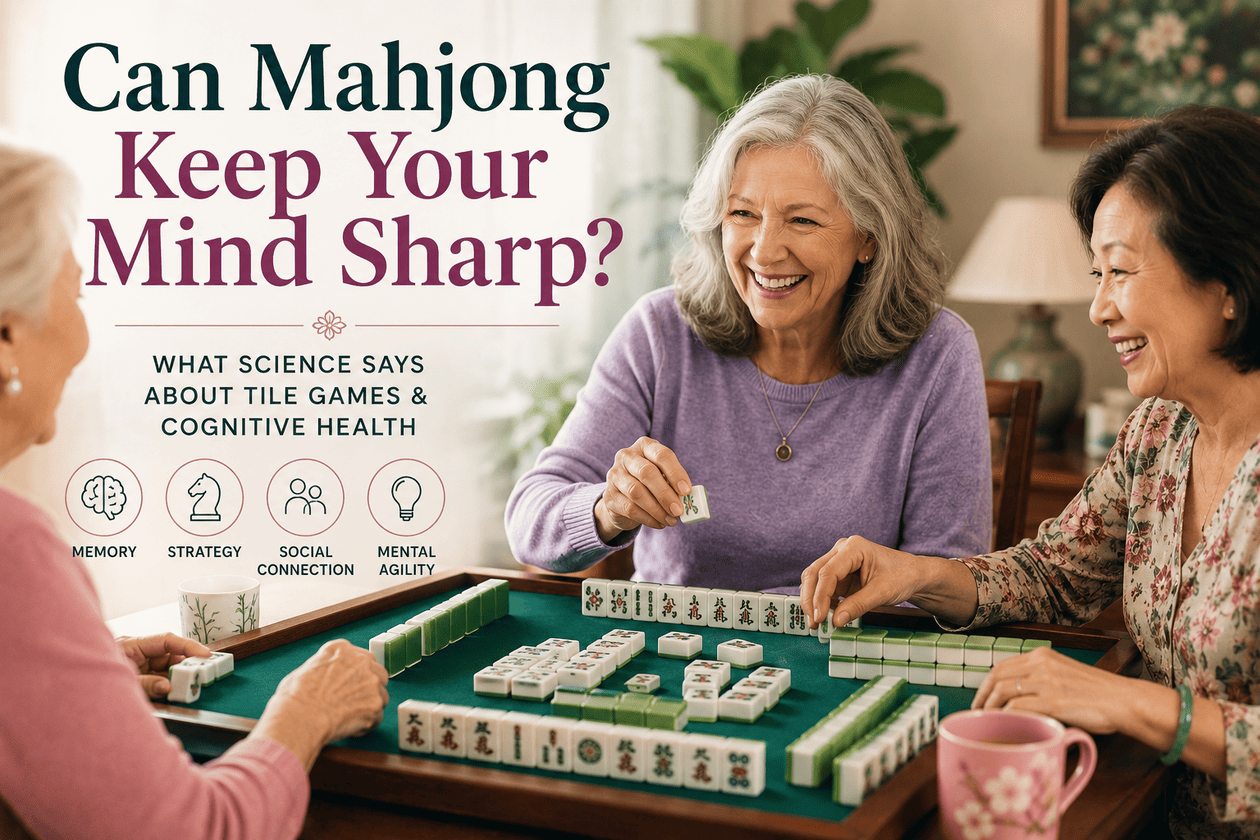
There comes a point in life when you walk into a room and completely forget why you’re there. Was it laundry? Coffee? Revenge? No one knows. Naturally, this leads many women to ask an important question: Can I do anything to keep my brain from turning into a browser with 47 tabs open and one playing music I can’t find?
According to science, the answer is yes. And surprisingly, one of the best tools may not be crossword puzzles or expensive brain-training apps. It might be sitting around a table shuffling tiles while politely destroying your friends in Mahjong.
Why Cognitive Health Matters More As We Age
As we get older, the brain changes in perfectly normal ways. Processing speed slows a bit. Memory retrieval becomes less immediate. Names vanish into the void approximately 12 seconds after introductions. But cognitive decline is not inevitable.
Research consistently shows that mentally stimulating activities help maintain cognitive function and may even reduce the risk of dementia. The key word here is stimulating. Scrolling Facebook while muttering at strangers in the comments section does not count as cognitive training. Tragically.
The healthiest activities for the brain tend to combine several elements:
- Memory
- Strategy
- Problem-solving
- Social interaction
- Attention and focus
Which is exactly why games like Mahjong have researchers paying attention.
What Makes Mahjong So Good for the Brain?
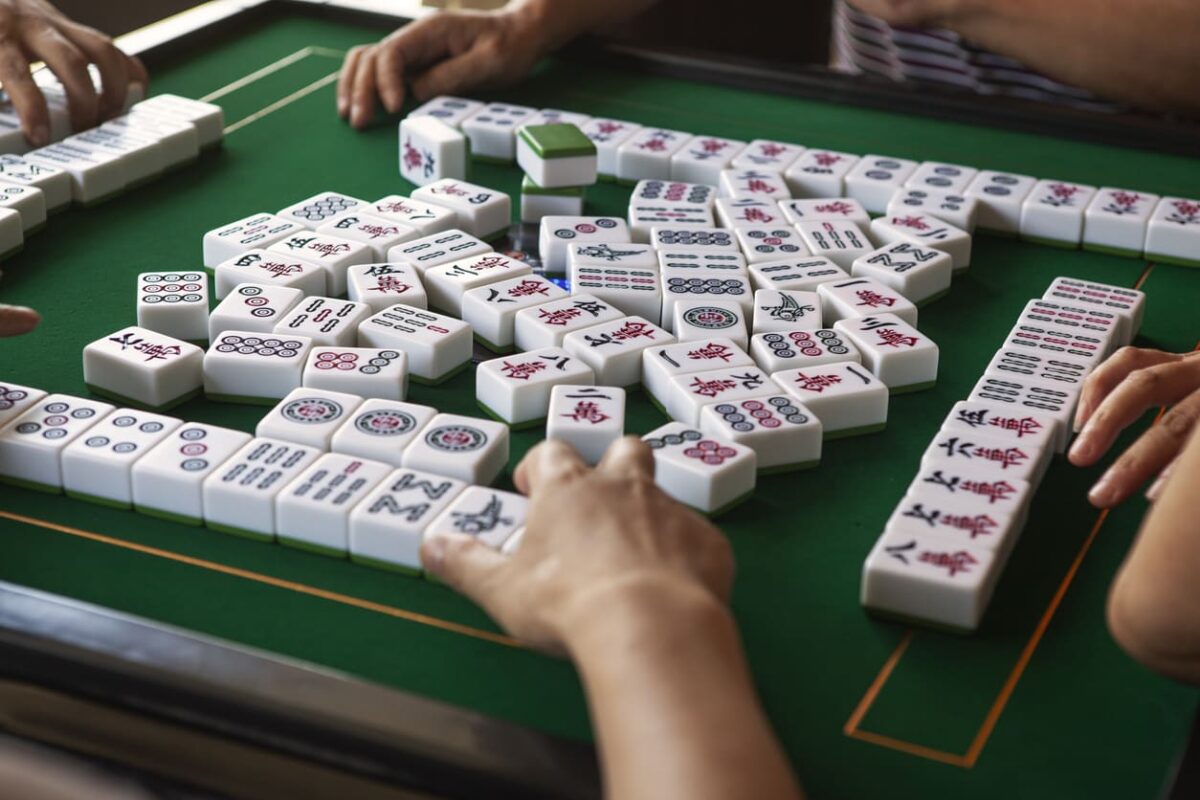
Mahjong isn’t just a game. It’s essentially a full-body workout for your frontal lobe.
Originally developed in China during the Qing dynasty, Mahjong requires players to recognize patterns, remember discarded tiles, calculate probabilities, make strategic decisions, and adapt quickly. All while pretending not to care that Doris just stole the tile you needed.
In other words: your brain is busy. Studies suggest that engaging in complex games like Mahjong may help improve or preserve several cognitive functions, including:
Memory
Players constantly track which tiles have been played and which remain in circulation. This taps into both short-term working memory and long-term pattern recognition.
Attention and Concentration
Mahjong requires sustained focus. Drift off mentally for even a moment and suddenly someone wins while you’re wondering if you left chicken in the freezer.
Executive Function
Executive function includes planning, decision-making, and flexible thinking. Mahjong demands all three, especially when your carefully crafted strategy collapses in real time.
Processing Speed
Fast-paced tile evaluation helps exercise mental agility, which naturally slows with age.
What the Research Actually Says
Several studies have explored the relationship between Mahjong and cognitive health, particularly in older adults. One study published in Frontiers in Aging Neuroscience found that regular Mahjong play was associated with improved cognitive function and memory performance in older adults. Researchers noted benefits in attention, executive function, and social engagement.
Another study from China observed that elderly participants who played Mahjong regularly showed higher levels of psychological well-being and lower rates of depression compared to non-players.
And perhaps most importantly: social games appear to matter. Research from the National Institute on Aging suggests that social interaction itself supports brain health. Isolation, on the other hand, is associated with increased risk of cognitive decline and dementia.
So technically, Mahjong night counts as wellness. Please feel free to mention this to anyone who questions your fourth consecutive afternoon of tile games and snacks.
Is Mahjong Better Than Crossword Puzzles?
This is where things get interesting. Crossword puzzles are excellent for verbal memory and recall. Sudoku strengthens logic and pattern recognition. Word games improve language processing. But Mahjong combines multiple cognitive demands at once:
- Memory
- Visual-spatial processing
- Strategy
- Emotional regulation
- Social interaction
- Rapid decision-making
It’s closer to a “whole brain” activity than many solo puzzles. Also, unlike crossword puzzles, Mahjong occasionally allows you to stare directly into your opponent’s eyes while ruining their day. That has to count for something.
The Social Connection May Be the Secret Weapon
One of the strongest predictors of healthy aging isn’t IQ, income, or whether you remembered your password on the first try. It’s social connection. Regular social interaction has been linked to:
- Lower stress levels
- Better emotional health
- Reduced risk of depression
- Improved cognitive resilience
Mahjong naturally creates community. People gather. They laugh. They gossip. Someone brings cookies nobody should eat but everyone does anyway. This combination of mental stimulation and social engagement may be especially powerful for aging brains.
Can Mahjong Prevent Dementia?
Here’s the honest answer: no game can guarantee prevention of dementia or Alzheimer’s disease. But mentally stimulating activities can help build what scientists call “cognitive reserve.” That’s essentially the brain’s ability to adapt and compensate as it ages.
Think of it as strengthening alternate mental pathways — like your brain quietly creating detours around construction zones.
Activities that challenge the mind may help delay symptoms or slow cognitive decline in some people. And at the very least, they make the process of aging more enjoyable than doomscrolling in silence.
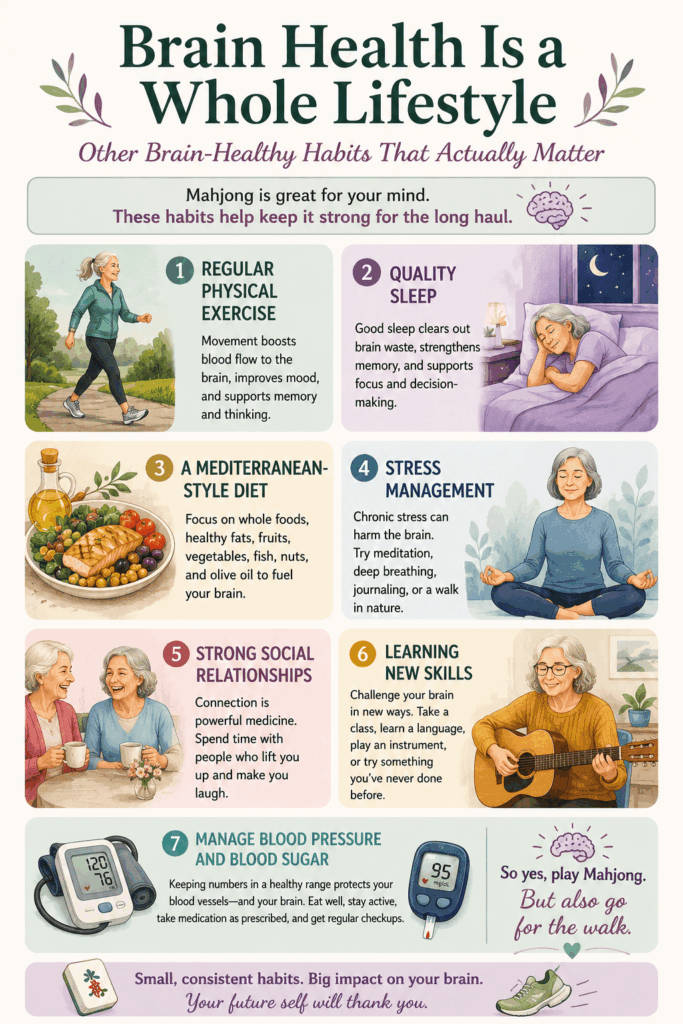
Other Brain-Healthy Habits That Actually Matter
As wonderful as Mahjong may be, no single activity is enough on its own. Brain health works best as a package deal. Experts also recommend:
- Regular physical exercise
- Quality sleep
- A Mediterranean-style diet
- Stress management
- Strong social relationships
- Learning new skills
- Managing blood pressure and blood sugar
So yes, play Mahjong. But also go for the walk.
The Bottom Line
Mahjong isn’t just a pastime your grandmother dominated while sipping tea and quietly judging everyone. It’s a mentally engaging, socially rich activity that checks many of the boxes researchers associate with healthy cognitive aging.
Will it magically prevent memory loss? No. Will it challenge your brain, improve focus, encourage social connection, and possibly help maintain cognitive function as you age? Very likely. And, if the path to better brain health involves snacks, friends, strategy, and a little harmless competition, we’ve certainly heard worse medical advice.