

For decades, women have been conditioned to be peacemakers, to smooth over conflicts, and to forgive quickly. While forgiveness can be a powerful tool for healing and moving forward, there’s a darker side that many women over 50 are only now beginning to recognize: toxic forgiving. This harmful pattern involves repeatedly excusing unacceptable behavior, dismissing your own hurt, and prioritizing others’ comfort over your own wellbeing.
More women in their fifties, sixties, and beyond are examining the patterns that have shaped their relationships and realizing that constant, unconditional forgiveness may have cost them more than they ever intended to give.
What Is Toxic Forgiving?
Toxic forgiving occurs when forgiveness becomes an automatic response rather than a thoughtful choice. It’s the pattern of immediately pardoning someone who has hurt you without requiring accountability, changed behavior, or even a genuine apology. Unlike healthy forgiveness, which comes after processing emotions and often involves setting boundaries, toxic forgiving bypasses your feelings entirely.
Key Characteristics of Toxic Forgiving:
- Forgiving without an apology or acknowledgment of wrongdoing
- Repeatedly excusing the same harmful behaviors
- Feeling pressured to forgive quickly to keep the peace
- Minimizing your own pain to make others comfortable
- Believing that holding someone accountable makes you a bad person
- Using forgiveness to avoid confrontation or difficult conversations
- Feeling guilty when you can’t immediately forgive
Why Women Over 50 Are Particularly Vulnerable

Women who came of age in the 1960s, 70s, and 80s received strong messages about their role as nurturers and caretakers. Many were taught that a “good woman” puts others first, doesn’t hold grudges, and keeps relationships harmonious at all costs. These cultural messages became deeply embedded, creating patterns that persist well into later life.
By the time women reach their fifties, and beyond, they often have decades of practiced toxic forgiving behind them. They’ve forgiven critical parents, dismissive partners, thoughtless adult children, and boundary-crossing friends so many times that it’s become second nature. The problem is that this pattern doesn’t just affect one relationship—it shapes an entire approach to life and self-worth.
The Accumulated Cost
After 50, 60, or 70 years of putting others’ needs and comfort ahead of your own, the consequences become harder to ignore. Many women in this age group report feeling invisible, unvalued, or taken for granted. They’ve spent so much time forgiving others that they’ve neglected to honor themselves.
The Hidden Dangers of Toxic Forgiving

While forgiveness itself isn’t harmful, toxic forgiving creates serious problems that compound over time.
Erosion of Self-Worth
When you consistently dismiss your own hurt feelings and excuse others’ harmful behavior, you send yourself a powerful message: your feelings don’t matter. Over time, this erodes your sense of self-worth and can lead to believing that you don’t deserve respect or consideration.
Enabling Harmful Behavior
Toxic forgiving doesn’t actually help the person who hurt you. Without consequences or accountability, they have no reason to change their behavior. Your quick forgiveness may actually enable them to continue treating you and possibly others poorly.
Accumulated Resentment
You can’t bypass genuine emotions forever. When you suppress hurt, anger, or disappointment in the name of quick forgiveness, those feelings don’t disappear. They accumulate, creating deep wells of resentment that can eventually poison relationships or lead to emotional or physical health problems.
Physical Health Consequences
Chronic stress from repeatedly absorbing mistreatment takes a physical toll. Studies have linked suppressed emotions and unresolved conflict to various health issues, including high blood pressure, weakened immune function, digestive problems, and chronic pain. For women over 50, who may already be managing health concerns, the physical cost of toxic forgiving adds an unnecessary burden.
Relationship Imbalance
Toxic forgiving creates one-sided relationships where your needs are consistently minimized while others’ behaviors are constantly excused. This imbalance prevents genuine intimacy and mutual respect from developing.
Common Scenarios Where Toxic Forgiving Appears
Understanding where toxic forgiving shows up in your life is the first step toward change.
Adult Children Who Take Without Giving
Many women over 50 find themselves repeatedly forgiving adult children who treat them as an ATM, free childcare service, or emotional dumping ground without offering reciprocal respect or consideration. The mother automatically forgives broken promises, harsh words, or being taken for granted because “that’s what mothers do.”
Long-Term Partnerships with Unequal Emotional Labor
After decades of marriage or partnership, some women realize they’ve been doing all the emotional work, forgiving thoughtless comments, managing the household mental load, and accommodating their partner’s needs while their own are ignored. Each incident is forgiven, but the pattern never changes.
Friendships That Drain Rather Than Sustain
Some friendships become one-way streets where you’re always the listener, the forgiver, the one who adjusts. When your friend repeatedly cancels plans, shares your confidences, or criticizes you “for your own good,” you forgive because you don’t want to lose the relationship.
Family Members Who Cross Boundaries
Extended family members who make intrusive comments about your appearance, life choices, or relationships often face no consequences because you’ve trained yourself to “let it go” and “not cause family drama.”
The Difference Between Healthy Forgiveness and Toxic Forgiving
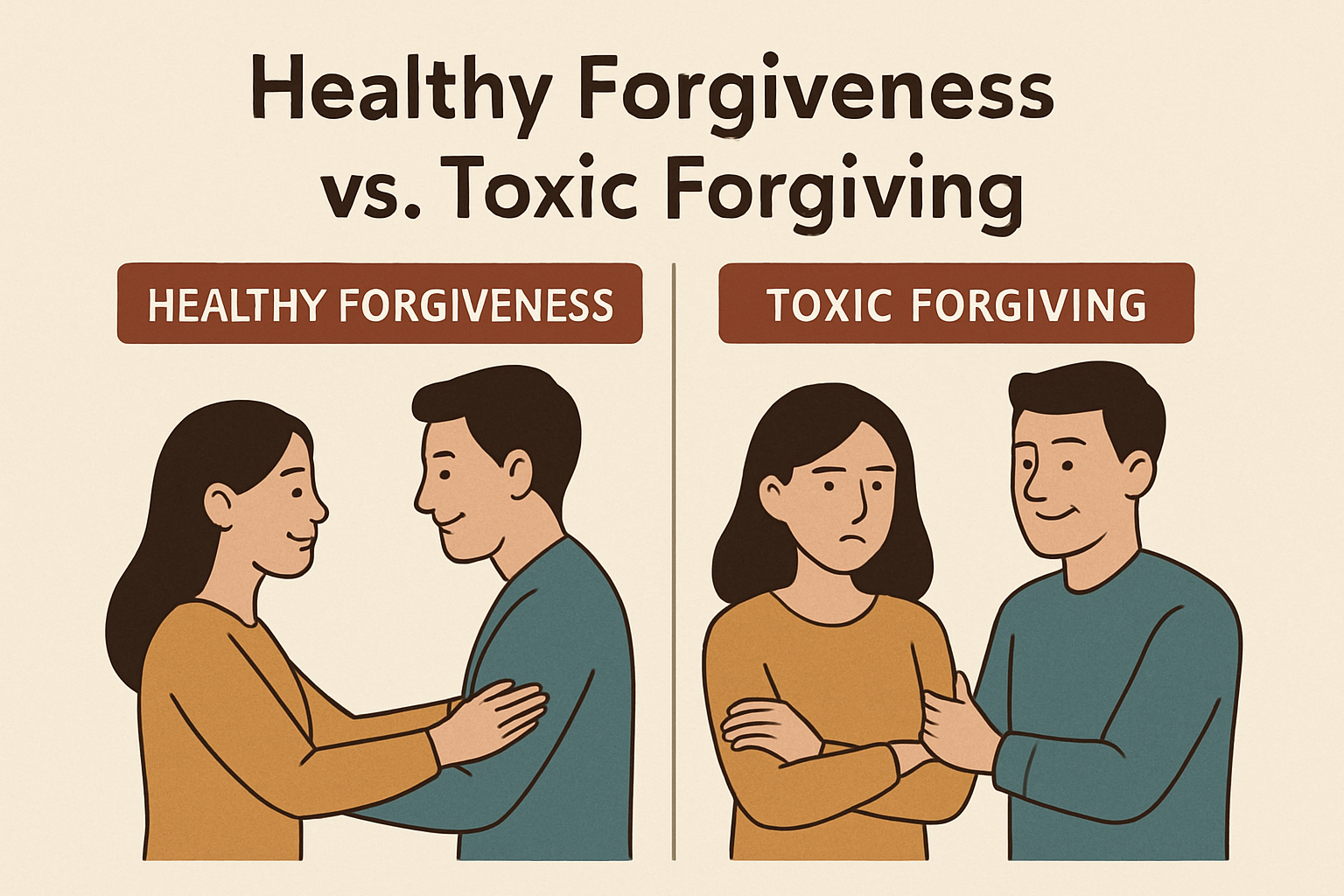
Understanding the distinction is crucial for breaking free from harmful patterns.
Healthy Forgiveness:
Happens after you’ve acknowledged and processed your emotions
Doesn’t require you to continue accepting harmful behavior
Often includes establishing clear boundaries
May mean forgiving someone from a distance
Requires time and emotional work
Can include consequences for the person who caused harm
Prioritizes your wellbeing alongside relationship repair
Doesn’t demand immediate reconciliation
Toxic Forgiving:
Happens automatically, often immediately
Requires no accountability from the other person
Bypasses your own emotional processing
Prioritizes maintaining the relationship over your wellbeing
Feels obligatory rather than chosen
Includes no boundaries or consequences
Leads to repeated patterns of the same harmful behavior
Often accompanied by guilt if forgiveness doesn’t come easily
Breaking Free from Toxic Forgiving Patterns

Changing lifelong patterns isn’t easy, especially for women who have spent decades perfecting the art of toxic forgiving. However, it’s never too late to reclaim your right to healthy boundaries and genuine respect.
Recognize Your Patterns
Start paying attention to how quickly you forgive and whether you’re actually processing your emotions or just bypassing them. Notice if you feel pressured to forgive or if guilt drives your responses. Keep a journal of situations where you felt hurt and how you responded.
Give Yourself Permission to Feel
Your emotions are valid, even the uncomfortable ones. Anger, hurt, and disappointment are not character flaws—they’re normal human responses to mistreatment. Allow yourself to sit with these feelings rather than rushing to forgiveness.
Understand That Boundaries Aren’t Mean
Many women over 50 were taught that setting boundaries is selfish or unkind. This is false. Boundaries are essential for healthy relationships and self-respect. Saying “that behavior isn’t acceptable” or “I need some space” isn’t cruel—it’s honest and necessary.
Practice Saying No to Premature Forgiveness
When someone hurts you, resist the urge to immediately say “it’s okay” or “don’t worry about it.” Instead, try phrases like: “I need time to process this,” “I’m not ready to discuss this yet,” or “That hurt me, and I need you to understand why.”
Require Accountability
Healthy relationships include accountability. Before offering forgiveness, consider whether the person has acknowledged what they did, shown genuine remorse, and demonstrated willingness to change. Forgiveness without these elements rarely leads to lasting change.
Seek Support
Breaking patterns that have existed for decades is challenging work. Consider working with a therapist who specializes in women’s issues, joining a support group, or finding a trusted friend who understands healthy boundaries. Professional support can be especially valuable for processing long-standing patterns.
Redefine What Being “Good” Means
Challenge the belief that being a good woman means constant forgiveness and accommodation. Redefine goodness to include self-respect, honesty, and healthy boundaries. A good person can hold others accountable while still being kind and loving.
What About Religious or Spiritual Teachings on Forgiveness?
Many women struggle with toxic forgiving because they believe their faith requires immediate, unconditional forgiveness. However, most religious and spiritual traditions, when examined more deeply, support healthy boundaries alongside forgiveness.
Genuine forgiveness in most traditions involves a process, not an instantaneous erasure of accountability. It doesn’t require you to continue accepting abuse or mistreatment. You can forgive someone for your own peace while still maintaining boundaries that protect you from future harm.
If you’re struggling to reconcile healthy boundaries with your faith, consider speaking with a trusted spiritual advisor who understands the difference between genuine forgiveness and enabling harmful behavior.
Moving Forward: Life After Toxic Forgiving

As women over 50 break free from toxic forgiving patterns, they often experience a profound shift in their relationships and self-perception. This doesn’t mean becoming unforgiving or holding grudges—it means developing discernment about when, how, and whom to forgive.
Relationships May Change
When you stop toxic forgiving, some relationships will improve. People who genuinely care about you will respect your boundaries and adjust their behavior. However, some relationships may end or become distant. This is a natural consequence of establishing healthy standards. The relationships that remain will be more authentic and balanced.
You’ll Reclaim Energy
The emotional energy required to constantly forgive without processing your feelings is enormous. When you stop toxic forgiving, that energy becomes available for pursuits that genuinely nourish you—hobbies, friendships, personal growth, or simply peace of mind.
Self-Respect Grows
Each time you honor your feelings and maintain healthy boundaries, you reinforce the message that you matter. Over time, this rebuilds self-respect that may have been eroded by years of toxic forgiving.
You Model Healthy Behavior
By breaking the cycle of toxic forgiving, you model healthier relationship patterns for adult children, grandchildren, and other women in your life. You give them permission to respect themselves, too.
Final Thoughts
Toxic forgiving is a pervasive issue that affects countless women over 50, often without them even recognizing it as problematic. For women who have spent decades prioritizing others’ comfort over their own wellbeing, the pattern can feel so natural that questioning it seems wrong.
But here’s the truth: You deserve relationships where your feelings matter, where mistreatment has consequences, and where forgiveness is a thoughtful choice rather than an automatic reflex. You deserve to be treated with the same kindness and consideration you’ve been extending to others for your entire life.
Forgiveness is a gift, but it’s one you should offer thoughtfully, not reflexively. Your feelings matter. Your boundaries matter. You matter. And recognizing toxic forgiving for what it is may be the first step toward relationships—including the one with yourself—that truly honor who you are.