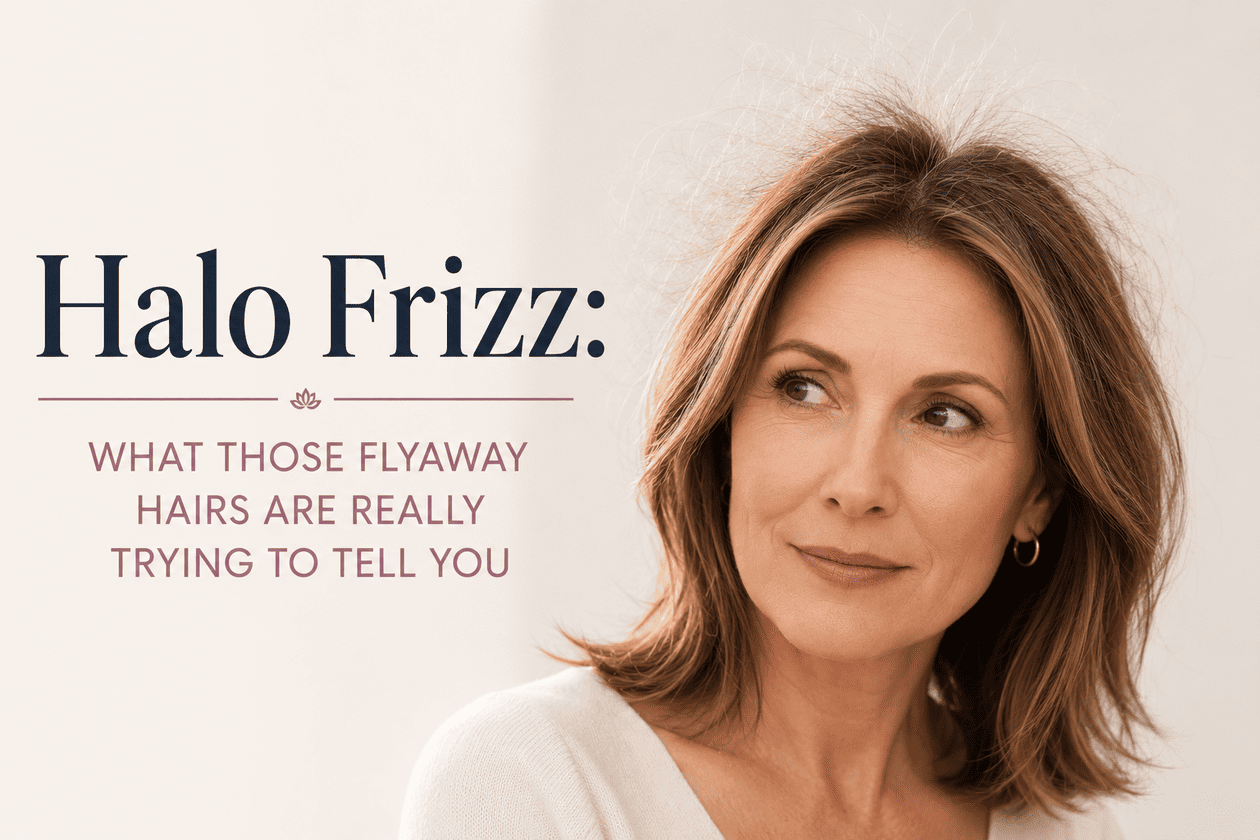
You smooth your hair, style it exactly the way you want it, and then catch a glimpse of yourself in the mirror. Somehow, despite your best efforts, a collection of wispy little hairs seems determined to stand straight up around your crown. If this sounds familiar, you’re dealing with what’s commonly known as halo frizz.
While many women assume these flyaways are simply baby hairs doing their thing, halo frizz can actually tell us quite a bit about the health of our hair. In some cases, those short strands are perfectly normal new growth. In others, they’re a sign that hair is becoming dry, fragile, or prone to breakage.
The distinction is important because the solution isn’t always another styling product. Sometimes the answer lies in understanding what’s causing those hairs to misbehave in the first place.
What Exactly Is Halo Frizz?
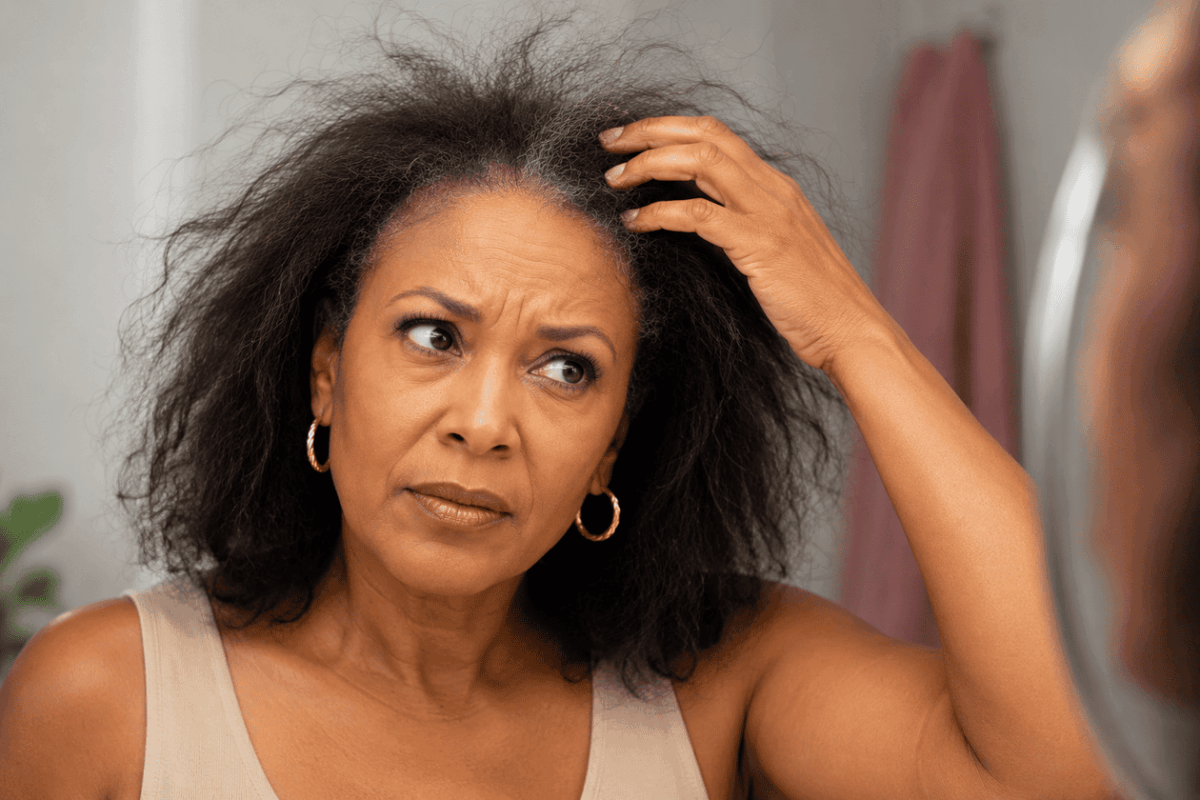
Halo frizz refers to the short, fuzzy hairs that appear around the top of the head, creating a soft halo effect. Unlike traditional frizz, which can affect the entire head of hair, halo frizz tends to concentrate around the crown and outer layer of the hair.
Some of these strands may be baby hairs or new growth, which is actually a positive sign. New hairs are often shorter and lighter than the rest of your hair, making them more noticeable until they grow longer. However, when those flyaways appear throughout the head and look dry, uneven, or broken, they may be signaling damage rather than growth.
As we get older, it can become more difficult to tell the difference. Hair naturally becomes finer and drier with age, and decades of coloring, heat styling, and environmental exposure can leave strands more vulnerable to breakage.
Why Hair Becomes More Fragile With Age
One reason halo frizz becomes more noticeable after 50 is that our hair changes right along with the rest of our bodies. Hormonal shifts can affect both hair texture and moisture levels, leaving strands drier and less resilient than they were in our thirties and forties.
At the same time, many of us continue habits we’ve had for years without realizing they may be causing damage. Tight ponytails, frequent blowouts, flat irons, curling wands, aggressive brushing, and even something as simple as sleeping on a cotton pillowcase can create friction that weakens hair over time.
The result is often a collection of shorter hairs that refuse to cooperate, no matter how much hairspray or smoothing serum we apply.
Summer Can Make Halo Frizz Look Even Worse
If your halo frizz seems more noticeable during the warmer months, you’re not imagining it. Humidity causes the outer layer of the hair, known as the cuticle, to lift slightly. Once that happens, moisture from the air enters the hair shaft, causing strands to swell and become unruly.
Add in swimming pools, sun exposure, sweat, and more frequent washing, and it’s easy to see why summer can feel like the perfect storm for frizz. Women who have curly, coily, or textured hair often notice this even more because natural oils have a harder time traveling down the hair shaft, making curls inherently drier.
The Biggest Mistake Most Women Make
When halo frizz appears, our first instinct is usually to force it into submission. We reach for the flat iron, slick everything down with gel, or blast the area with even more heat.
Unfortunately, that approach often treats the symptom rather than the cause.
If those short hairs are the result of breakage, additional heat and tension can actually make the problem worse. Instead of focusing solely on smoothing the hair, experts recommend focusing on strengthening it. Hair that is properly hydrated and protected is far less likely to develop the breakage that creates halo frizz in the first place.
How To Reduce Halo Frizz and Prevent Breakage
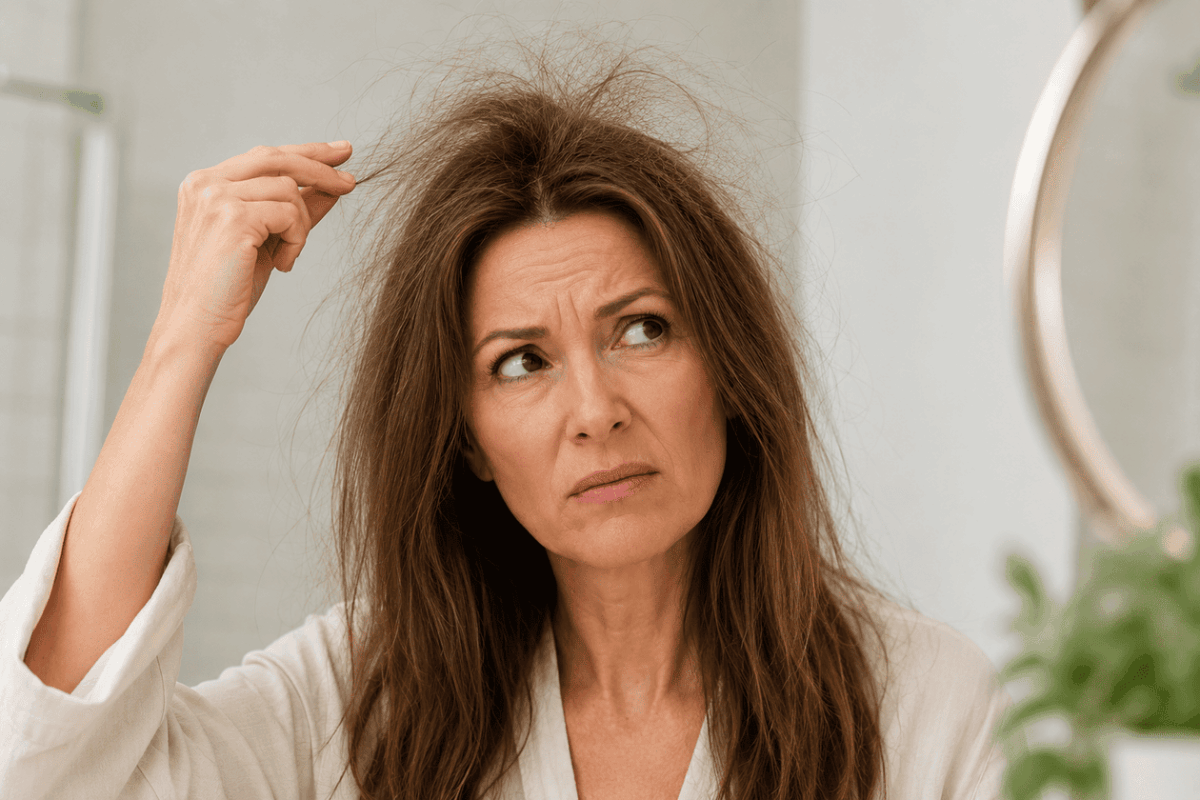
Fortunately, improving halo frizz doesn’t require a complete bathroom makeover. A few smart swaps can make a noticeable difference.
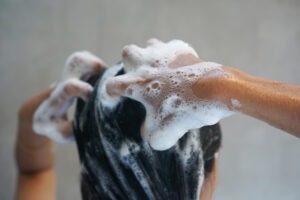
Start with a gentle shampoo and moisturizing conditioner designed for dry or damaged hair. If your hair has been colored or heat styled for years, adding a weekly deep-conditioning mask can help restore moisture and improve elasticity. Hair that’s properly hydrated is much less likely to snap.
If your hair is showing signs of damage, consider adding a bond-building treatment like Olaplex No. 9 Bond Protector Nourishing Hair Serum. It helps strengthen weakened strands while providing heat protection and smoothing frizz, making it a great option for women who regularly color or style their hair.
After washing, a lightweight hair oil can make a world of difference. A few drops of OUAI Hair Oil or Living Proof No Frizz Vanishing Smooth Hair Oil help seal in moisture, smooth the cuticle, and tame flyaways without leaving hair looking greasy. If you live somewhere humid, Living Proof’s humidity-blocking technology is especially impressive.
Don’t overlook the basics, either. Wash your hair with warm rather than hot water, and if you swim frequently or have hard water at home, use a clarifying shampoo every couple of weeks to remove mineral buildup that can make hair feel dry and rough.
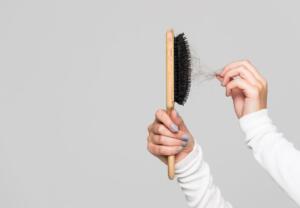
When it’s time to detangle, skip the brush on soaking wet hair. A wide-tooth comb or a gentle detangling brush creates much less stress on fragile strands. Swapping your cotton pillowcase for a satin one and using a microfiber towel instead of rubbing your hair dry with a regular bath towel can also reduce friction while you sleep and after every shower.
If you’re looking for an affordable anti-frizz option, John Frieda Frizz Ease Extra Strength Serum has remained a favorite for years because it delivers noticeable smoothing without requiring a luxury beauty budget. Women with naturally curly hair may also love Curlsmith Frizz Rescue Finishing Serum, which smooths flyaways while helping curls maintain their shape.
Prime Women Editor’s Picks
If halo frizz has become your newest beauty frustration, these are the products I’d reach for first:
Best inexpensive upgrade: A satin pillowcase and a microfiber hair towel
Best for repairing damage: Olaplex No. 9 Bond Protector Nourishing Hair Serum
Best lightweight hair oil: OUAI Hair Oil
Best for humid climates: Living Proof No Frizz Vanishing Smooth Hair Oil
Best budget buy: John Frieda Frizz Ease Extra Strength Serum
Best for curly hair: Curlsmith Frizz Rescue Finishing Serum
Not Every Flyaway Is Bad News
Before you launch a full-scale battle against every strand that refuses to stay in place, remember that some halo frizz is completely normal. In fact, some of those short hairs may simply be healthy new growth making its way into the world.
The key is paying attention to what your hair is telling you. If the strands feel soft and appear primarily around the hairline, they’re likely baby hairs or new growth. If they seem brittle, uneven, or concentrated in areas that experience tension and styling stress, it may be time to give your hair a little extra TLC.