

Dense breast tissue refers to the composition of a woman’s breasts in terms of the ratio of different types of tissue. The breast is made up of three main components: glandular tissue (which includes milk ducts and lobules), fibrous tissue (which gives structural support), and fatty tissue (which cushions and supports the other two types). A woman is considered to have dense breasts if she has more glandular and fibrous tissue than fatty tissue. Breast density is determined through a mammogram, and it’s classified into four categories ranging from almost entirely fatty to extremely dense.
Breast density is a normal and common finding; about 40% to 50% of women aged 40 and older have dense breasts. It is important to understand what it means to have dense breast tissue, how it affects mammography, and the steps to take if you are told you have dense breasts.
What Causes Dense Breast Tissue?
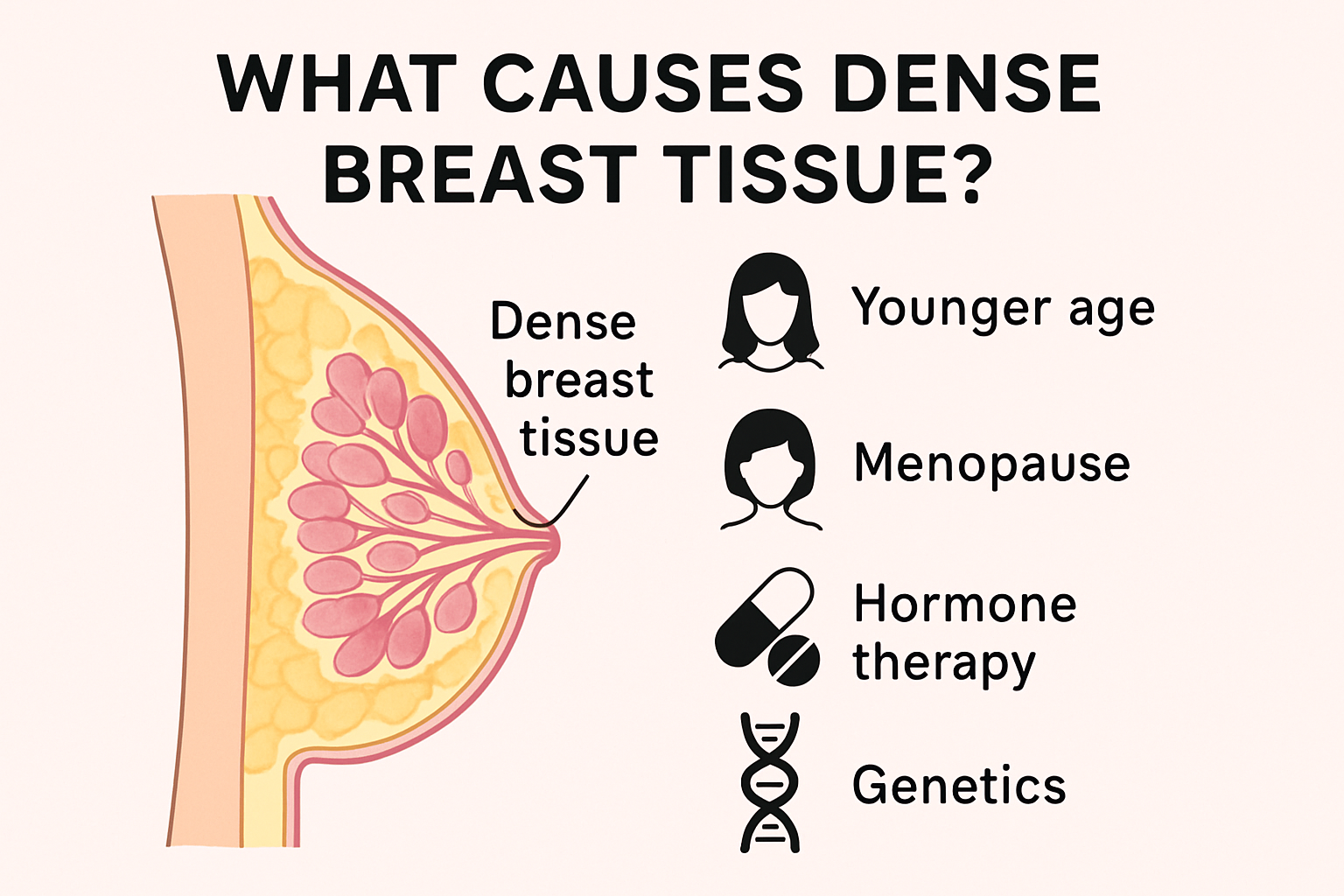
Several factors influence breast density, and it’s important to recognize that density varies among women.
- Age: Younger women tend to have denser breasts. Breast tissue often becomes less dense as women age, particularly after menopause, when the proportion of fatty tissue increases relative to glandular and fibrous tissue.
- Genetics: Dense breast tissue can run in families, meaning if your mother or sister has dense breasts, you may be more likely to have them as well.
- Hormone Therapy: Postmenopausal women who take hormone replacement therapy (HRT) may have denser breast tissue. Estrogen and progesterone can stimulate the growth of glandular and fibrous tissue, increasing overall density.
- Body Mass Index (BMI): Women with lower BMI tend to have denser breasts. This is because lean women have less fatty tissue in their breasts, making the glandular and fibrous tissue a larger proportion of the total breast tissue.
- Pregnancy and Breastfeeding: Breast density can fluctuate during pregnancy and breastfeeding due to hormonal changes that affect glandular tissue growth.
How Does Dense Breast Tissue Affect Women?
While dense breast tissue is common and not harmful by itself, it does have implications for breast cancer screening and diagnosis.
- Increased Breast Cancer Risk: Women with dense breasts have a higher risk of developing breast cancer compared to women with less dense breasts. The reason for this increased risk is not entirely understood, but it’s believed that denser breast tissue might have more active cells that could potentially become cancerous. Research suggests that the risk is about 1.2 to 2 times higher in women with dense breasts.
- Mammogram Challenges: Dense tissue appears white on a mammogram, just like cancerous tissue, making it difficult to distinguish between normal dense tissue and potential tumors. This can lead to what are known as “masking effects,” where cancers are obscured by dense tissue. As a result, mammograms may be less accurate in women with dense breasts, and cancers may be missed. According to some studies, mammograms miss about 50% of cancers in women with extremely dense breasts.
- False Positives: Women with dense breasts are also more likely to experience false positives—instances where a mammogram suggests an abnormality, but further testing reveals no cancer. This can lead to additional imaging, biopsies, and anxiety.
Mammograms and Dense Breast Tissue
For women with dense breasts, mammograms are still the gold standard for breast cancer screening. However, they may need supplementary imaging to get a clearer picture of the breast tissue.
- Digital Mammography: Digital mammograms are more effective than traditional film mammograms for women with dense breasts. Digital mammography allows radiologists to adjust the image contrast and zoom in on specific areas, improving the detection of abnormalities in dense tissue.
- 3D Mammography (Tomosynthesis): This advanced form of mammography takes multiple images of the breast from different angles, allowing radiologists to examine layers of tissue. It can help reduce the overlap of dense tissue and cancerous areas, making it easier to detect small cancers that may be hidden in dense breasts.
- Supplemental Screening Options:
- Ultrasound: Breast ultrasound uses sound waves to create images and can be a useful tool for women with dense breasts, especially in detecting abnormalities that are difficult to see on a mammogram.
- MRI (Magnetic Resonance Imaging): MRI is another option, especially for women who are at a higher risk of breast cancer due to dense tissue and other risk factors. MRI is very sensitive and can detect small tumors that may be missed by mammograms and ultrasounds. However, it is more expensive and may result in more false positives.
- Contrast-Enhanced Mammography: This technique involves using a contrast dye to highlight areas of the breast tissue that may be abnormal, making it easier to identify potential cancers in dense breasts.
What to Do if You Have Dense Breasts
If your mammogram report indicates that you have dense breast tissue, here are steps you can take:
- Discuss with Your Doctor: Talk to your healthcare provider about what breast density means for your personal breast cancer risk and whether additional screening might be necessary. Your doctor may consider your family history, genetics, and other risk factors to develop a personalized screening plan.
- Know Your Screening Options: While mammograms remain essential, you may want to discuss supplemental screening options like 3D mammography, ultrasound, or MRI. These additional tests can help provide more detailed images and improve the detection of cancers that might be hidden by dense tissue.
- Maintain Regular Screenings: Even though dense breasts can make mammograms less effective, it’s crucial to continue regular screenings. Early detection remains one of the best ways to treat breast cancer successfully. Women with dense breasts may need more frequent screenings or additional imaging, so staying informed about your schedule is essential.
- Lifestyle Choices: Though you can’t change your breast density, there are lifestyle changes that can help reduce overall breast cancer risk. Maintaining a healthy weight, limiting alcohol consumption, not smoking, and engaging in regular physical activity can help lower your risk of breast cancer.
- Stay Informed: Many states in the U.S. now require that women be informed about their breast density after a mammogram. Understanding your breast density can empower you to make more informed decisions about your health and breast cancer screening.
Conclusion
Dense breast tissue is a common finding, and while it’s not harmful in itself, it does come with specific challenges, particularly when it comes to mammography and breast cancer risk. If you have dense breasts, staying proactive with your screenings, understanding the limitations of mammograms, and considering supplemental imaging options are key steps to ensuring early detection and effective care. By working closely with your healthcare provider and making informed decisions, you can navigate the complexities of dense breast tissue with confidence.