

When most of us think about planks, we think about abs. We picture a stronger core, flatter stomach, better posture, and maybe a little less back pain. But what if one of the greatest benefits of a daily plank challenge has nothing to do with your waistline and everything to do with your brain?
I recently committed to planking for three minutes every day for 30 days. What started as a simple fitness challenge quickly became something more. By the end of the month, I wasn’t just physically stronger, I felt mentally tougher, more focused, and more confident. And science suggests there may be a reason why.
Why Three Minutes Feels So Hard
Let’s be honest: three minutes is a long time in a plank. Your shoulders shake. Your core starts to quiver. Your mind begins negotiating with you. “Maybe 90 seconds is enough. No one will know if I stop now. I’ll make it up tomorrow.”
The challenge isn’t just physical. It’s psychological. Every day you hold a plank, you’re practicing discomfort. You’re teaching yourself to stay calm when your body wants to quit. You’re strengthening the connection between intention and action.
The Body-Brain Connection
Researchers have long known that physical strength and brain health are closely connected.
Resistance and strength-based exercise stimulate the release of brain-derived neurotrophic factor (BDNF), often called “fertilizer for the brain.” BDNF helps support the growth and survival of brain cells and plays a critical role in learning, memory, and cognitive function. A study published in Frontiers in Psychology found that resistance training improved cognitive performance while increasing BDNF levels in older adults.
In other words, when you challenge your muscles, you’re also challenging your brain. Your body adapts by becoming stronger. Your brain adapts by becoming more resilient.
Strength Training Doesn’t Just Build Muscle
A comprehensive review found that resistance training produces measurable changes in the brain, particularly in the frontal lobe—the area responsible for decision-making, focus, planning, and self-control. Researchers also found improvements in executive function and evidence that strength training may help reduce age-related brain decline.
For women over 50, that’s especially important. Executive function affects everything from managing finances and organizing schedules to remembering appointments and making sound decisions. Maintaining these skills becomes increasingly important as we age.
The takeaway? Every time you strengthen your body, you’re investing in your cognitive future.
Why Planks Are Different
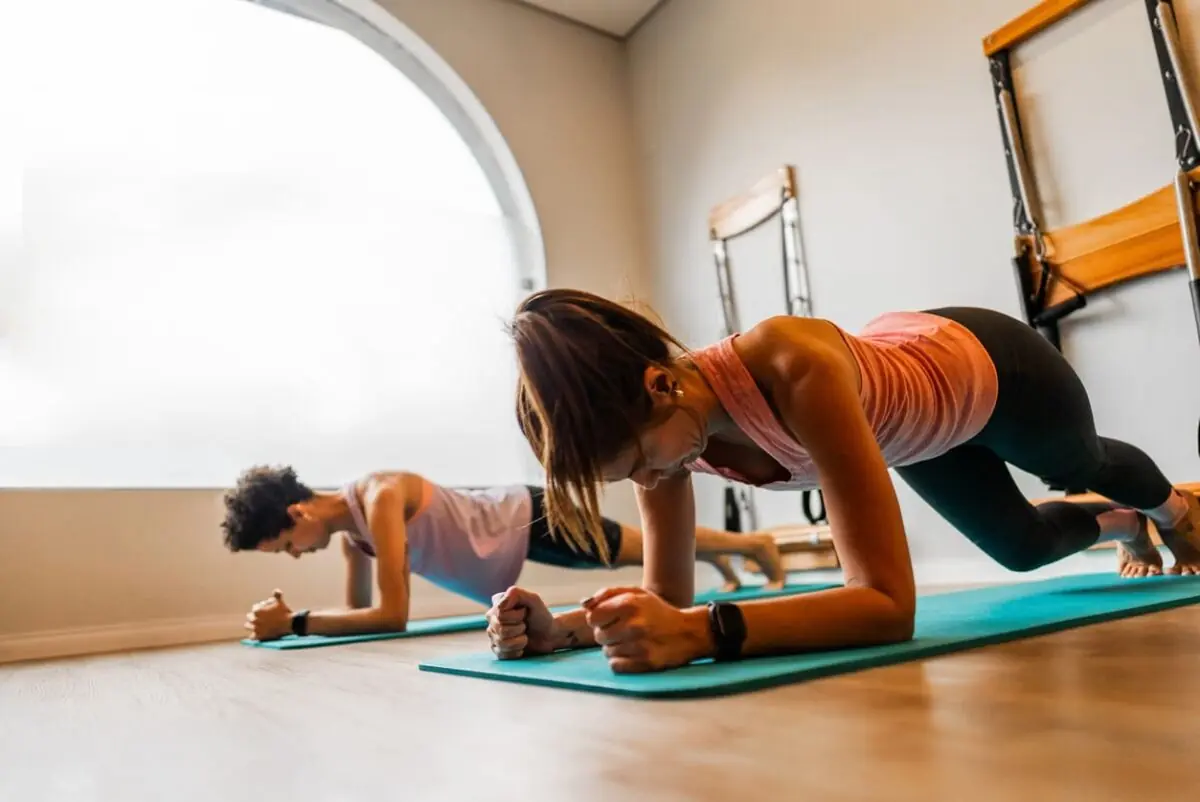
Unlike many exercises, planks are isometric. You aren’t moving through repetitions. You’re holding tension. That requires sustained focus.
You have to monitor your breathing, maintain proper alignment, and resist the urge to quit. The exercise becomes a form of moving meditation.
For three minutes, your mind has only one job: stay present. Many women discover that the mental battle becomes harder than the physical one. That’s actually good news. Mental resilience works the same way muscle does. The more you practice it, the stronger it becomes.
The Confidence Effect
One of the most overlooked benefits of a 30-day plank challenge isn’t measured by fitness trackers or body composition scans. It’s confidence. Every day you complete a difficult task, you send yourself a message: “I can do hard things.” That mindset transfers into every area of life.
You become more willing to tackle challenging projects, difficult conversations, and ambitious goals because you’ve spent 30 days proving to yourself that discomfort isn’t something to avoid, it’s something you can overcome. Psychologists call this self-efficacy: the belief that you can successfully accomplish a task. And self-efficacy is strongly linked to resilience, motivation, and overall well-being.
What Happened After 30 Days?
Most people who commit to daily planking notice several changes:
- Increased core strength
- Better posture
- Improved balance and stability
- Reduced back discomfort
- Greater mental toughness
- Increased confidence
- Improved focus and discipline
Core exercises like planks have also been shown to improve stability, balance, and postural strength, which become increasingly important as we age.
But perhaps the most meaningful change is the realization that strength isn’t just physical. It’s neurological. It’s psychological. It’s the ability to stay steady when things get uncomfortable.
The Real Challenge
The goal isn’t actually to hold a plank for three minutes. The goal is to become the kind of person who keeps going when things get hard. For 30 days, your body learns strength. Your brain learns persistence. And those lessons last much longer than the challenge itself.
So if you’re looking for a simple habit that can improve your physical fitness, sharpen your mental resilience, and remind you just how capable you are, get down on the floor and start the timer. Three minutes. Thirty days. One stronger body and one stronger brain.