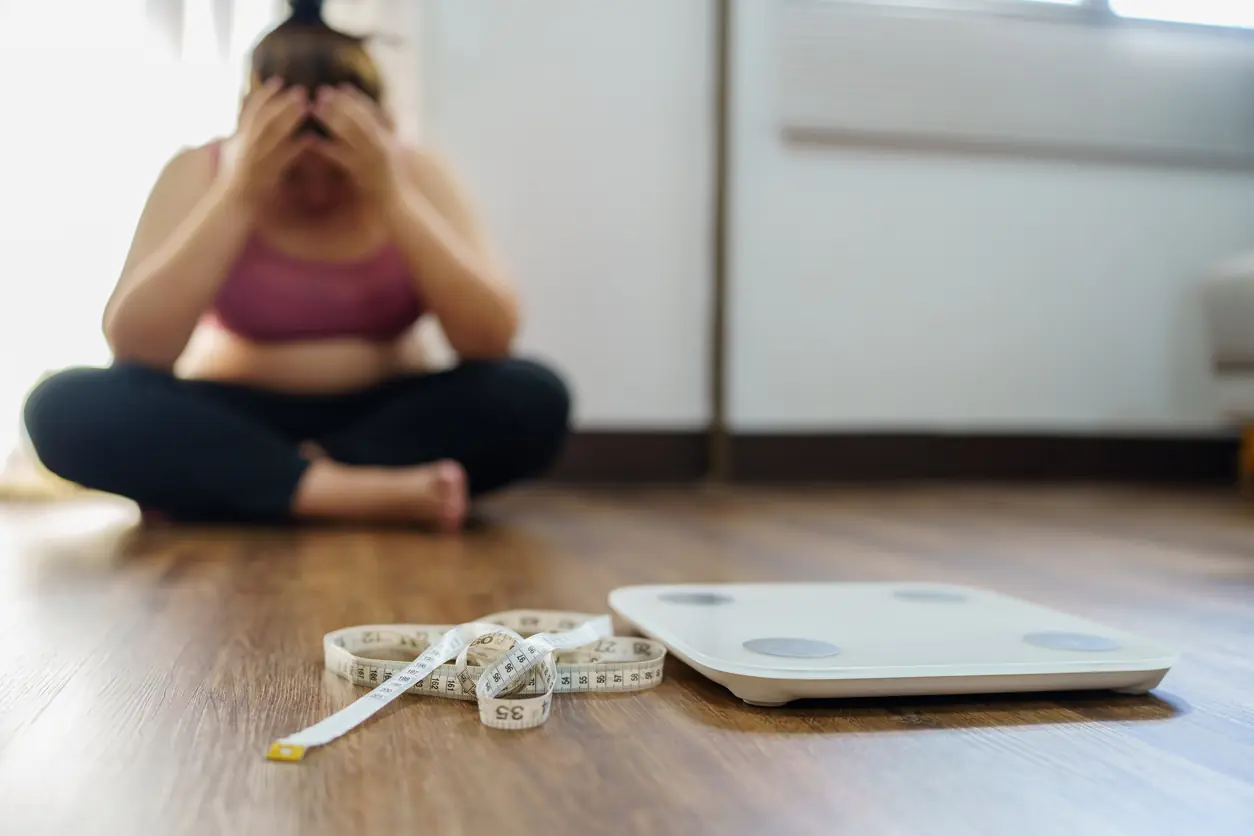
When the scale started creeping up after you hit 50, what did you do? If you’re like most women, you cut calories, added cardio, and pushed harder — because that’s what we’ve always been told to do. Eat less, move more. It’s just simple math, right?
Except after 50, that “simple math” is lying to you. Our body composition isn’t the same as it once was, and doubling down is very likely making things measurably worse. Here’s what’s actually going on.
The Real Problem Isn’t Your Metabolism… It’s Your Muscle
I want you to hear this clearly. The reason your body is behaving differently after 50 actually has very little to do with a slow metabolism and everything to do with muscle loss.
Starting in our 30s, we lose muscle mass unless we actively work to keep it. Menopause accelerates that process because estrogen plays a direct role in maintaining lean tissue. As estrogen drops, so does your body’s ability to hold on to muscle.
Muscle is like your metabolic Spanx. It holds everything in tighter. More than that, it’s the only lever you can actually pull to improve your resting metabolic rate.
You don’t need a detox, a harsh new workout regimen, or a steep calorie cut. Here’s the 1-2-3 on muscle and metabolism:
- The amount of muscle on your body is one of the only things you can change that affects how many calories you burn at rest.
- Muscle is also a sugar sponge, giving carbohydrates a far better place to land than being stored as fat.
- Also, muscle releases compounds that reduce inflammation, support brain function, and strengthen your immune system!
When you lose muscle, you lose all of that.
Why Eating Less is Working Against You

When weight starts creeping up, the instinct is to restrict: eat less, skip meals, and cut carbs. That feels like control, but trust me, your body does NOT see it that way. In reality, chronic calorie restriction sends your body one glaring message: scarcity.
Your body responds to scarcity by protecting fat stores and burning away lean muscle instead. Even worse, women who severely restrict calories not only lose muscle but critical bone density. This can increase your risk of developing osteoporosis, which many women experience as we age.
Less muscle also means a slower resting metabolism, greater hunger, and more difficulty keeping weight off.
Ultimately, if you lose weight, but you’re losing muscle along with fat, then your metabolism is worse off than when you started. You will burn fewer calories at rest. Then you’ll need to eat even less to maintain that. Around and around…
Remember, this is not a willpower problem. It’s a natural physiological response to an outdated strategy.
Why more cardio can backfire too!
I know this isn’t what you want to hear.
Endless cardio sessions, especially paired with calorie restriction, can work directly against your goals after 50. Cardio burns calories during the workout, but it does very little to preserve or build the muscle that keeps your metabolism running efficiently.
When you combine high-volume cardio with undereating, you increase recovery demands while depriving your body of what it needs to maintain lean mass. The net result can actually accelerate muscle loss.
Therefore, exercise after 50 should focus on building a stronger body, not just burning off calories.
Protein Matters More Now Than Ever
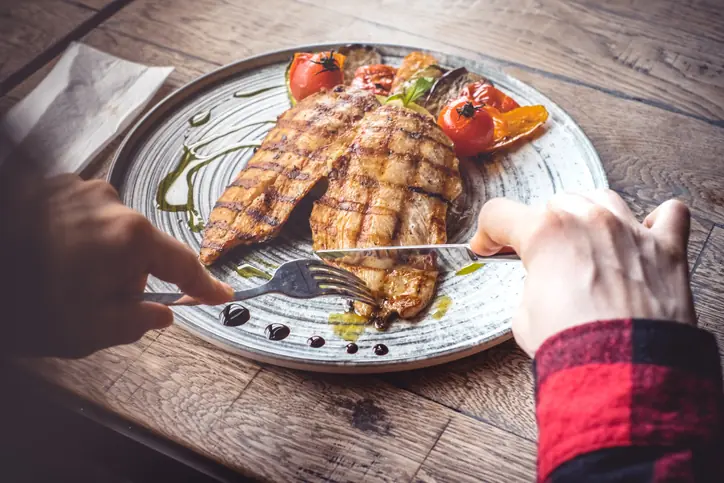
Most women over 50 don’t know that your muscles become less responsive to protein as we age! This is called anabolic resistance. It means the protein you eat is less efficiently used for muscle repair than it was when you were younger.
The answer to this problem is to increase your protein intake and time it more deliberately. Women over 50 need more high-quality protein per meal to trigger muscle protein synthesis.
| Muscle protein synthesis (MPS) is the process your body uses to build and repair muscle tissue using amino acids from the protein you eat. It’s triggered by resistance training and protein intake, and it becomes less efficient as we age. Here’s a longer, step-by-step explanation. When you eat protein, your body breaks that protein down into amino acids. Those amino acids are then used as raw materials to build new muscle proteins. This happens in response to two main triggers: eating protein (especially leucine-rich sources) and resistance training. When both happen together, MPS is maximized. After 50, the process becomes less efficient due to anabolic resistance, which is why older women need more protein per meal than younger women to trigger the same response. A 25-year-old might hit her MPS threshold with 20 grams of protein at a meal. A 55-year-old may need 35 to 40 grams to get the same result. The practical takeaway: if you’re eating protein but not seeing muscle gains, the issue often isn’t how much you’re eating overall. It’s whether you’re hitting the threshold at each individual meal to actually trigger the building process. |
You should eat protein first, at every meal, and build the rest of the plate around it. Aim for at least 30 grams of quality animal protein per sitting.
Essential amino acids are worth adding here. Unlike whole food protein, they absorb rapidly and go directly to work for muscle repair. They’re especially useful when hitting your protein target through food alone is difficult, such as when you’re traveling, or when your appetite is lower than usual.
Digestive enzymes can also help your body break down and absorb protein, maximizing the benefits of a high-protein diet.
Resistance Training is the Closest Thing to a Metabolic Reset Button
If there is one change that makes the most meaningful difference in your metabolism after 50, it’s lifting weights consistently and progressively.
Resistance training preserves and builds muscle mass, improves insulin sensitivity, increases functional strength, and supports bone density. It is the direct antidote to the muscle loss driving midlife metabolic changes.
And here’s some great news: it is never too late! Research shows that women in their 60s, 70s, and 80s can build meaningful muscle with resistance training. During my PhD research in exercise science and nutrition at USC, we had people in their 90s putting on muscle!
Age is not the barrier. You can do this.
| What should you take to the gym to improve your results (and recovery)? Here are 3 things that work together to help you train harder, recover faster, and build more lean mass: 1. Creatine HCl (this absorbs far more efficiently than traditional creatine monohydrate, with none of the bloating or GI upset). This inspires muscle energy, strength, and even supports cognitive function! In fact, a 2021 study found that 750mg of creatine HCl improved processing speed, cognition, and mood in postmenopausal women. 2. Taurine. This supports cellular hydration and helps muscles contract more powerfully. Think of creatine as your performance engine and taurine as the cooling system that keeps it running right. 3. Magnesium glycinate is needed to produce ATP, the energy your muscles run on. It also supports recovery, sleep, and hormone production. (And most women over 50 are deficient, so this is vital.) |
The Scale is Lying to You
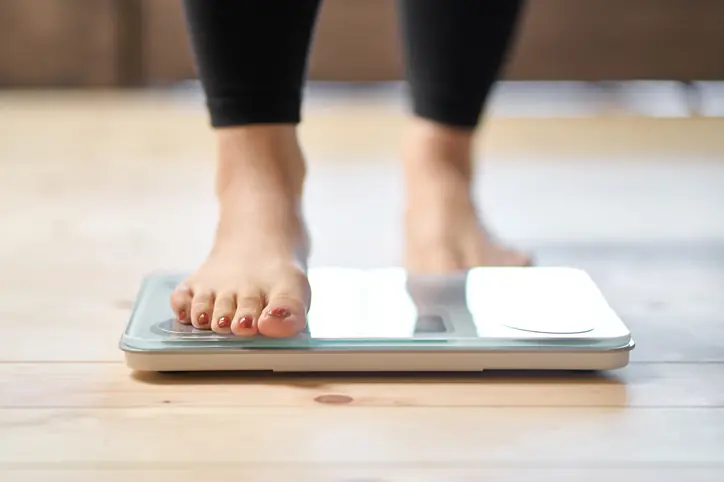
Two women can weigh exactly the same and have completely different amounts of muscle, body fat, energy, and metabolic health. The traditional scale captures none of that.
What you really want to track is body composition: that’s the ratio of lean muscle to body fat. A bioimpedance scale gives you far more useful information.
How it works: A bioimpedance scale sends a small electrical wave up through your body and measures the resistance to that wave. From that, it predicts how much of your body is fat mass versus fat-free mass. It’s far more useful than a traditional scale because it tells you what your weight is made of, not just how much you weigh.
Pair that with functional tests, such as grip strength, the 30-second sit-to-stand test, and push-ups. These will tell you whether your muscle is not just present but actually working.
Track what matters, and let your bathroom scale be the least interesting number in the room.
Recovery is a Metabolism Strategy
Sleep and stress management are not optional extras. They are core, vital metabolic tools, and most women over 50 are undervaluing them badly.
Poor sleep raises cortisol and hunger hormones, increases cravings for high-sugar foods, and impairs muscle recovery. Chronic stress compounds all of this, creating a hormonal environment that works against fat loss and muscle building at the same time.
Sauna sessions after a workout support muscle protein synthesis, unlike cold plunges, which can shut it down. Red light therapy is gaining traction for cellular energy production and inflammation reduction. Both are worth adding to your recovery routine.
What Actually Works? The Muscle-First Approach!
To build muscle: eat protein first at every meal, resistance train with progressive overload, and treat sleep and recovery as non-negotiable.
To reduce belly fat, cycle your calories strategically rather than restricting them chronically, and add HIIT to complement your strength work. HIIT, or high-intensity interval training, alternates short bursts of hard effort with brief recovery periods. It’s more effective at burning fat than steady-state cardio and takes far less time.
The most underused tool here is NEAT, which stands for non-exercise activity thermogenesis. That’s all the movement you do outside of formal workouts, like walking, taking the stairs, standing instead of sitting, etc. Unlike your gym sessions, which are fixed blocks of time, NEAT is happening all day long. It has an outsized effect on how many calories you burn. Most women ignore this entirely, but it should be an important part of your health and everyday life.
Remember, lowering cortisol through breathwork and stress reduction efforts supports fat loss too.
Stop Trying to Shrink. Start Trying to Build.
The biggest metabolism mistake women over 50 are still making is treating their bodies like they did at 25, and the solution is not eating less and exercising more. It’s building and protecting the one thing that keeps you metabolically young: MUSCLE.
Muscle isn’t just “part” of the equation after 50. It is the equation for a happy, healthy life.
Read Next:
How Exercise Affects Your Breast Cancer Risk
Mediterranean Power Sandwich: Your New Favorite Protein-Packed Lunch