

Morning exercise is often recommended as the best time to avoid obstacles that may arise later in the day. If you jump out of bed to get your exercise done first thing, these morning exercise tips may be bad news. On the other hand, if you’re a slow starter, this could free you from the guilt of procrastinating.
Why Morning Exercise Puts You at Risk
During the first hour after you rise, your disks are plumped from your overnight horizontal position. The pressure between your vertebrae is at its highest for the day. Adding the pressure of exercise — whether it is movement as in running, stretching, or lifting weights or moment pressure, a term used to describe the pressure that occurs when you push the vacuum cleaner or do planks, for instance, increases intervertebral pressure.
The hard-to-accept fact is that you don’t feel it until you do. A bulging disk or a ruptured disk is more likely at this time of day than at any other time. Even the core exercises that would later be recommended are to be avoided. Bracing and stabilizing, as well as the already risky forward flexion or extreme range-of-motion back extension exercises, should be avoided in the early morning.
Is Any Morning Exercise Acceptable?
During that first hour, morning exercise as you know it may be off-limits. If protecting your back is a high priority, delaying movement is smart. There are a few things you can do. Remove the load from the spine, and you can remove the risk. Still, I’d suggest you get up and enjoy a tall glass of lemon water or your first cup of coffee before you do anything. Gravity will take care of reducing pressure, so all you need to do is be upright, and 90% of that intervertebral pressure goes bye-bye within an hour.

Instead of pulling those knees to your chest while you’re in bed, which puts your spine in a fairly aggressive flexed position, try simpler stretching. Alternately tighten and relax your muscles. You’ll get the blood flowing there and help reduce that early stiffness you feel. Keep in mind that stiffness is in part due to the plumped disks. You can aggravate the situation and yet feel relief, leading you to do it over and over every morning. A “feels good” method of evaluating exercise isn’t always the best determinant of what to do. Think of it like an addict. Taking more of the drug that’s causing the problem feels good at the time.
Morning Exercise Tips: Flip it Over
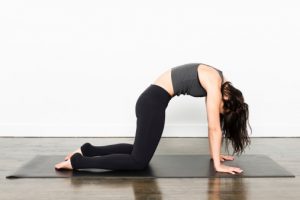
A gentle cat-cow back exercise from yoga takes the load off the spine. The movement into and out of position is initiated right from the core. There’s no knee pull and no gravity resistance to speak of, so this one is safe.
Morning Exercise Tips: The Worst Combination
Morning exercise that combines bending (as in weight training or yoga), lifting (weight training, dog food, lifting small children, or the garbage bag), and twisting, is what I refer to as BLT. Any one of them alone can cause problems, but all of them together put you at greater risk.

Twisting and rotation are hidden in every move you do. Don’t take getting out of bed for granted or hop into your little convertible too quickly. Don’t think gentle yoga or hot yoga that warms up your body puts you out of the woods. Many yoga moves that are healthy for your spine later in the day are not healthy in the first hour. It’s tricky to navigate when programs carry titles like AM yoga. You have to be a critical thinker.
Spread the Word
This information is not exclusive to prime women. Younger and older individuals, as well as those who are fit and those who are more sedentary, should pay equal attention to back health. Share the information about morning exercise with friends and loved ones. If you have experienced a disk injury, you’re likely to be much more cautious – and for good reason. You’re more prone to recurring pain. There’s hope, however, for those with chronic back pain. Listen to this podcast with renowned back expert Dr. Stuart McGill. Although gravity makes these morning exercise tips appropriate for everyone, the exercise that is best for individuals with back pain varies greatly from person to person.
Next – if you want to avoid injuring your knees when doing squats, check out more from Debra here.
Related Article: Why do some workouts leave us feeling better or worse than when we started? It turns out there are signs of a good workout that go beyond what our smartwatches show, such as how sweaty we get and how sore we feel. Learn more about what constitutes a rewarding exercise session and the signs of a good workout. And always keep in mind — showing up is better than not showing up at all!
This article is for informational purposes only. Before beginning any exercise program, check with your doctor.
Read Next:
The Non-Exercise Workout That Could Save Your Life