
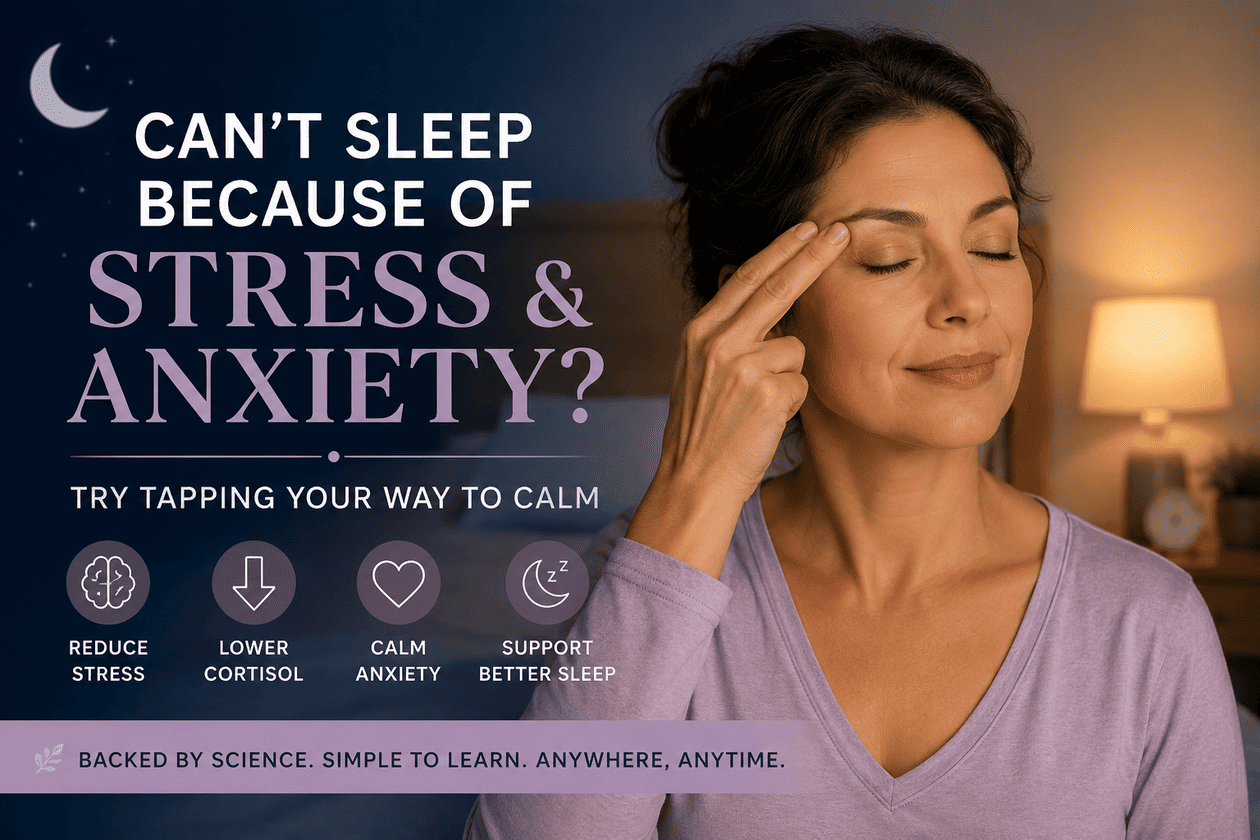
You climb into bed exhausted, but the moment your head hits the pillow, your mind starts racing. Did I send that email? What if the test results come back bad? How am I going to handle everything on my list tomorrow?
For many women, especially during midlife and beyond, nighttime becomes the only quiet moment of the day,, and that’s exactly when stress and anxiety decide to speak the loudest. If you’ve ever found yourself staring at the ceiling at 2 a.m., there may be a surprisingly simple technique worth trying: tapping.
Also known as Emotional Freedom Techniques (EFT), tapping combines gentle fingertip tapping on specific acupressure points with focused attention on stressful thoughts and emotions. While it may look unusual at first glance, a growing body of research suggests it can help calm the nervous system, reduce anxiety, and even lower levels of the body’s primary stress hormone, cortisol.
Why Stress Keeps You Awake
When we’re stressed, our brains activate the body’s “fight-or-flight” response. This survival mechanism evolved to protect us from danger. Still, modern stressors like financial concerns, caregiving responsibilities, health worries, work pressures, and relationship challenges can keep the system switched on long after the threat has passed.
One of the key players in this response is cortisol. Cortisol helps us stay alert and energized during challenging situations. However, when cortisol remains elevated for long periods, it can interfere with sleep, making it difficult to fall asleep, stay asleep, or return to sleep after waking during the night. Research has linked chronic stress and elevated cortisol levels to sleep disturbances, anxiety, and decreased overall well-being.
What Exactly Is Tapping?
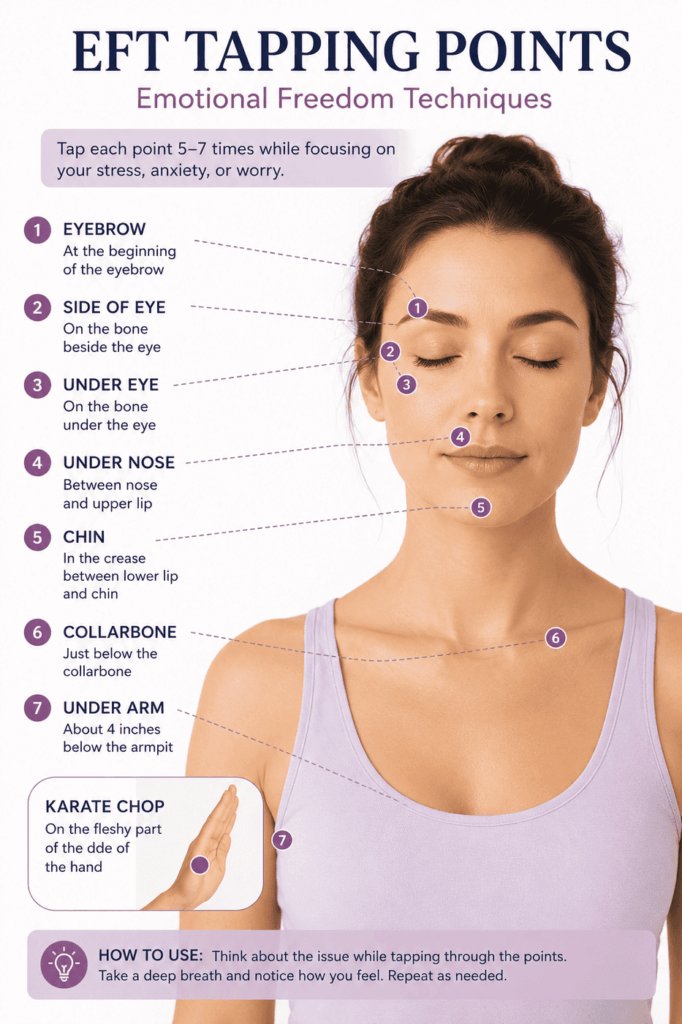
EFT tapping involves gently tapping with your fingertips on specific points on the face and upper body while acknowledging a stressful thought or emotion.
Common tapping points include:
- Side of the hand
- Eyebrow
- Side of the eye
- Under the eye
- Under the nose
- Chin
- Collarbone
- Under the arm
- Top of the head
The technique combines elements of exposure therapy, mindfulness, and acupressure. Rather than trying to suppress anxious thoughts, tapping encourages you to acknowledge them while simultaneously sending calming signals to the nervous system.
What Does the Research Say?

One of the most frequently cited studies on EFT was published in the Journal of Nervous and Mental Disease in 2012. Researchers randomly assigned 83 participants to one of three groups: EFT tapping, supportive talk therapy, or rest. After just one hour, the tapping group experienced a significantly greater reduction in cortisol levels than either comparison group. Participants in the EFT group showed an average cortisol reduction of approximately 24%, compared with about 14% in the other groups. They also reported significant improvements in anxiety and psychological distress.
A later randomized controlled trial led by Australian researcher Dr. Peta Stapleton replicated the findings. Participants who engaged in one hour of EFT experienced a cortisol reduction of more than 43%, significantly greater than comparison groups receiving psychoeducation or no treatment. Researchers concluded that EFT appeared to be an effective brief intervention for reducing biological markers of stress.
While scientists continue to investigate exactly how and why tapping works, the evidence suggests it may help regulate the body’s stress response and promote a sense of calm.
How Tapping May Help When You Can’t Sleep
The beauty of tapping is that it can be done anywhere. There’s no equipment, apps, or special training required. When anxious thoughts begin spiraling at bedtime, tapping may help:
- Shift attention away from racing thoughts
- Reduce feelings of overwhelm
- Calm the body’s stress response
- Create a greater sense of emotional control
- Promote relaxation before sleep
Many people report feeling noticeably calmer within a few minutes. Even if tapping doesn’t immediately put you to sleep, reducing mental and physical tension can make it easier for your body to transition into a restful state.
A Simple Bedtime Tapping Routine
If stress is keeping you awake, try this brief exercise:
Step 1: Identify the Thought
Notice what’s bothering you.
For example: “I’m worried about tomorrow’s presentation.” or “I can’t stop thinking about my finances.”
Step 2: Rate Your Stress
On a scale from 0 to 10, how intense does the feeling seem right now?
Step 3: Begin Tapping
Gently tap each point 5–7 times while repeating a phrase such as: “Even though I’m feeling anxious about tomorrow, I choose to relax and let my body rest.”
Move through the points slowly while continuing to acknowledge the feeling.
Step 4: Reassess
After one or two rounds, notice whether your stress level has changed. Many people find that the intensity decreases, making it easier to settle into sleep.
A Few Important Caveats
Tapping is not a replacement for medical care, mental health treatment, or evaluation of chronic insomnia.
If anxiety, depression, trauma, or sleep difficulties are significantly affecting your life, it’s important to speak with a qualified healthcare professional.
Think of tapping as another tool in your sleep-support toolbox—alongside good sleep habits, exercise, stress management, mindfulness practices, and professional care when needed.
The Bottom Line
When stress hijacks your sleep, it can feel as though your mind has become your own worst enemy.
Tapping offers a simple, low-risk technique that may help quiet anxious thoughts and calm the body’s stress response. Research has shown meaningful reductions in cortisol and anxiety following EFT sessions, making it a promising option for women looking for non-pharmaceutical ways to unwind before bed.
The next time you’re lying awake replaying tomorrow’s worries, try putting your fingertips to work. A few minutes of tapping may be enough to help your mind and your cortisol levels.