

Every few months, America rediscovers kale like it’s a groundbreaking scientific achievement. Meanwhile, Amish communities have been quietly growing nutrient-dense vegetables in the soil for generations without once calling it a “wellness journey.”
No ring lights. No supplements. No woman named Aspen explaining gut health from her kitchen island. Just a consistent diet made up of home-grown whole foods and vegetables with names that sound vaguely fictional.
While the Amish are certainly not immune to illness, researchers have long noted that many Amish communities experience lower rates of certain chronic diseases common in modern American life — particularly obesity, Type 2 diabetes, cardiovascular disease, and some inflammatory conditions.
The reasons are complicated, of course: genetics, physical labor, lower stress levels, stronger social ties, less processed food, fewer ultra-sedentary lifestyles. All of these are important factors of longevity that we should try incorporating more into our lifestyles. But their food? That’s a big part of the story, especially the vegetables.
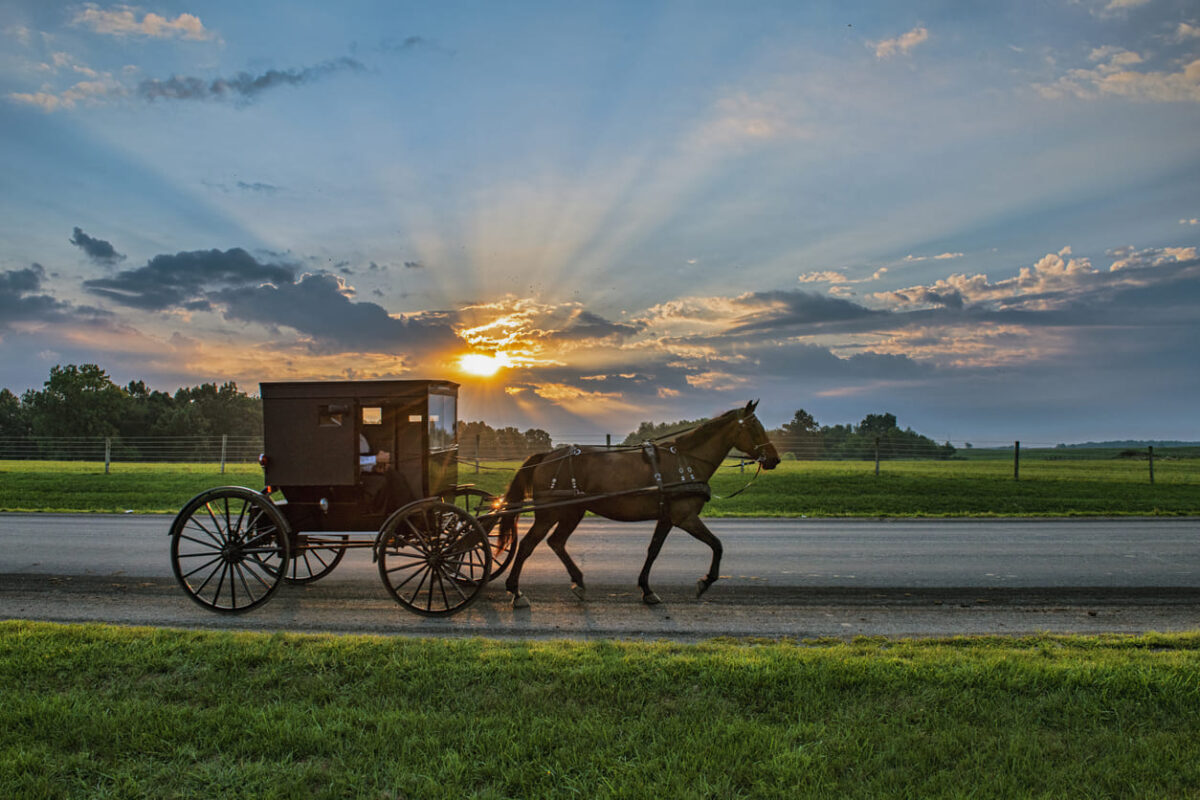
First: No, the Amish Are Not Magical Woodland Superhumans
Many online myths and blatant misinformation have claimed that the Amish do not suffer from certain diseases and neurological disorders. Let’s clear this up before someone starts churning butter in a panic. The Amish absolutely do get sick. They can develop cancer, dementia, infections, arthritis, and genetic disorders just like anyone else. In fact, some isolated Amish populations have higher rates of certain inherited conditions due to smaller gene pools.
So this is not one of those “Doctors hate them!” miracle-health stories. But researchers have consistently found lower rates of several modern chronic illnesses among Amish populations, especially those living more traditional lifestyles.
And honestly, when you compare their lifestyle of homegrown vegetables, daily physical movement, strong community support, and lower screen exposure to the every-day habits of modern American life, it makes sense. Many of our lives are fueled by stress and processed meals eaten alone in a hurry. We work at our desks all day, often staring into a screen and getting minimal physical or social activity.
The Vegetables the Amish Grow That Most Americans Ignore
Amish gardens often contain heirloom and nutrient-dense vegetables that have largely disappeared from mainstream grocery stores because they:
- Don’t ship well
- Aren’t “pretty” enough
- Grow seasonally
- Aren’t trendy enough to become a cauliflower pizza crust
But some of these vegetables are nutritional powerhouses! And frankly, several look like they were invented during medieval times.
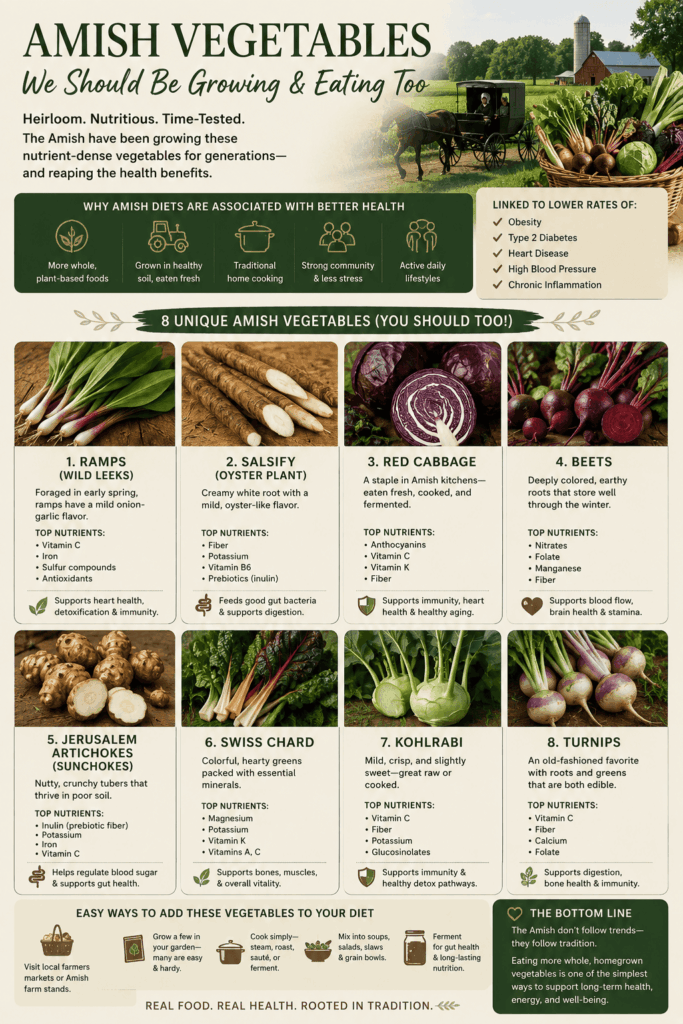
Ramp (Wild Leeks)
Ramps are wild onions with a garlicky flavor that Amish communities have used for generations. They’re packed with vitamin C, iron, sulfur compounds, and antioxidants.
Sulfur-rich vegetables may support heart health, detoxification pathways, and inflammation control. Also, ramps are aggressive little flavor bombs. One serving, and nobody within six feet will question whether you had lunch.
Salsify (The “Oyster Plant”)
Salsify may look like a sad stick, but it contains fiber, potassium, vitamin B6, and prebiotics that support gut health.
It’s also called the “oyster plant” because the flavor is supposedly oyster-like. Gut health researchers now know that diverse plant fibers help support healthy microbiomes, which influence everything from immunity to inflammation and mood. That means your intestines are somehow emotionally involved in your life choices now.
Red Cabbage
Red cabbage is common but underappreciated. Amish cooking frequently includes cabbage in soups, slaws, and fermented dishes. Cabbage contains anthocyanins, vitamin K, vitamin C, and anti-inflammatory compounds.
Fermented cabbage also supports beneficial gut bacteria. Meanwhile, modern society spent ten years pretending yogurt-covered raisins were health food. Thinking that’s an oddly specific example… I’m eating some while I write this.
Beets
The Amish use beets extensively because they store well through winter. Beets contain nitrates that may improve blood flow, blood pressure, and exercise endurance.
There’s emerging evidence that nitrates may even support cognitive health by improving circulation to the brain. Also, beets stain everything they touch like a crime scene.
Jerusalem Artichokes (Sunchokes)
These knobby little root vegetables contain inulin, a prebiotic fiber linked to improved blood sugar control and gut health. Ironically, they are neither from Jerusalem nor artichokes. Vegetable naming was apparently chaotic before the internet.
Swiss Chard
Swiss chard is loaded with magnesium, potassium, vitamin K, and antioxidants.
Many Americans are magnesium deficient, partly because processed diets stripped half the nutrients out of everything sometime around 1987. Magnesium is incredibly important for brain health and sleep quality. Swiss chard quietly keeps doing its job without becoming a TikTok personality.
So Is It the Vegetables… or the Lifestyle?
The answer is both. That’s the annoying answer nobody wants because it can’t be purchased in gummy form. The Amish lifestyle naturally includes:
- Constant movement
- Gardening
- Walking
- Manual labor
- Less processed food
- More home cooking
- Strong social connection
- Lower rates of chronic stress exposure
You cannot separate the vegetables from the lifestyle surrounding them. A side salad does not cancel 11 hours of stress-scrolling and sleep deprivation. Science continues to disappoint us this way.
Why Processed Food Changes Everything
One major difference between Amish diets and standard American diets is the absence of ultra-processed foods. Modern processed foods are often high in sugar and refined oils, low in fiber, full of additives, and engineered for overeating.
Meanwhile, Amish meals tend to revolve around actual ingredients. Not “protein chips.” Not beverages described as “metabolic.” Not yogurt with more ingredients than windshield fluid.
Real food changes metabolism, inflammation, blood sugar stability, and long-term health outcomes in measurable ways.
The Bigger Lesson Here
The Amish are not healthier because they discovered one secret vegetable hidden deep within Pennsylvania. They’re healthier in many cases because their entire lifestyle supports human biology better than ours does. They move more, cook more, sit less, eat seasonally, sleep more consistently and spend less time staring into glowing rectangles while stress-eating cereal.
The vegetables matter, but their rhythm of life matters too.
The Bottom Line
No single Amish vegetable is going to suddenly make you immune to modern illness. But there’s real wisdom in the way traditional communities approach food:
- Eat more plants
- Eat seasonally
- Grow what you can
- Prioritize fiber
- Move daily
- Cook real meals
- Stop treating every snack like a chemistry experiment
And perhaps most importantly: if a vegetable looks ugly but has survived 200 years of farming tradition, it probably deserves more respect than another cauliflower cracker. Your great-grandmother would likely agree.