
You’re a woman over 40. You still want to look great in that sleeveless shirt. You want to be able to play with your kids and grandkids. You want to enjoy the way you look in pictures, or maybe you’re scared of falling into the same health issues your parents had. I get it. Those are all great reasons to exercise!
But there are lots of myths about strength training for women over 40, and there are lots of people out there exercising in ways that may do more harm than good. Prime Women has partnered with Coach Igor Klibanov to break down some of the most common strength training myths and mistakes that women over 40 make.
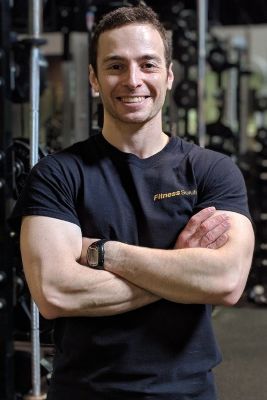
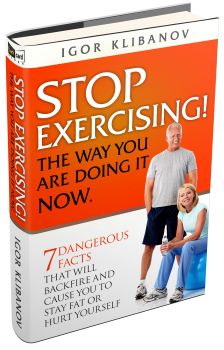
Igor is a public speaker, author, and founder of Fitness Solutions Plus, a premier online personal training company that specializes in exercise for women over 40. He is also giving our subscribers a FREE PDF copy of his book, STOP EXERCISING! The Way You Are Doing It Now (which also sells for $13.99 on Amazon). Inside, you’ll discover strategies to help you:
- Lose weight and feel more confident in the clothes you love.
- Manage stress with practical techniques you can put into action.
- Boost your energy so you can accomplish more without feeling exhausted.
- Improve your posture and feel better in your body.
- Stay motivated so exercise feels less like a chore and more like a sustainable part of your routine.
Myth #1: Metabolism Slows Down
This is a common myth, and it’s logical. You often gain weight after 40 even if you’ve made no changes in exercise or nutrition, so that must mean your metabolism is slowing down, right? But that’s not actually the case.
One study found that yes, women gain weighter after 40, but no, it’s not because of a decrease in metabolism. Another study found the same thing. In fact, metabolism remains relatively unchanged between ages 20 and 60. Only after 60 does metabolism slow down, and even then, only about 0.7% per year.
So what gives? Why do we gain weight after 40? Well, there are four sources of energy expenditure:
- Metabolism: How many calories you burn per day just to stay alive.
- Exercise: Calories burned through purposeful physical activity.
- Thermic effect of food: How many calories you burn digesting and assimilating food.
- NEAT: Non-exercise activity thermogenesis. This refers to the calories you burn through movement that isn’t purposeful exercise. For instance, gardening isn’t purposeful exercise, but it burns calories. Sitting there and bouncing your ankle isn’t purposeful exercise, but it burns calories, too. And so on.

It’s actually NEAT that is affected by changing hormones, according to this study. Small, unconscious movements throughout the day can add up to hundreds of calories over 16 or so waking hours. So if you’re moving less but eating the same amount, there’s less on the “energy out” side of the equation.
But most women over 40 actually aren’t eating less. Their appetite increases slightly, and that’s on purpose. Your body wants to gain body fat. You might not like the way it looks, but this is actually healthy body fat, provided you weren’t overweight to begin with.
I can feel your confusion: “Why does my body want to gain body fat after 40?”
Before 40, the three organs that make estrogen are:
- Ovaries
- Adrenal glands
- Body fat
As you approach, go through, and move beyond menopause, your ovaries no longer do the job, so estrogen production falls to two organs: the adrenal glands and body fat. So women who gain some body fat to compensate for estrogen production after 40 may actually be healthier (again, provided they weren’t overweight to begin with).
Research shows that lean women who gain body fat after 40 actually experience a decrease in all-cause mortality. Another study shows that obese postmenopausal women who lose weight experience health improvements. But overweight women don’t. The difference between obese and overweight is that obese women have a body mass index (BMI) of over 30, while overweight women have a BMI between 25.0 and 29.9. To calculate your BMI, go here.
Another study found that obese menopausal women experience the worst menopausal symptoms. However, overweight menopausal women had no more hot flashes than lean menopausal women.
Myth #2: You’re Going to Look Bulky
A lot of women see men lifting weights and notice how bulky they are. So they shy away from weights, and if they do use them, they don’t choose appropriate weights or intensity levels.
However, more than anything, there are significant hormonal differences between men and women. Namely, testosterone. Men have lots of it, while women typically have very little. Because of that, women simply can’t build as much muscle as men.
For comparison’s sake, a man has the potential to build 40–50 pounds of muscle over his lifetime. Of that, 20–25 pounds will come in the first year, 10–12 in the second year, 5–6 in the third year, and so on.
By contrast, women only have the potential to build 20–25 pounds of muscle over their entire lives. Of that, 10–12 pounds will come in the first year, 5–6 in the second year, and so on. Notice how slow that is. Even at the fastest rate, it’s about 0.8–1 pound per month. Routines that make men bulky make women toned.
6 Common Strength Training Mistakes for Women Over 40
Now that we’ve busted the two most common myths about strength training for women over 40, let’s talk about common strength training mistakes, in no particular order:
Mistake #1: Using Weights That Are Too Light
This mistake typically comes from the myth that if women lift heavy, they’ll get bulky. Not true. Ultimately, you need to cross a certain threshold to get stronger. That threshold is about 70% of the maximum weight you can lift for one repetition. So, for instance, if you can lift 10 pounds for just a single repetition, you should be strength training with at least 7 pounds.
Furthermore, you should be adjusting the weights based on the muscle being worked. You think 10 pounds is heavy? Maybe for your biceps it is, but for your legs, it’s virtually nothing. Different muscles have different strengths, whether we’re talking about your biceps, shoulders, back, legs, calves, or abs. Exercises need to be adjusted on a muscle-by-muscle basis, and the weights should be at least 70% of your maximum.
You’ll still burn calories using weights that are lighter than that, but you won’t get stronger or more toned.
Mistake #2: Not Getting Close Enough to Muscular Failure
Along with the previous mistake of using weights that are too light, most women don’t get close enough to muscular failure. They may just fear getting too bulky, or they’re not willing to push past the muscle burn that happens when you get close to muscular failure.
But again, you need to put in sufficient effort to get stronger and more toned. Otherwise, you’ll be one of those people who spends lots of time exercising but doesn’t see the fruits of their labor. You’re not as toned or as strong as you want to be.
So what counts as sufficient effort? When you finish an exercise, you should ask yourself, “How many more could I have done?” The answer should be 1–3 more. If you could have done more than three, the weight was too light.
Mistake #3: Using Generic Programs
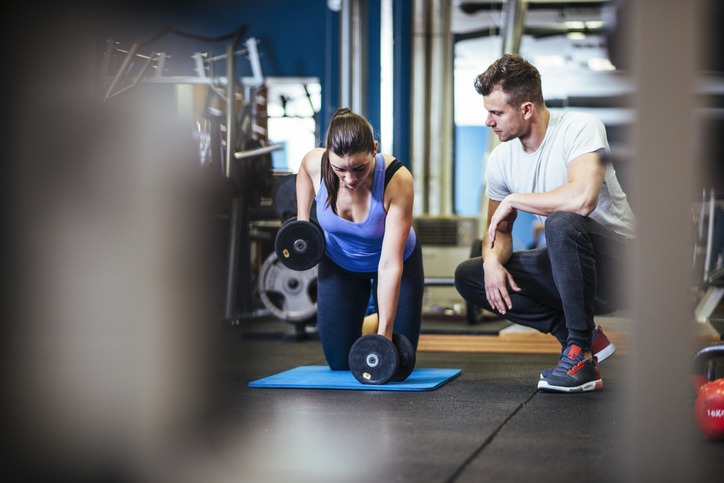
I’m a personal trainer. My entire career is about personalizing exercise to a person’s body. So when I see people using generic programs (or even worse, personal trainers using generic programs with their clients), there are three possible outcomes:
- You get the results you’re looking for. This is the best-case scenario. Unfortunately, it’s also pretty rare.
- You spend a lot of time exercising…and nothing happens. You don’t get stronger or more toned.
- You spend a lot of time exercising…and get injured!
There are a lot of important factors when putting together an exercise program, and there is no one-size-fits-all solution. You need to take into account:
- Your goals
- Your injuries
- Your health conditions
- Your medications
- Your hormonal status
…and more. Use generic programs, get generic results.
Mistake #4: Not Progressing
When someone wants an exercise program, they typically just want a list of exercises. But the exercises themselves are only the fourth most important variable. The progression model is the most important factor.
What do I mean by that? Each workout should be ever so slightly harder. Whether it’s one more repetition, one more pound, one more set, or another method of progression (there are 8–9 methods of progression).
After all, if your program is static — the same exercises, sets, reps, weights, etc. — you’ll simply maintain your current fitness level. That’s fine if maintenance is your goal, but not if you’re looking for progress.
Mistake #5: Not Exercising Due to Injuries
If you have an injury, you certainly don’t want to make it worse. But a common mistake is, for instance, having a left knee injury and then not exercising your right leg or your upper body. There is still a lot you can do to stay in shape despite an injury.
The majority of our clients come to us with some kind of issue, whether it’s arthritis, back pain, carpal tunnel, or something else. The focus should always be on “what can I do?” as opposed to “what can’t I do?”
Mistake #6: Not Taking Health Status Into Account
Exercise for weight loss and toning is one thing. Exercise for a specific health condition is another.
For instance, one of our clients was already fit, strong, and exercising 3–4 days per week, but he still had high blood pressure. That’s because his exercise wasn’t geared toward lowering blood pressure. It was geared toward gaining strength. But the two are very different goals.
There needs to be specificity in exercise prescription. Once we adjusted his program to focus more on reducing high blood pressure, his blood pressure normalized. The same principle applies to exercise for osteoporosis, diabetes, and other conditions. It’s one thing to exercise for weight loss and toning. It’s another thing to exercise for a specific health goal.
Strength Training for Different Goals
Probably the single biggest factor that will determine your strength training program isn’t your age or sex. It’s your goals. For women over 50, factors such as bone health, osteoporosis, arthritis, and blood pressure can influence your fitness goals, which exercises are most appropriate, and how to approach them safely. The right workout can help you achieve your goals, support strength, mobility, balance, and overall well-being.
Whether you’re looking to refresh your fitness routine, work around age-related changes, or finally get more out of your exercise efforts, Igor’s book may offer a fresh perspective on how to approach fitness. For more workout tips and specific exercises from Igor, click here to claim your free PDF of STOP EXERCISING! The Way You Are Doing It Now.
And if you want a strength training program tailored to your body, Igor has a special program just for women over 40! The personal training program called Fit, Feminine, and Over 40 (both in-person and virtual) combines exercise and nutrition to target your goals.