You should be doing weight training exercises. Period. This post isn’t going to dedicate much of its word count to convincing you. If you want to look better, feel better, and age well, there is not one single exercise that will make as much positive difference for you as weight training. There is a wealth of research supporting it.
Weight training positively influences muscles more than any other exercise can. If you need convincing that muscle is the organ of longevity for both improving metabolism now and avoiding frailty later, we’re about to change your mind.
Weight Training Exercises vs. Resistance Training Exercises
In literature, weight training and resistance training are often used interchangeably. Resistance training can include bodyweight exercises, bands, tubing, pilates, suspension training, as well as machine weights and free-weight training exercises. If you want your workout to change your body in ways that improve metabolism, bone density, and function, you need to reach a point of overload.
Overload means reaching temporary fatigue, or that at the end of a set of exercises, you should find it challenging to complete another repetition with good form. That is effectively reaching fatigue or overload, so the muscles respond positively by gaining strength and endurance.
However, when you’re considering weight training in midlife and beyond, you often have to find your sweet spot between risk and reward. The five weight training exercises in this post lie in the sweet spot. They are single-leg or unilateral exercises, and each can be done with body weight alone or with added weight.
One of the major benefits of unilateral training is that you don’t have to compromise the spine or other joints.
Maintaining Success
To age well, you must maintain strength, muscle mass, and strong bones, and those goals require strength training. Of course, if you’re exercising with arthritis, advanced osteoporosis, or degeneration, you want to balance your need for adequate load for strength with minimal stress to the spine to prevent injury.
That’s particularly important with lower-body exercises, where you’re using weight with a bar on the shoulders, or with certain machines that increase pressure on the spine. In order to reach fatigue when doing exercises like the squat or leg press, it requires a fairly heavy load. When you switch from bilateral (two-leg) to a unilateral weight-training exercise, you can still achieve fatigue and safe overload without adding undue stress to the spine and other joints.
Another major benefit of single-leg exercise is that it helps strengthen muscles that aren’t usually activated. Muscles around your pelvis respond differently when you have two feet operating together. When you train one leg at a time, you’re exercising stabilizing muscles that can reduce your chance of injury by improving balance and your ability to right yourself if you bobble.
5 Weight Training Exercises You Need to Start Now
Add these five exercises to your routine once or twice a week. Begin by using only your body weight, and gradually add resistance (or time, as in the last two yoga poses). Remember, your goal is fatigue. Don’t set an arbitrary number of repetitions and stop. When you can easily do 15-20 repetitions with the weight training exercises (the first three), then add some external weight as demonstrated.
You do want to include some bilateral (two-legged) exercises with heavier weights to improve body composition and bone density. These five weight-training exercises can be a good start for your foray into weight training or provide additional benefits to your existing program.
1. Single-Leg Deadlift
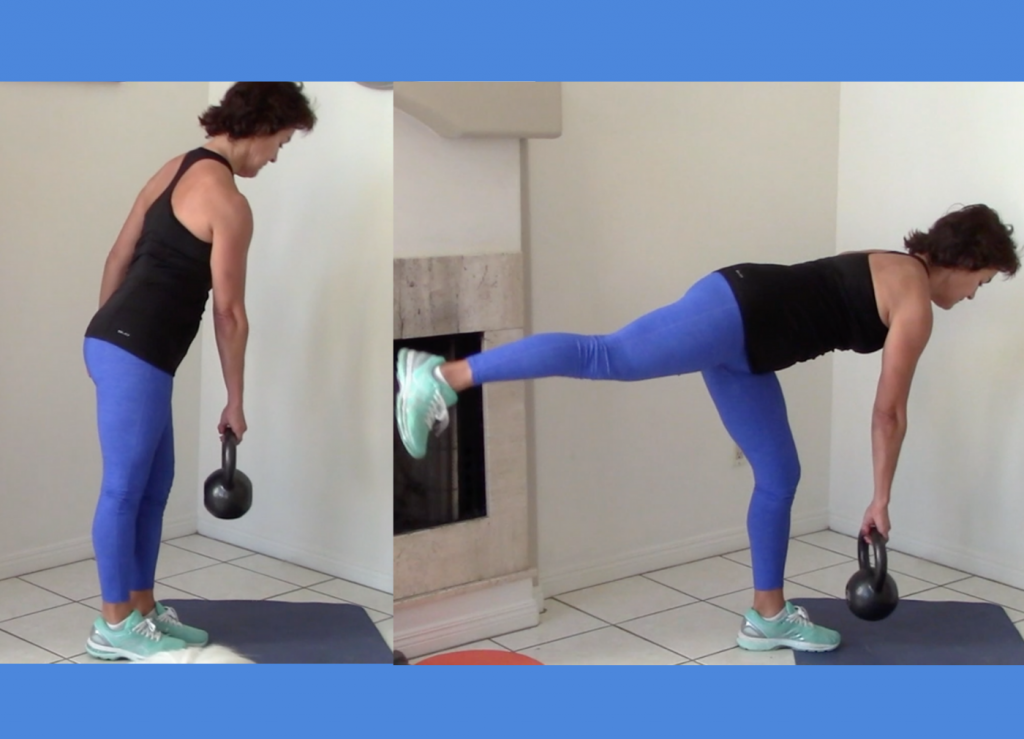
Stand with one leg forward and hold a weight in your opposite hand. Place the weight on your heel, and then gradually hinge at the hip with a slightly bent knee, lowering toward the floor or a step.
Where you should feel this: hamstrings (back of the thigh) and glutes
Where you should not feel this: lower back
2. Single-Leg Lunge with Elevated Rear Leg
Stand with one leg forward, and your back leg elevated on a bench, chair, or ottoman.
Make sure your weight is on your front heel. Lower and lift, pressing the heel firmly into the ground.
Where you should feel this: glutes
Where you should not feel this: front knee (keep the weight on the heel)
3. Single-Leg Bridge
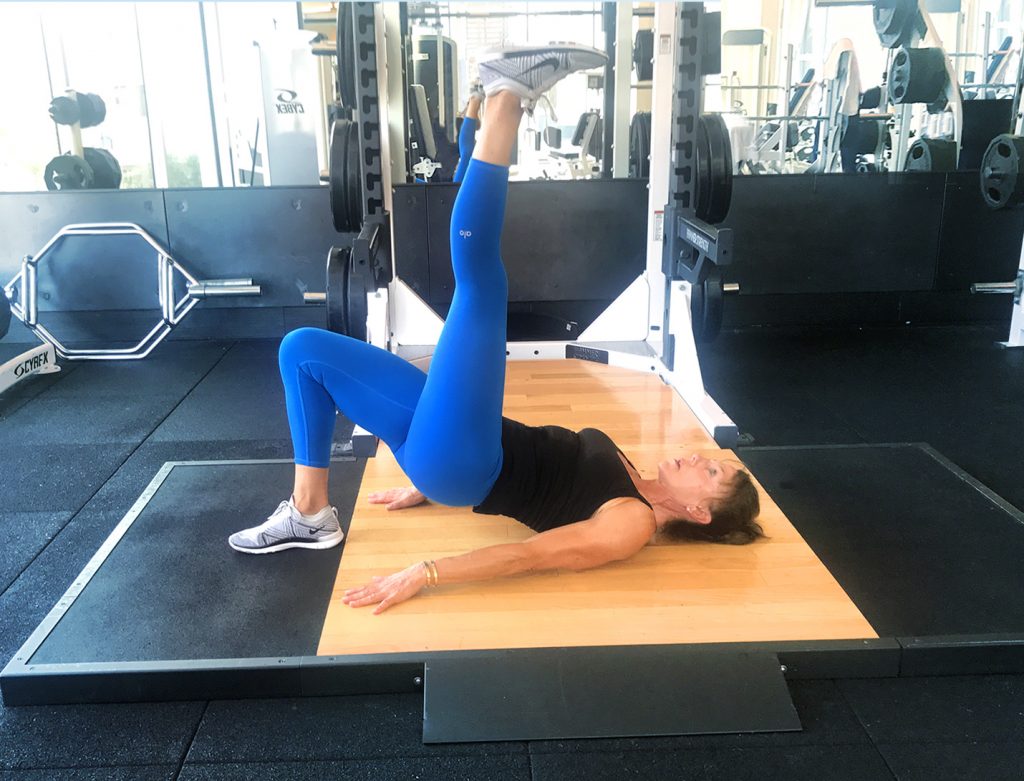
Lying on the floor, cross one ankle over the other knee. Press through the weight-bearing heel to raise the hips up. Repeat to fatigue without fully setting down between. For external resistance, you can place flat weight plates or tubing across your hips.
Where you should feel this: glutes
Where you should not feel this: lower back
4. Half Moon (yoga pose)
Stand with your back close to a wall for support if you’re new to this pose. Place a prop on the floor in front of you, so you don’t have to put your hand on the floor. Slowly lift your rear leg parallel to the floor while straightening your front leg. Keep your weight evenly distributed across the front foot, with slightly more emphasis on the heel. Hold for as long as you can.
5. Tree Pose (yoga pose)
Stand tall barefoot or with shoes on. (Barefoot will be a greater balance challenge.) Bring one foot up and place the sole of your foot against the standing leg as high up on the leg as your strength and mobility allow. (You can use your hand to bring the leg up or simply bring one leg to the other.) Press one leg firmly into the ground/floor, and press the other leg firmly into that grounded leg. Hold as long as you can.
Use support for any of these exercises as needed. As your strength and stability increase, your muscle tone and definition will also improve.
Our Picks:

Remember – check with your doctor before beginning any exercise program.
Read Next:
5 Resistance Training Exercises for Women Over 50
A 10 Minute Workout Routine You Can Do At Home
6 Best Butt Exercises to Boost Your Rear View